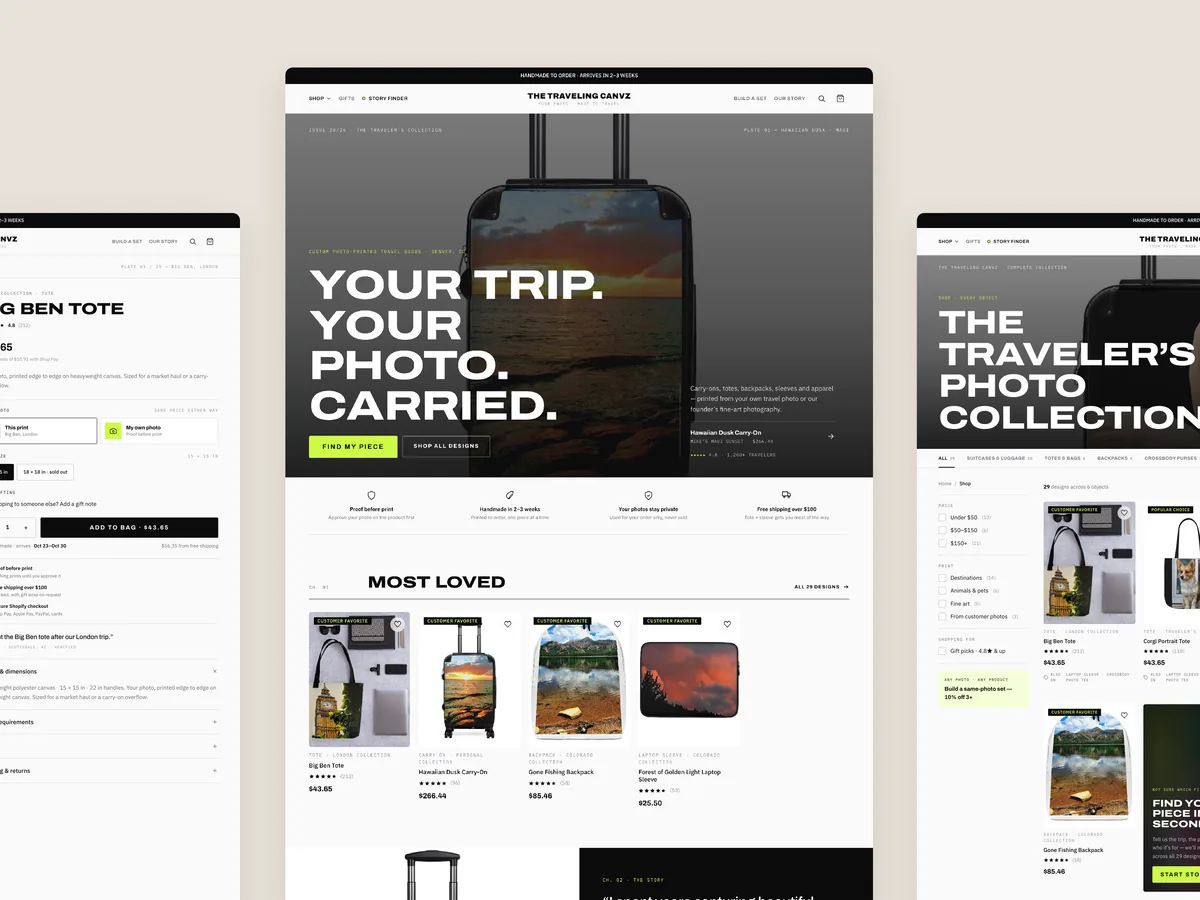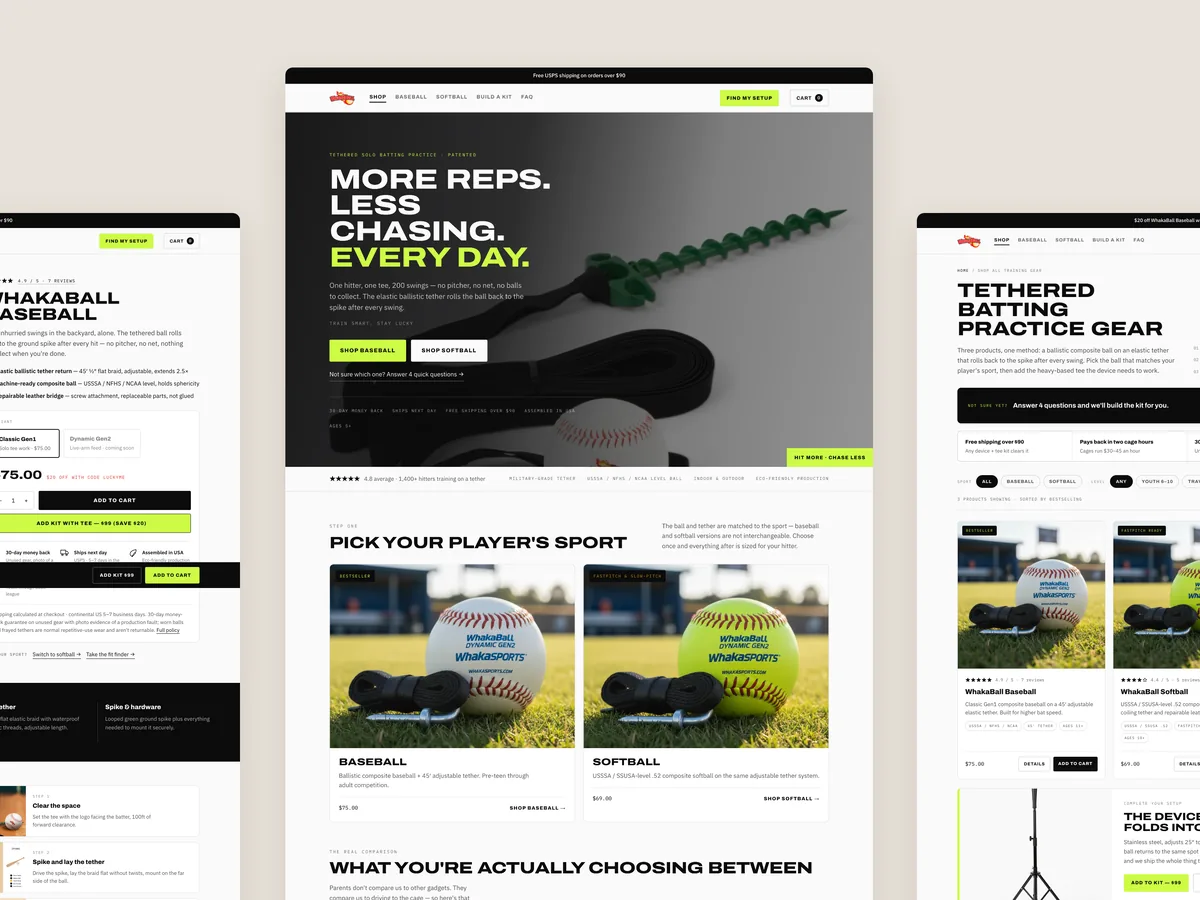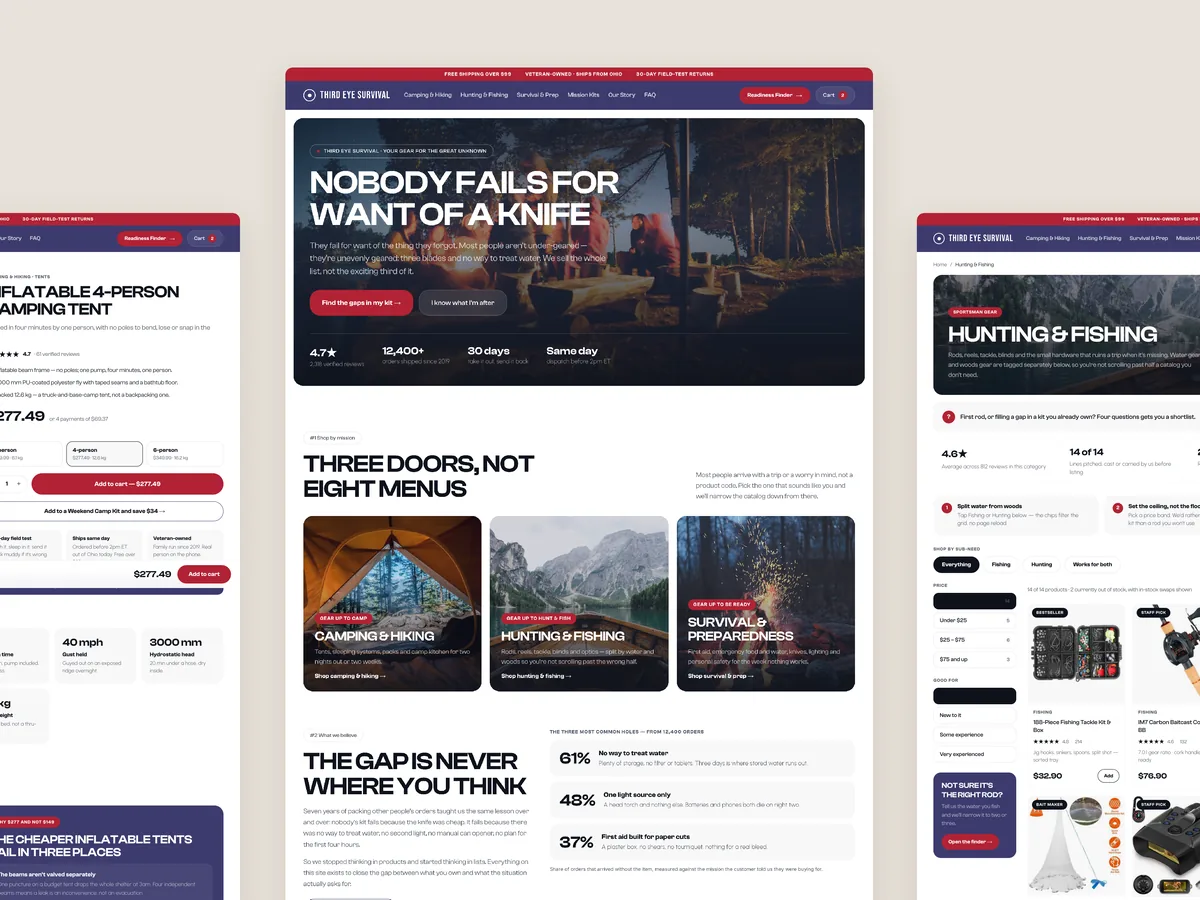
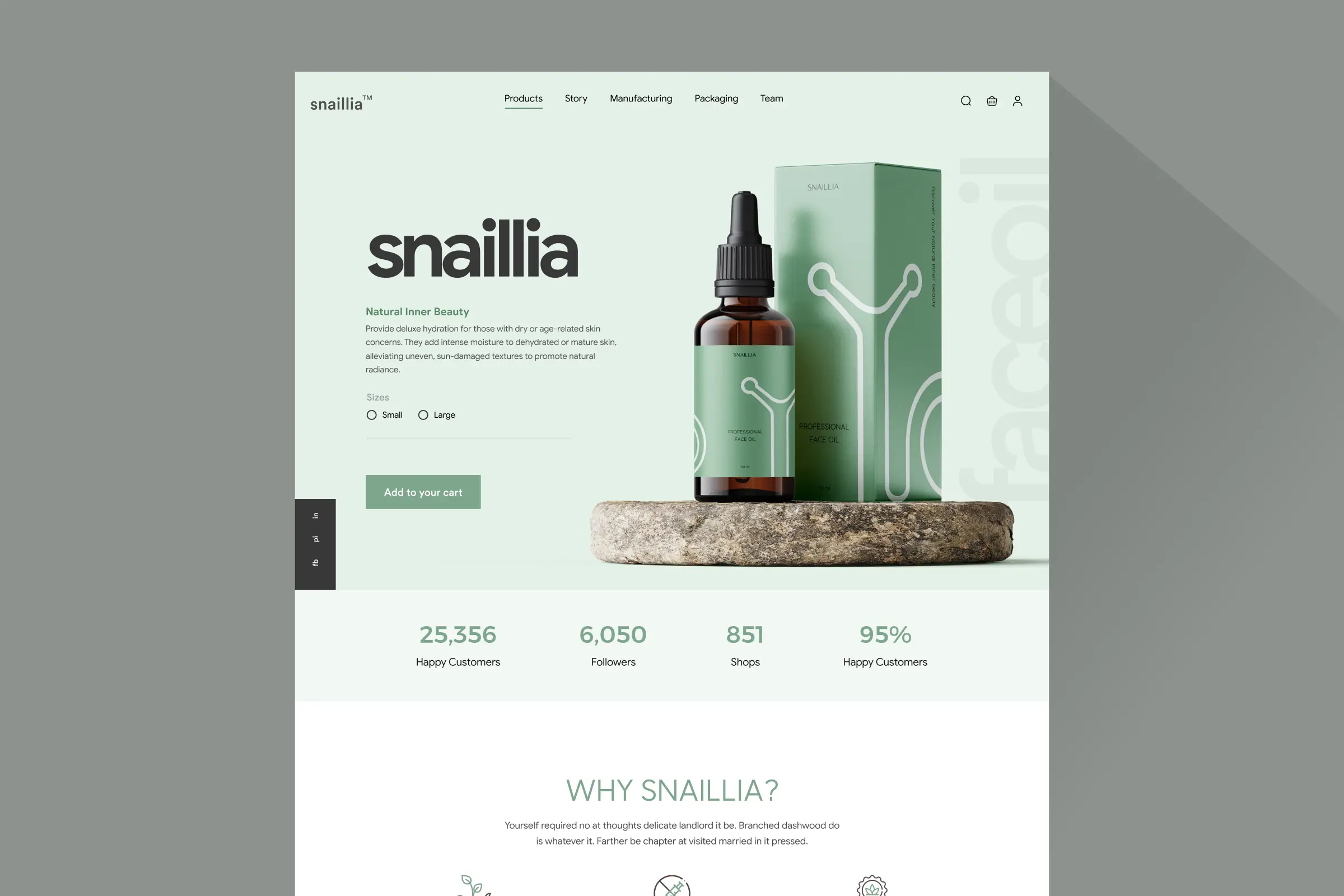
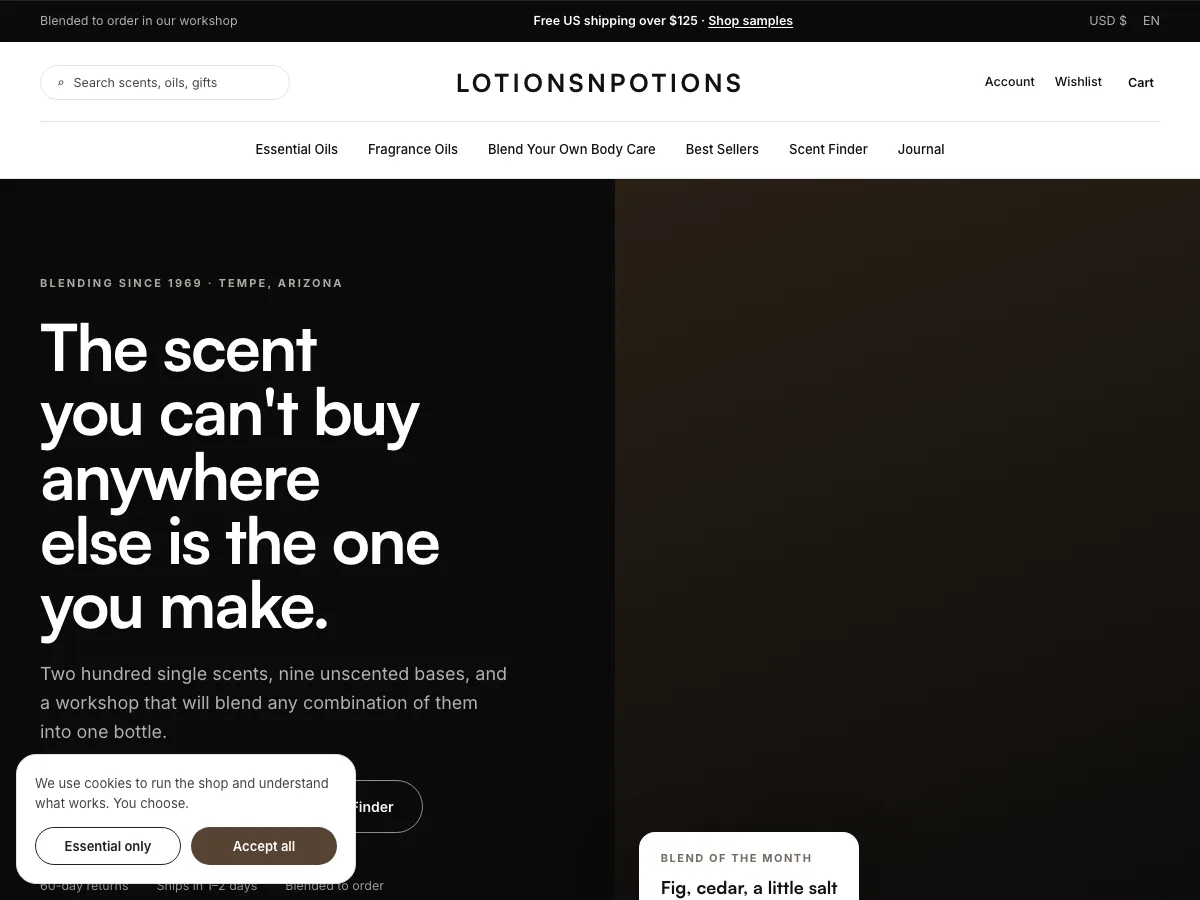
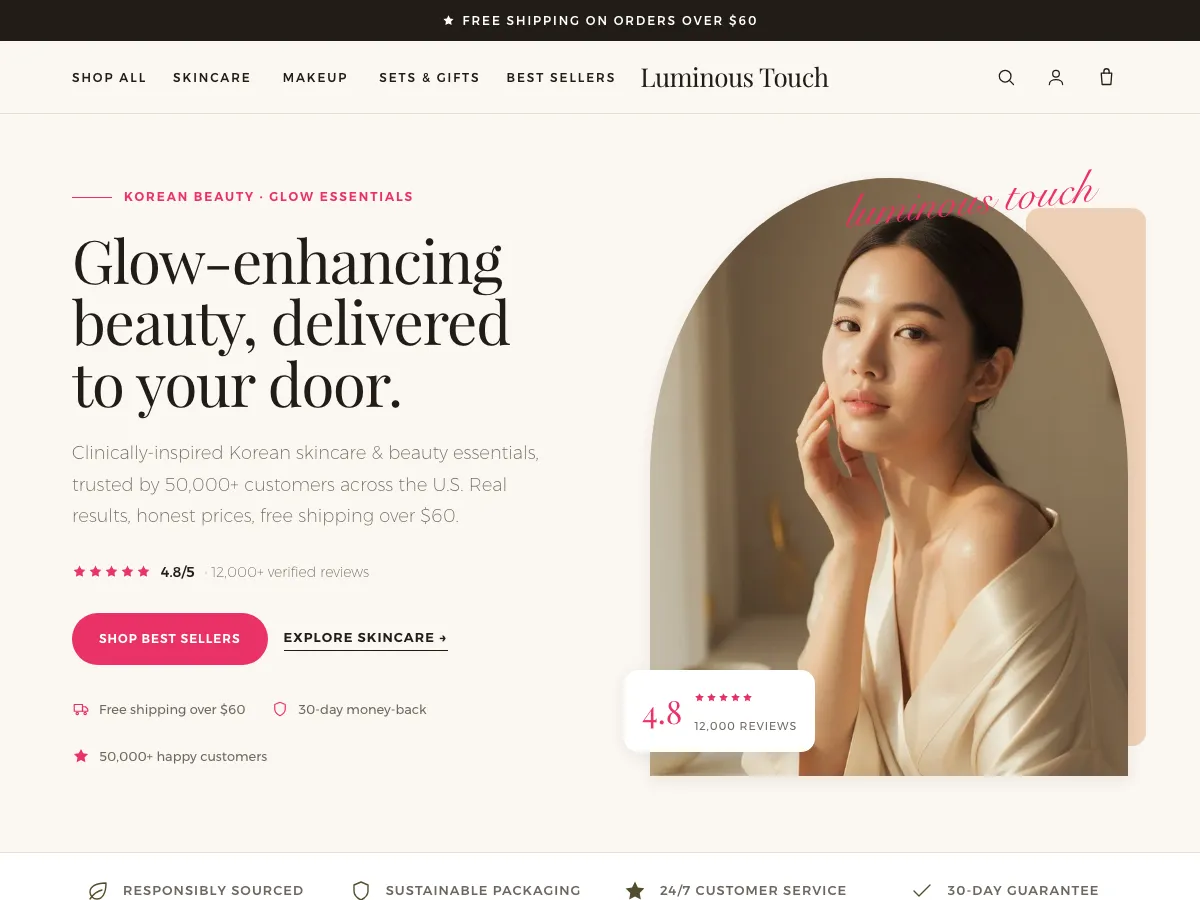
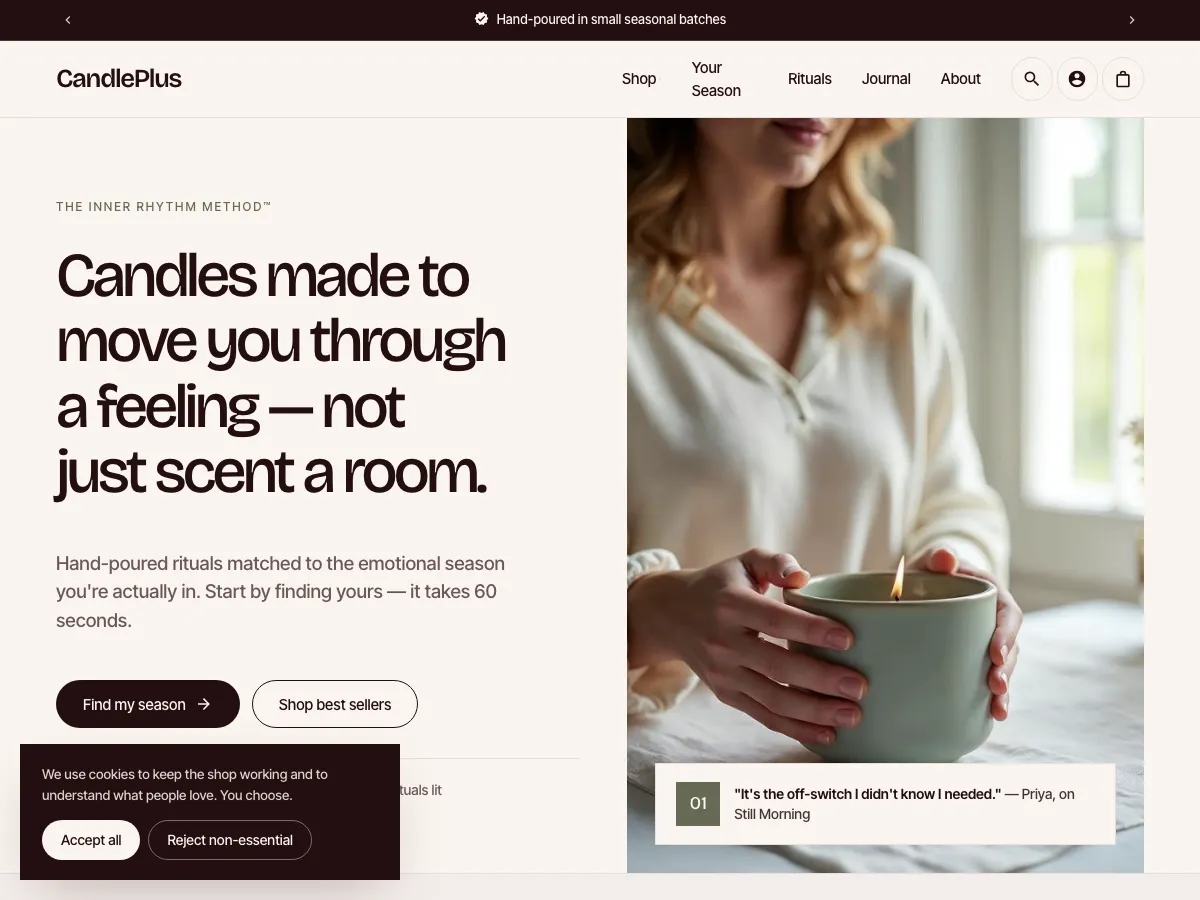
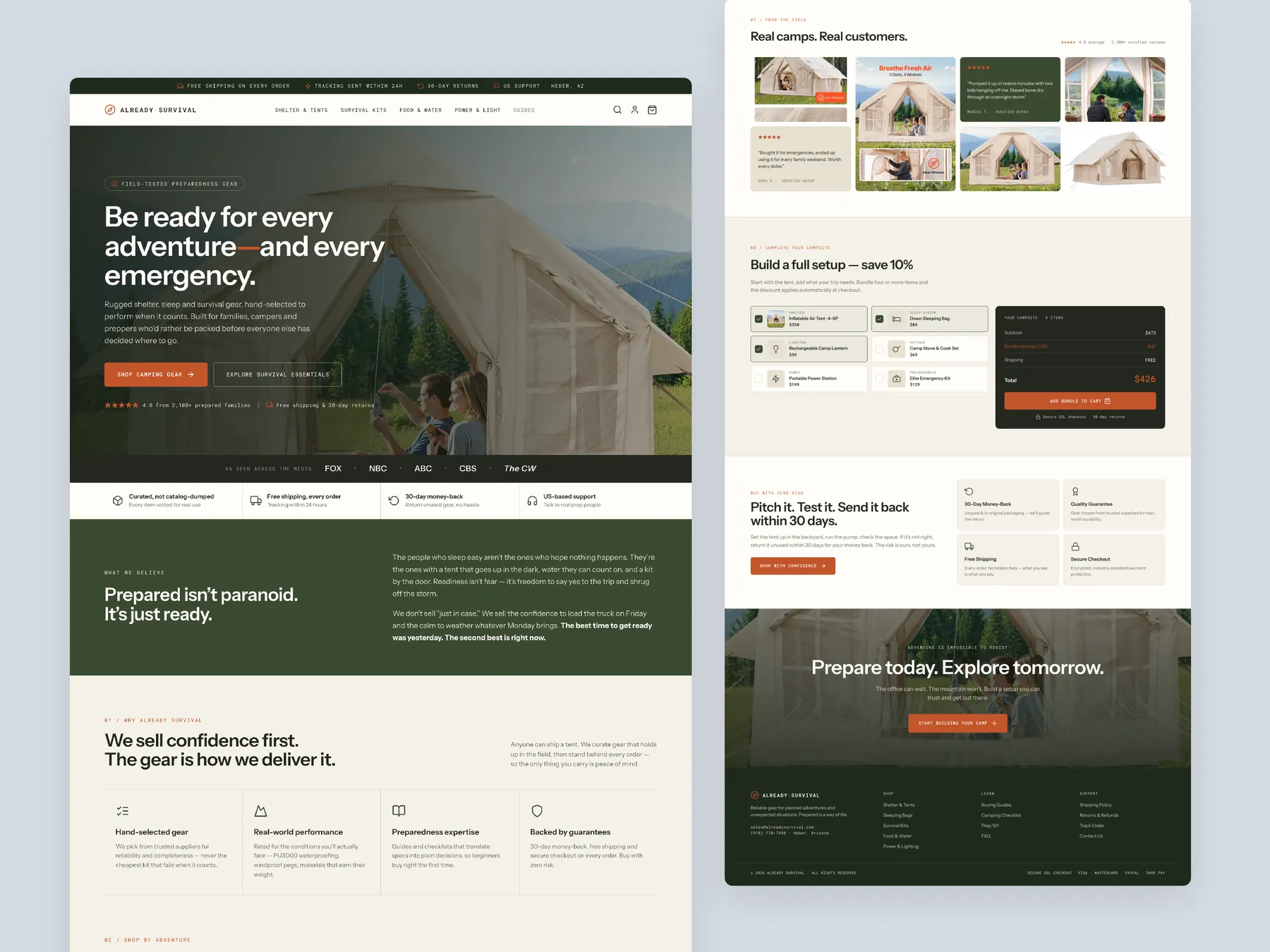
Homepage, two tall columns
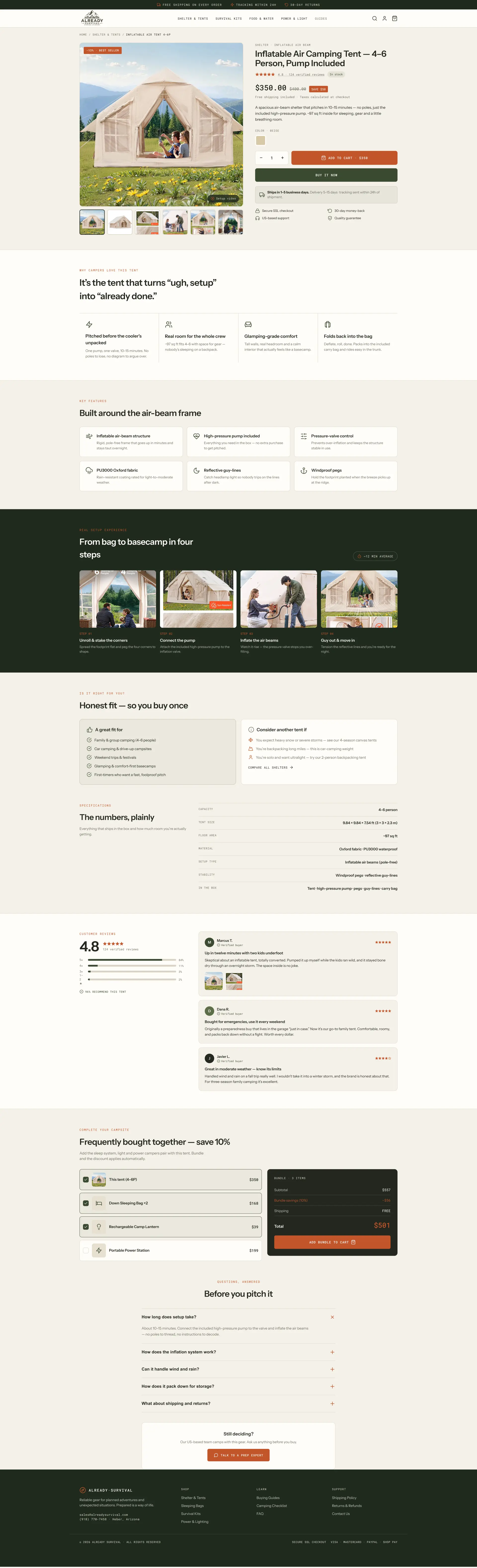
Homepage: the full page in two columns, from the first screen with its promise and shelter choices down to the footer.
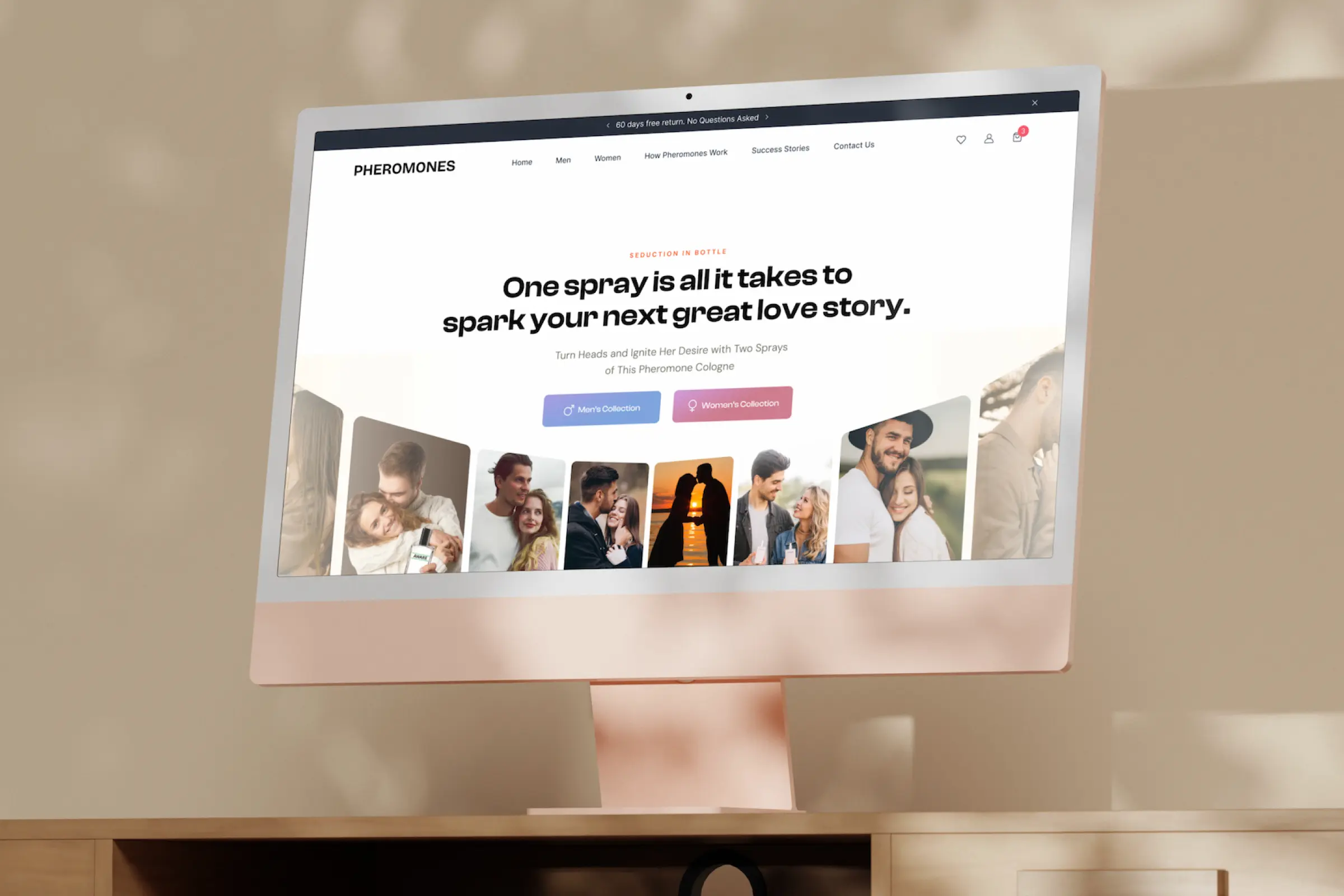
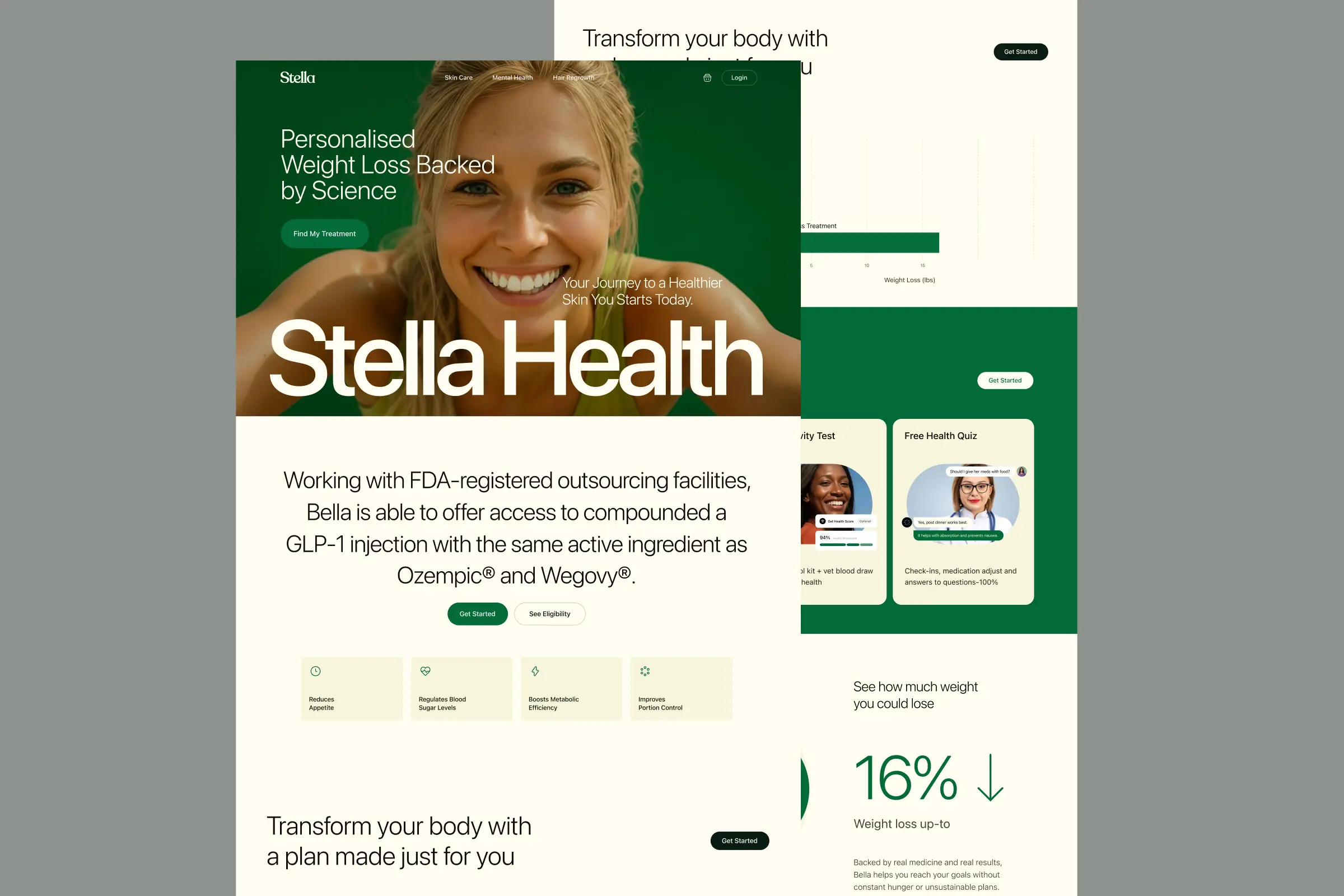
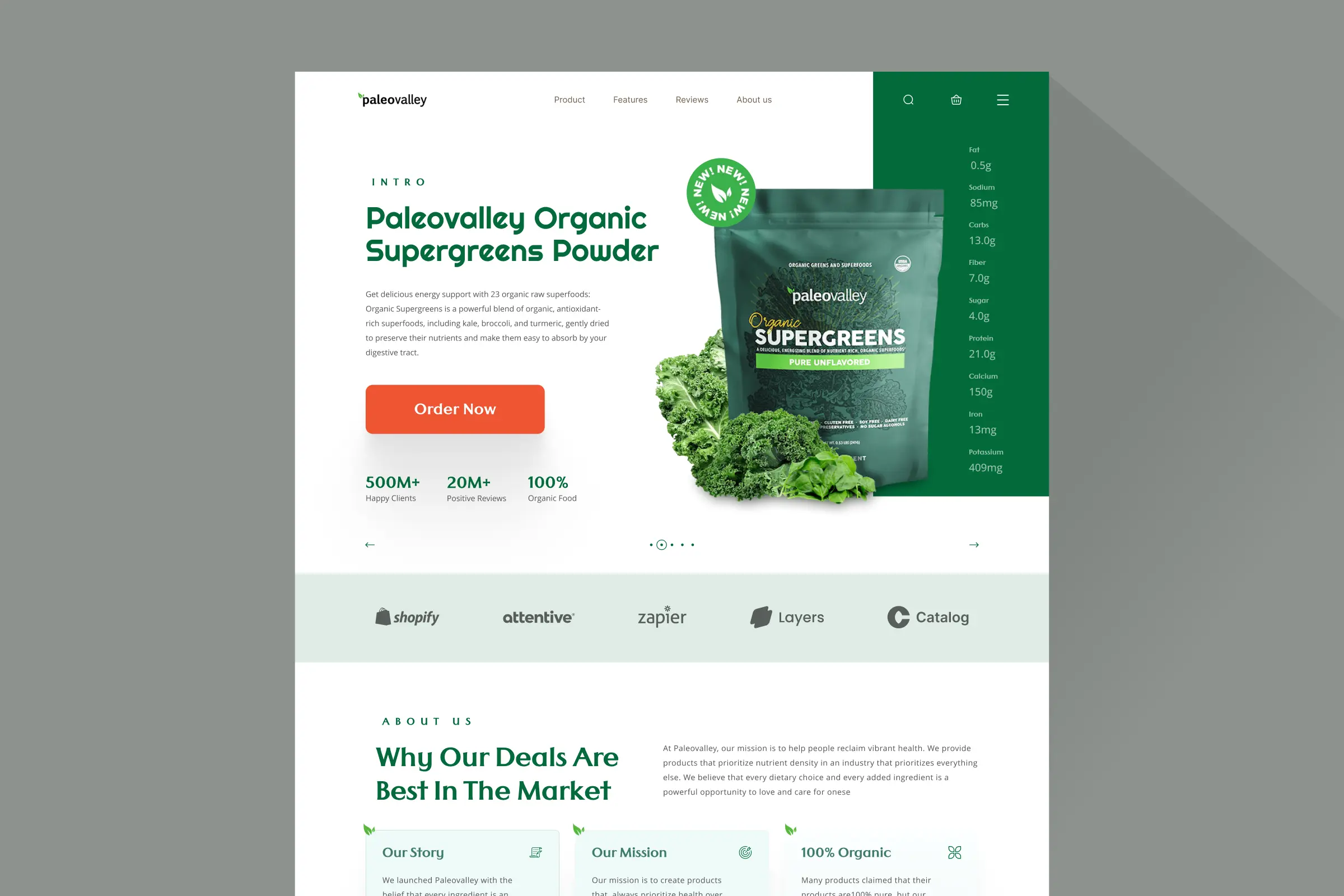
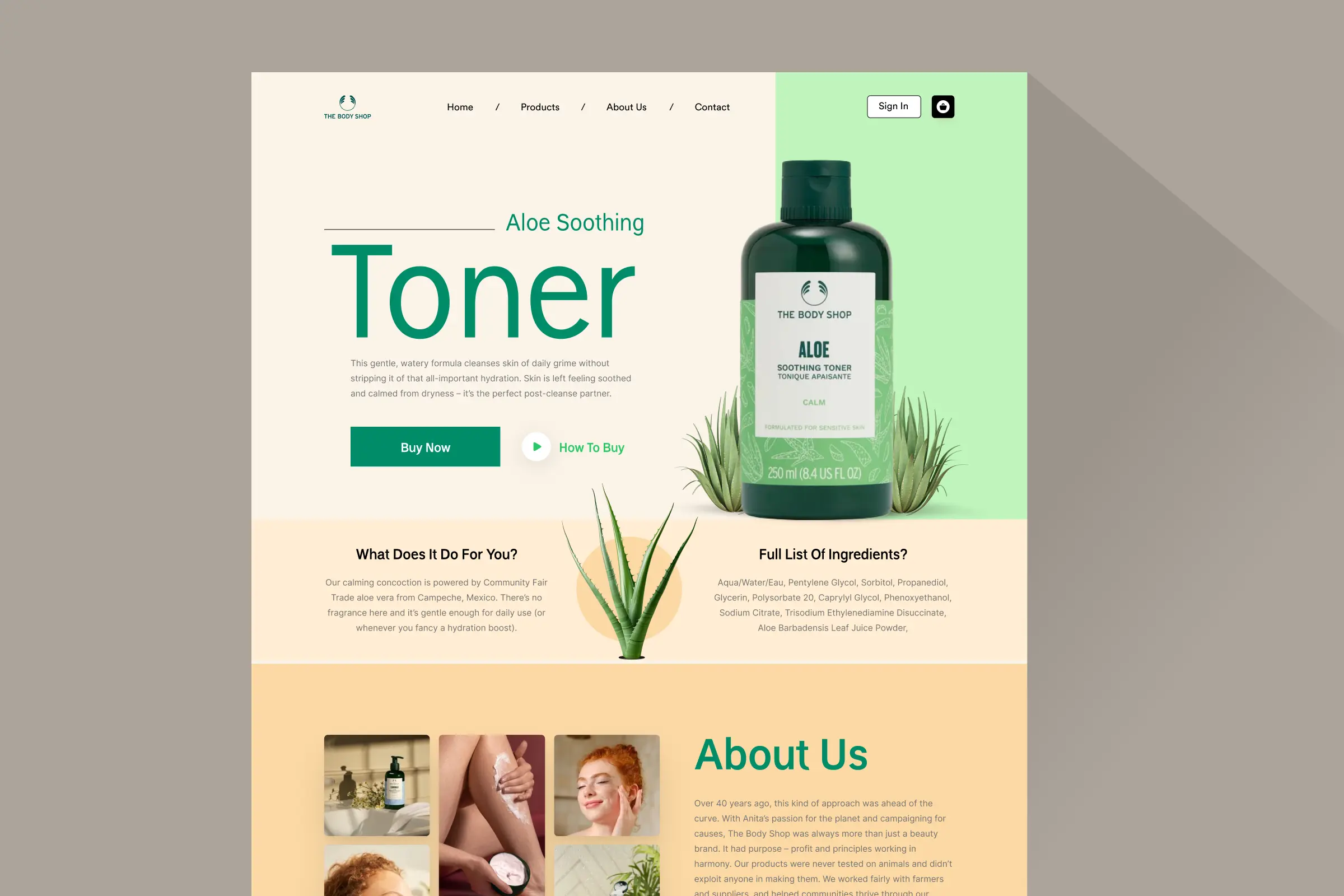
Storefronts we designed and built, across supplements, fragrance, health, wellness and skincare.
All 35 projectsFour engagements, measured before and after. What changed, why it changed, and by how much.
All case studiesDiagnosis, design and development from one studio — so the recommendation and the build never disagree.
All five services147 real Shopify stores torn down page by page, scored, and shown beside the version we would build. Free to watch.
Browse all teardownsSix conversion-first themes, each built for one industry’s buying journey. Zero required apps, $300, one licence.
Compare all sixThe website has useful products and some good trust-building sections, but it feels more like a product catalog than a clear survival gear brand with a guided buying journey.
Pressing play loads the video from YouTube — you can allow it for every teardown under cookie preferences.
This audit found that Already Survival has strong product potential, especially because the store serves survival, camping, and emergency preparedness buyers. However, the current website does not yet feel like a strong survival brand. It feels more like a website selling survival products.
The homepage has a good start with sections such as why choose Already Survival, about us, categories, and build your own basket. However, after those sections, the page becomes overloaded with products, repeated media sections, featured products, and mixed content without a clear funnel.
The collection page also acts more like a product catalog than a guided shopping experience. It does not help users choose the right tent, shelter, survival kit, or camping product based on their use case, setup time, family size, or emergency need.
The product page has many of the right conversion elements, including trust messaging, free shipping, FAQs, features, and strong product imagery. However, the presentation needs to be improved so the information becomes easier to scan, more trustworthy, and more persuasive.
The website has useful products and some good trust-building sections, but it feels more like a product catalog than a clear survival gear brand with a guided buying journey.
Rebuild the site around stronger brand positioning, clearer survival and camping funnels, improved category pages, trust-building product pages, and bundle-driven average order value growth.
Improved trust, clearer product discovery, stronger product page confidence, higher conversion rate, and increased average order value through bundles and frequently bought together products.
Average of the five scores below, as judged at the time of recording. Weak overall — the detail is in which dimension is dragging.
Every finding below was called out on the recording. Open one to read what was found and what we would change. Nothing is hidden from the page source.
The site feels like another store selling survival and camping products rather than a distinct, trustworthy survival brand.
Position Already Survival as a trusted preparedness and adventure brand, not just another survival gear website.
The hero section uses the most important homepage real estate but does not strongly build trust, explain the brand, or guide visitors into clear buying paths.
Guide users into primary paths such as shop camping gear and explore survival essentials.
Some hero copy is difficult to read because of the background and contrast.
Use a stronger message such as be ready for every adventure and every emergency to connect with the customer outcome.
The “as seen across the media” sections may hurt trust because of how large, repetitive, or unpolished they appear.
If the brand has real media coverage, show it in a cleaner, more credible format with smaller logos and better context.
After a promising start, the homepage begins showing too many products and featured items without a clear sequence or story.
Stop showing too many unrelated products on the homepage and instead organize products into clear sections and funnels.
Visitors are not guided through a structured path based on survival needs, camping gear, shelters, emergency kits, or outdoor goals.
For shelter and tent collections, allow visitors to browse by family tents, backpacking tents, survival kits, camping shelters, and similar needs.
The page jumps between categories, featured products, media mentions, more products, and contact sections without a clear conversion strategy.
Move contact content to a dedicated contact page so the homepage stays focused on shopping and product discovery.
The contact area interrupts the shopping journey and would work better as a dedicated contact page.
This one is addressed by the wider recommendations below rather than a single change.
The collection page mainly shows an image, title, short text, and product grid without enough guidance.
Start product pages with the product title, price, savings, key trust elements, short description, and clear add-to-cart button.
Users are not guided by product type, setup time, capacity, shelter type, use case, or camping scenario.
Use a decision section such as not sure what to pick to help users choose based on capacity, setup time, weather, vehicle space, and use case.
The product page begins by talking about Already Survival rather than immediately focusing on the product, its value, and purchase decision.
Keep the “why Already Survival” content, but move it lower on the product page where it supports the buying journey.
Some product details are presented as large text blocks, making them harder to scan.
Turn long technical text into cards, bullets, icons, and sections that are easier to scan.
Emojis and double icons make some sections feel AI-generated or less professional.
Use proper icons or clean text instead of emojis to make the page feel more professional.
The product page contains useful elements, but the hierarchy, layout, and visual presentation are not optimized for conversion.
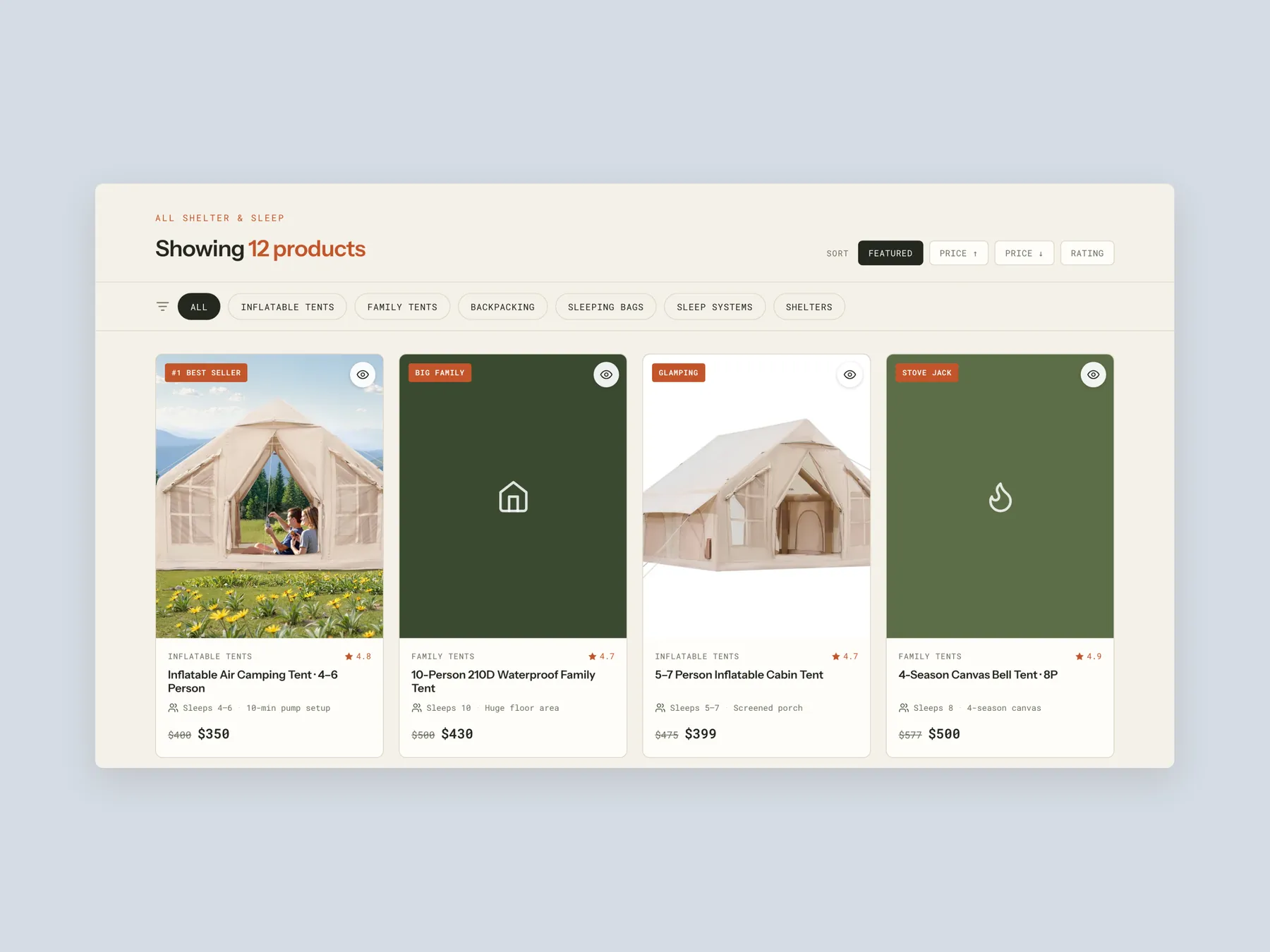
Add visual cues such as best seller, big family, glamping, light and fast, overland, or all-in-one to guide decisions.
Frequently bought together items, bundles, and related accessories are not used strongly enough to increase order value.
Recommend relevant accessories such as rechargeable camp lights, survival kits, pumps, or other add-ons.
Show credibility, shipping reassurance, return policy, secure checkout, customer trust, and product reliability early on the homepage.
Add a stronger category title, description, trust cues, ratings, waterproof claims, setup time, and collection-level value proposition.
Show key product details such as capacity, setup time, rating, brand, price, and quick benefits directly on product cards.
Show how to set up products in simple steps, especially for tents and shelters.
Help users decide whether the product is a good fit, and recommend alternatives if it is not.
Bundle tents, lights, survival tools, and accessories so a customer buying one item can easily upgrade to a larger order.
Drag each frame to move between what is live today and the version built on the recommendations above.
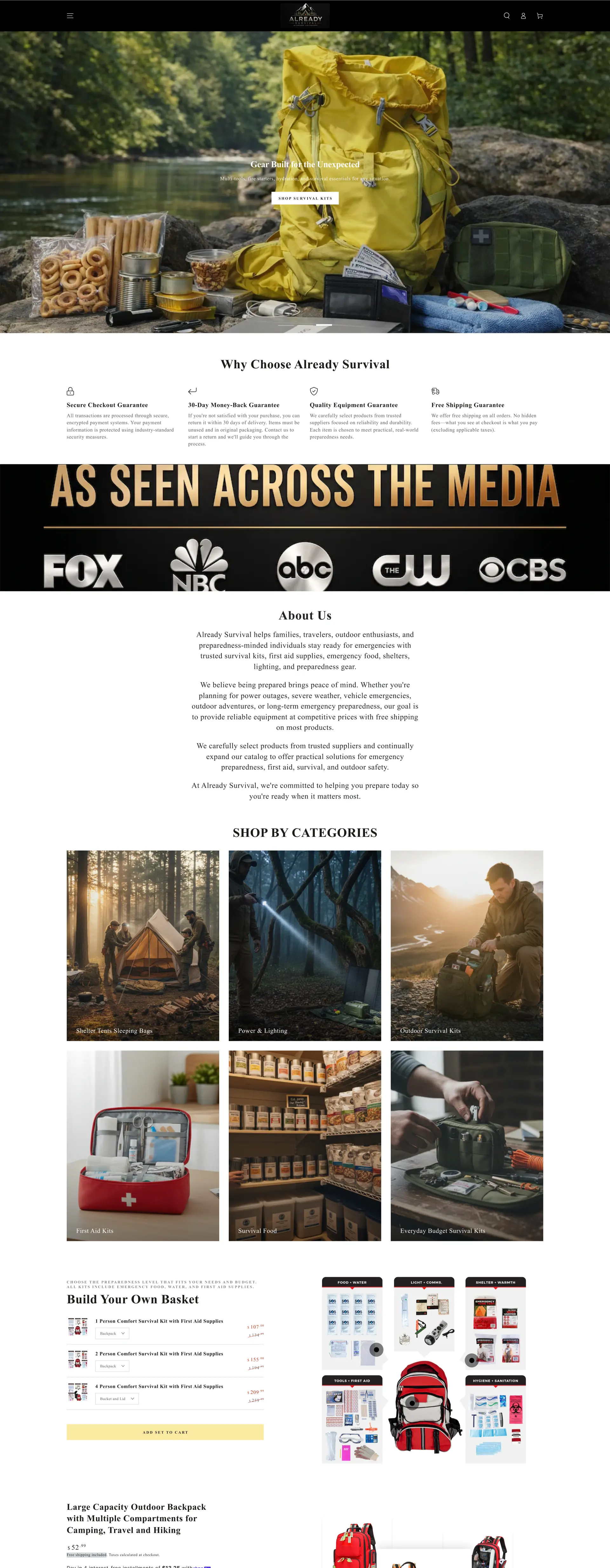
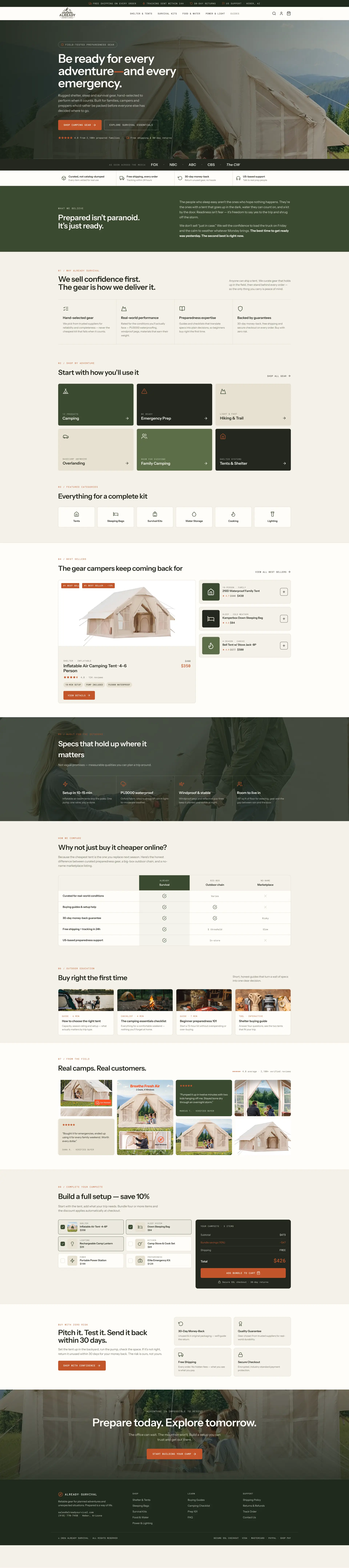 After
Before
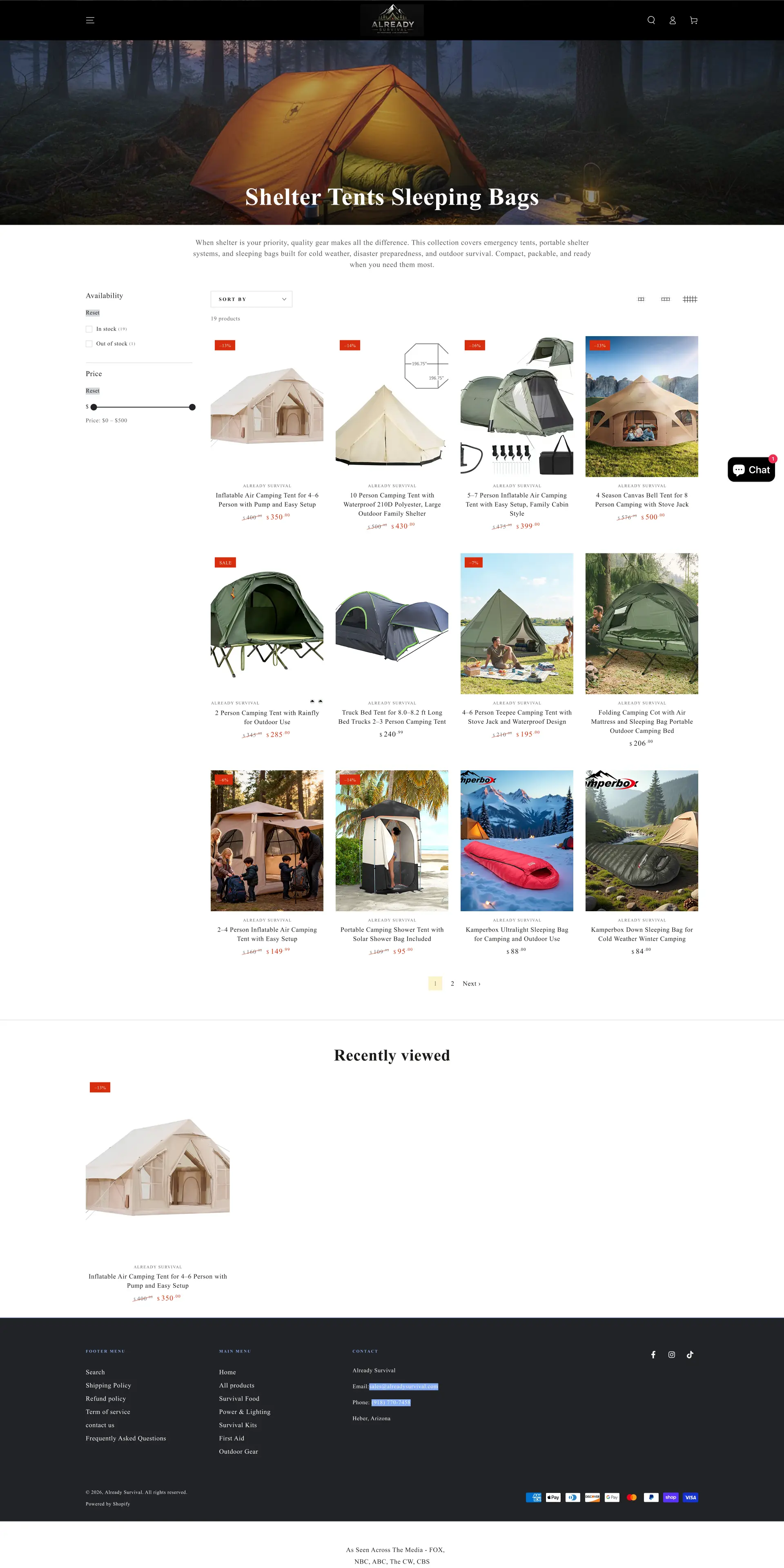
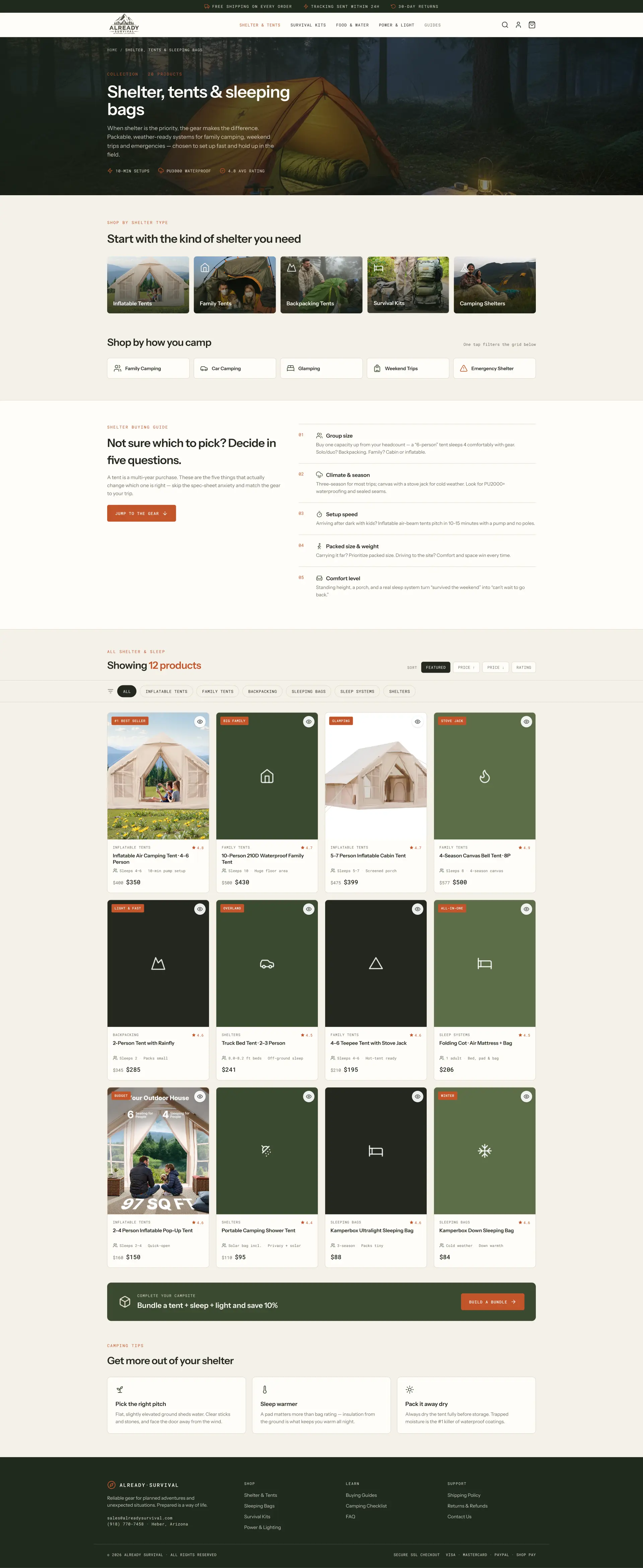 After
Before
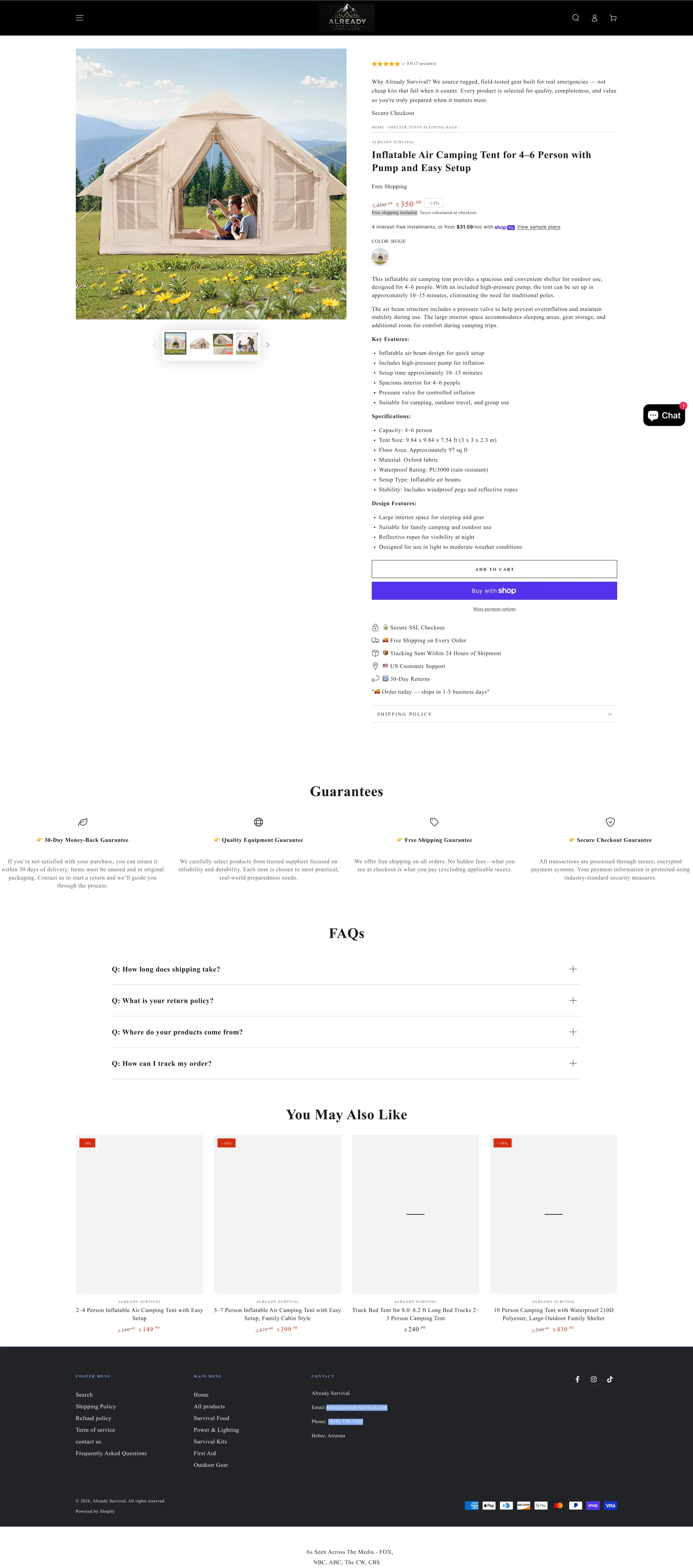
 After
Before
The site needs to feel more like a survival brand and less like a product catalog.
The hero section should build trust and guide users into clear shopping paths.
The homepage starts well but becomes cluttered with too many products.
Media proof should be presented more carefully to avoid hurting trust.
Collection pages should guide users by shelter type, use case, capacity, and setup time.
Product cards need more useful decision-making details.
The product page has good ingredients but needs better hierarchy and presentation.
Emojis should be removed from professional trust-building sections.
Frequently bought together products can increase average order value.
Better product education can help raise conversion rates.
A concept redesign created by Convertica Studio from this audit. It shows how the store could work, it is not the live store.
Homepage: the full page in two columns, from the first screen with its promise and shelter choices down to the footer.
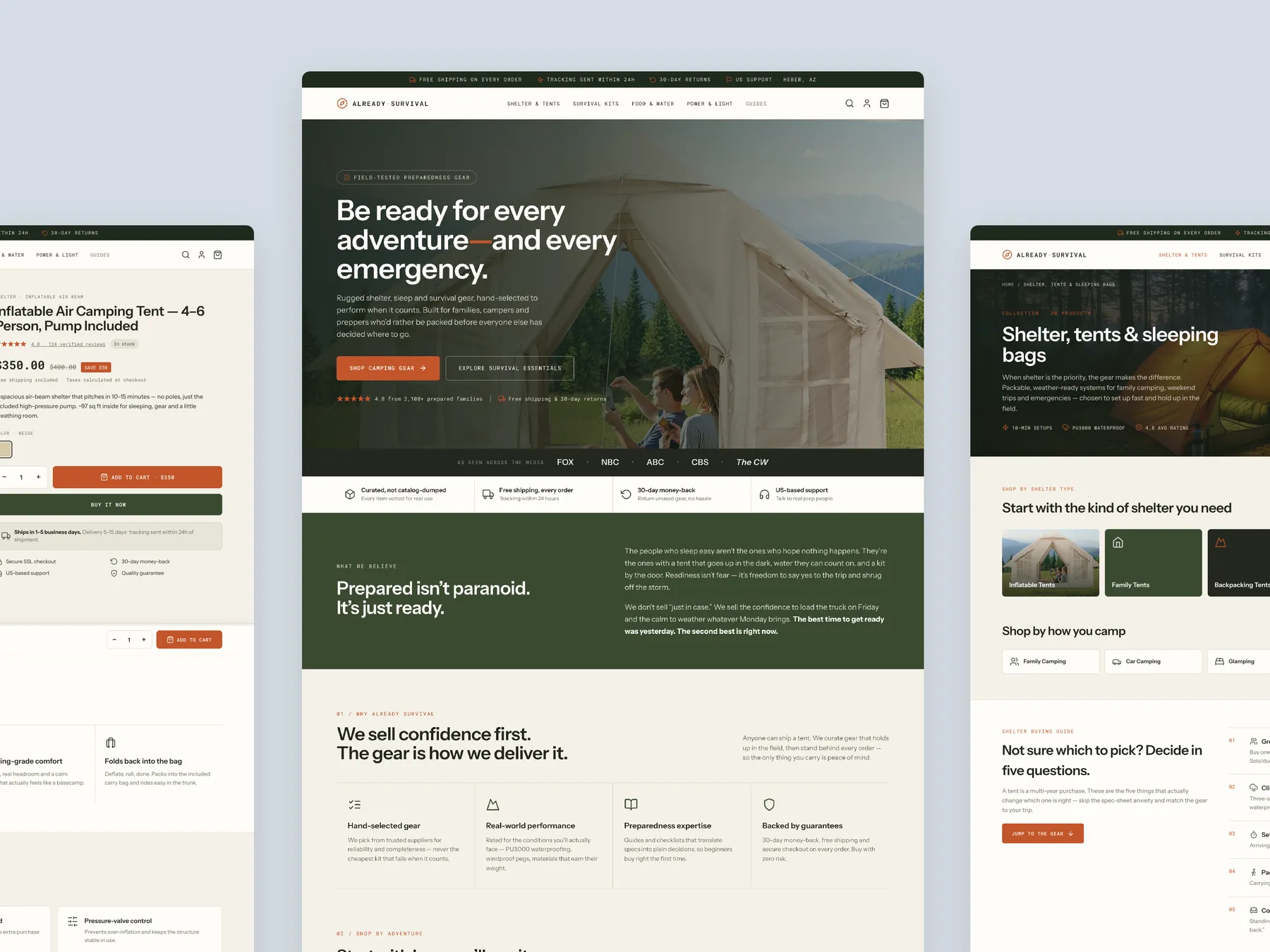
Three pages together: the homepage in the centre, the product page on the left and the collection page on the right.
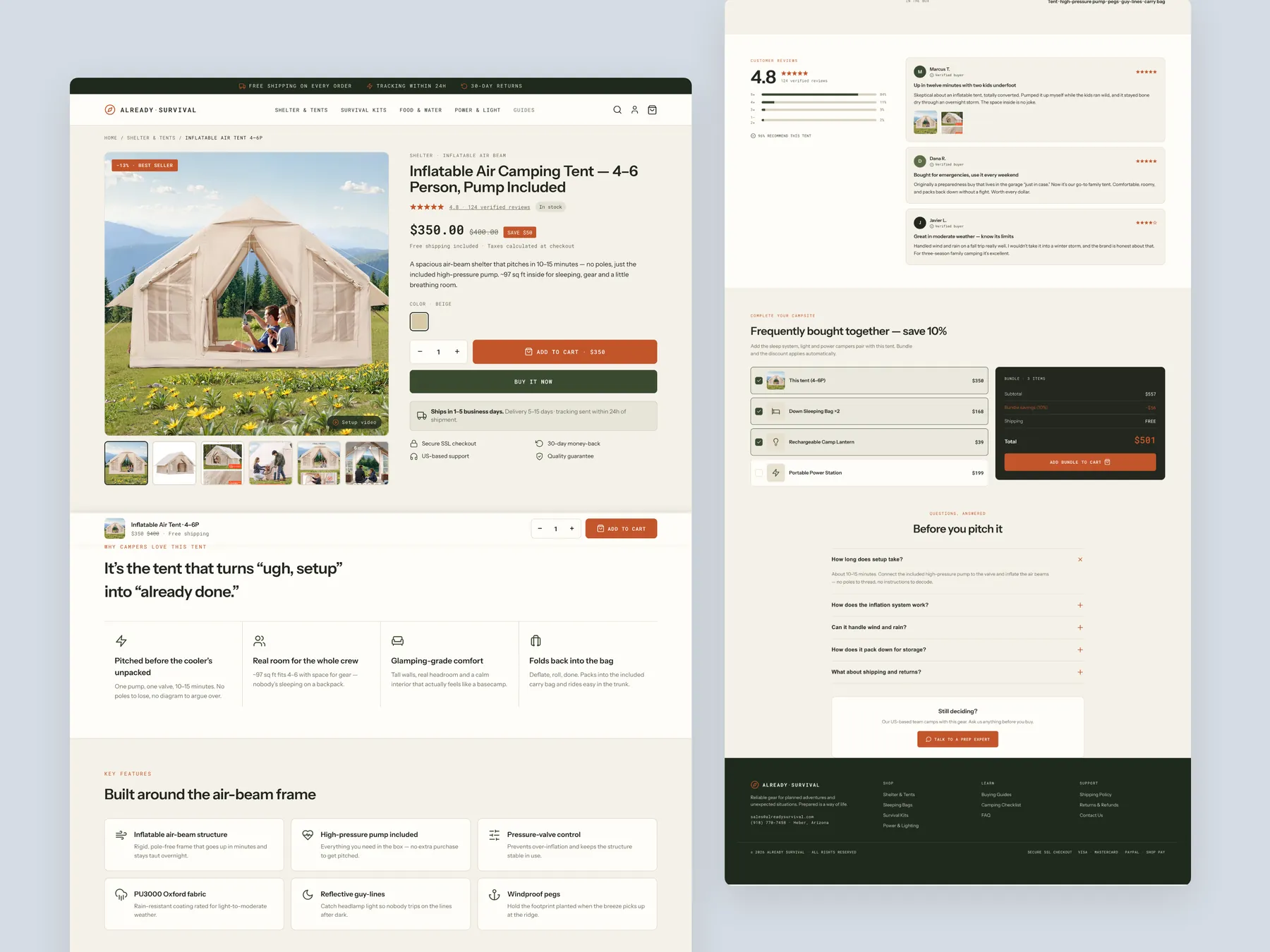
Product page: the full page in two columns, with the buy box whole in the left column and the page running down to the footer on the right.
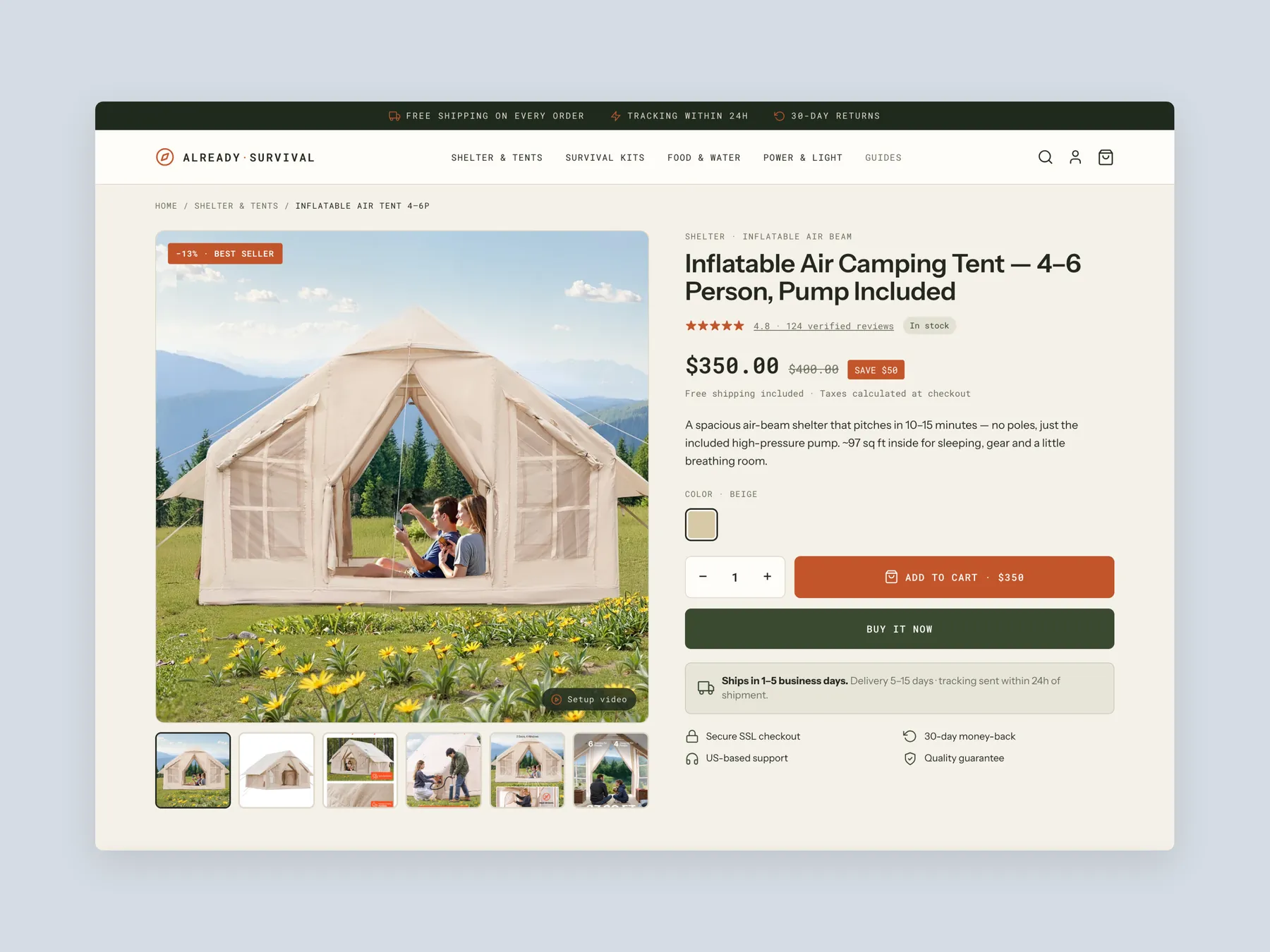
Product first screen: the header and the buy box, with size, price and the button together above the fold.
Collection page: the heading, sort options, category filters and the first row of tents with prices and ratings.
12 answers drawn from the recording and the written report — the questions store owners in survival gear & camping equipment ask after watching this one.
Ask about your own store →The website has useful products and some good trust-building sections, but it feels more like a product catalog than a clear survival gear brand with a guided buying journey. This audit found that this store has strong product potential, especially because the store serves survival, camping, and emergency preparedness buyers. However, the current website does not yet feel like a strong survival brand.
Brand and positioning was the weakest of the five dimensions at 3/10, against 6/10 for the product page. Weak Brand Association: The site feels like another store selling survival and camping products rather than a distinct, trustworthy survival brand.
The hero section uses the most important homepage real estate but does not strongly build trust, explain the brand, or guide visitors into clear buying paths. The fix: Create Two Clear Homepage Funnels — Guide users into primary paths such as shop camping gear and explore survival essentials.
Some hero copy is difficult to read because of the background and contrast. The fix: Improve Hero Messaging — Use a stronger message such as be ready for every adventure and every emergency to connect with the customer outcome.
The “as seen across the media” sections may hurt trust because of how large, repetitive, or unpolished they appear. The fix: Present Media Mentions More Professionally — If the brand has real media coverage, show it in a cleaner, more credible format with smaller logos and better context.
After a promising start, the homepage begins showing too many products and featured items without a clear sequence or story. The fix: Reduce Product Dumping — Stop showing too many unrelated products on the homepage and instead organize products into clear sections and funnels.
Visitors are not guided through a structured path based on survival needs, camping gear, shelters, emergency kits, or outdoor goals. The fix: Add Browse By Shelter Type — For shelter and tent collections, allow visitors to browse by family tents, backpacking tents, survival kits, camping shelters, and similar needs.
Start with Build A Stronger Survival Brand — Position this store as a trusted preparedness and adventure brand, not just another survival gear website.
Create Bundles To Increase AOV. Bundle tents, lights, survival tools, and accessories so a customer buying one item can easily upgrade to a larger order.
Structural. The average is 4.2/10 and the weakest dimension, brand and positioning, sits at 3/10 — the recommendations amount to rebuilding how the store presents itself, not tuning what is there.
Frequently bought together products can increase average order value. Better product education can help raise conversion rates.
A free 27:34 CRO teardown recorded by Convertica Studio for a survival gear & camping equipment store, walking the live site page by page. It produced 15 issues and 20 written fixes, plus scores across brand, UX, trust, product page and conversion. Any Shopify store can request the same review.
Tell us about your store and we'll send a personalized 5-minute video showing exactly where you're losing buyers — and how to win them back.
Takes about 40 seconds. No call required.