LoveStork CRO audit
The website has good branding and beautiful book presentation, but it sells the books as products instead of selling the emotional outcome of parents spending meaningful time with their children.
Watch the 32:01 teardown.
Pressing play loads the video from YouTube — you can allow it for every teardown under cookie preferences.
The short version.
This audit found that the website already has several strong elements, including recognizable branding and beautiful book presentation. The products look visually appealing and the overall store has a polished foundation.
The biggest issue is that the website is selling books instead of selling the emotional outcome behind the books. Since the products are for children but the website users are parents, the messaging should focus on parent-child connection, shared outdoor memories, curiosity, and time spent together.
The audit also identifies confusion in the product journey. Parents are not clearly guided on where to start, which book is right for their child, or how the books fit together as a path or progression. This weakens both conversion and repeat purchase potential.
The recommendation is to reposition the website around family exploration, outdoor adventure, curiosity trails, and emotional storytelling. Product pages should reduce confusion, explain formats clearly, add sticky add-to-cart functionality, and present books as gateways into shared experiences rather than standalone products.
The website has good branding and beautiful book presentation, but it sells the books as products instead of selling the emotional outcome of parents spending meaningful time with their children.
Reposition the books as tools for family connection, outdoor discovery, curiosity, and shared memories while creating a clearer path for parents to know where to start.
Improved emotional engagement, stronger parent appeal, clearer product understanding, higher conversion potential, and more repeat purchases through trail-based book paths.
repositions around family connection, with a clear place for parents to start.
Scored across five dimensions.
Average of the five scores below, as judged at the time of recording. Weak overall — the detail is in which dimension is dragging.
12 findings, each with the fix beside it.
Every finding below was called out on the recording. Open one to read what was found and what we would change. Nothing is hidden from the page source.
01 Website Speaks Too Much To Children Instead Of Parents Fix included
The products are for children, but the actual website buyers are parents. Some playful design choices, especially the comic-style font, reduce readability and do not properly address the buying audience.
Address Parents Directly
Use clearer, more readable typography and messaging that speaks to parents as the buyers, while still keeping the brand playful and child-friendly.
02 Emotional Selling Point Is Missing Fix included
The main value of the books should be the shared experience between parents and children, but this emotional story is not clearly communicated across the website.
Lead With Parent-Child Connection
Position the books around shared outdoor time, family memories, curiosity, and bonding between parents and children.
03 Products Are Sold As Books Instead Of Outcomes Fix included
The site focuses on the books themselves rather than the outcome: parents spending meaningful time with their children while exploring nature.
Sell The Outcome, Not The Book
Frame the books as tools that help families explore nature together rather than simply as illustrated children’s books.
04 No Clear Starting Path Fix included
Visitors are shown multiple books but are not guided on where to start, which book is right for them, or what order to explore the collection in.
Introduce Clear Exploration Paths
Organize books into trails or levels so parents know where to start and what to buy next.
05 Homepage Structure Lacks Emotional Flow Fix included
The homepage moves from hero to products, artist content, shirts, and bundles without first building enough emotional connection or curiosity.
Move Artist Content Lower
Keep the artist story, but place it after the emotional value, exploration path, curiosity-building content, and product introduction.
06 Artist Promotion Appears Too Early Fix included
The artist section is valuable, but it appears too early in the homepage journey before the emotional value and product path are fully established.
Use Bundles After Value Is Established
Introduce bundles after the product value has been explained, positioning them as full trails or complete adventure sets.
07 Product Page Title Is Confusing Fix included
The product title reads like a question and may confuse users about whether it is the book title or a prompt.
Make Product Pages More Story-Led
Open product pages with a mystery, challenge, or discovery concept before presenting the book itself.
08 Product Format Messaging Is Unclear Fix included
The offer around the ebook and hardcover purchase is confusing. Users may not immediately understand that the ebook is free with the hardcover.
Clarify Product Formats
Clearly separate ebook and hardcover options and explain that the hardcover includes the ebook for free.
09 Product Page Does Not Explain Value Above The Fold Fix included
The product page does not clearly explain why parents should buy the book or what outcome they will receive.
Show What Is Inside The Book
Preview inside pages, illustrations, activities, and facts so parents understand what they are buying.
10 Bundle Offer Appears Before Enough Value Is Built Observation
The page asks users to bundle and save before fully explaining why the product is valuable.
This one is addressed by the wider recommendations below rather than a single change.
11 No Sticky Add To Cart Fix included
After users scroll down the product page, they cannot easily add the product to cart without scrolling back up.
Add Sticky Add To Cart
Keep a sticky add-to-cart button visible as users scroll so they can purchase whenever they are ready.
12 Conversion Design Is Weaker Than Visual Design Observation
The site looks nice, but it is not structured strongly enough around conversion, emotional persuasion, and buying clarity.
This one is addressed by the wider recommendations below rather than a single change.
5 further recommendations that cut across the whole store.
Create An Emotional Hero Message
Use messaging such as outdoor afternoons, childhood memories, and exploring together to create immediate emotional connection.
Build A Repeat Purchase Funnel
Use trail-based progression such as backyard explorers, tiny creatures, winged things, park giants, and wild waters to encourage customers to return for the next adventure.
Use Curiosity-Based Homepage Sections
Add interactive or curiosity-driven sections that answer children’s nature questions and show parents how the books create real-world learning moments.
Promote The Next Trail
After each product, show the next logical book or trail to plant the seed for the next purchase.
Align Paid Ads With Emotional Positioning
Use parent-child outdoor moments in ads rather than only showing book covers. The book should be positioned as the tool for creating shared memories.
What the fixed version looks like.
Drag each frame to move between what is live today and the version built on the recommendations above.
Home page
Drag to compare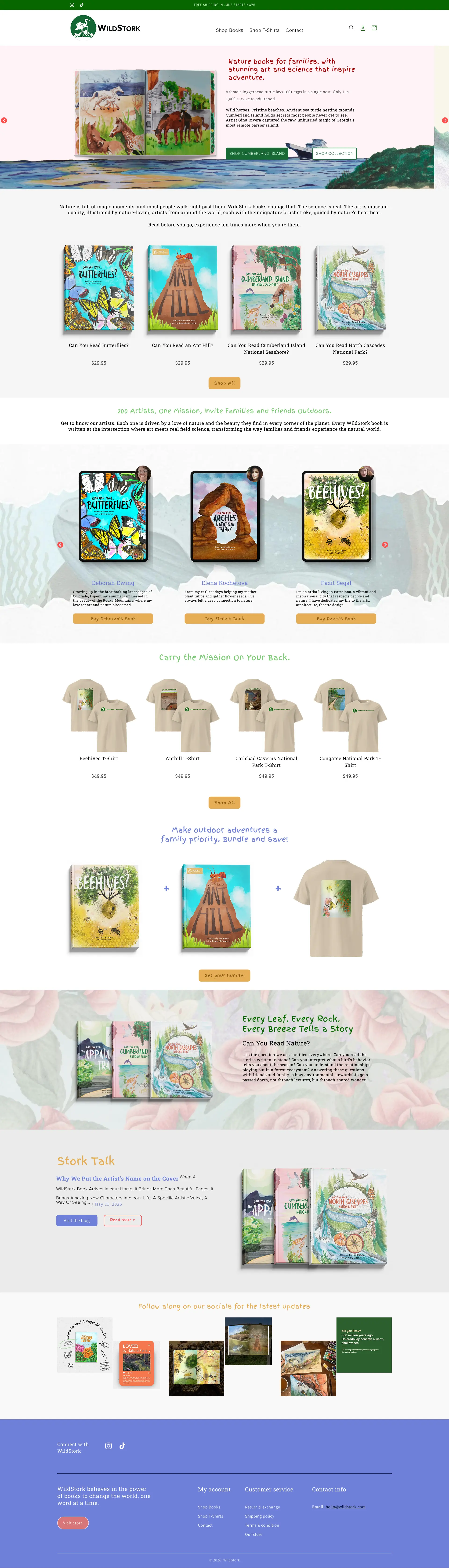
 After
Before
After
Before
Product page
Drag to compare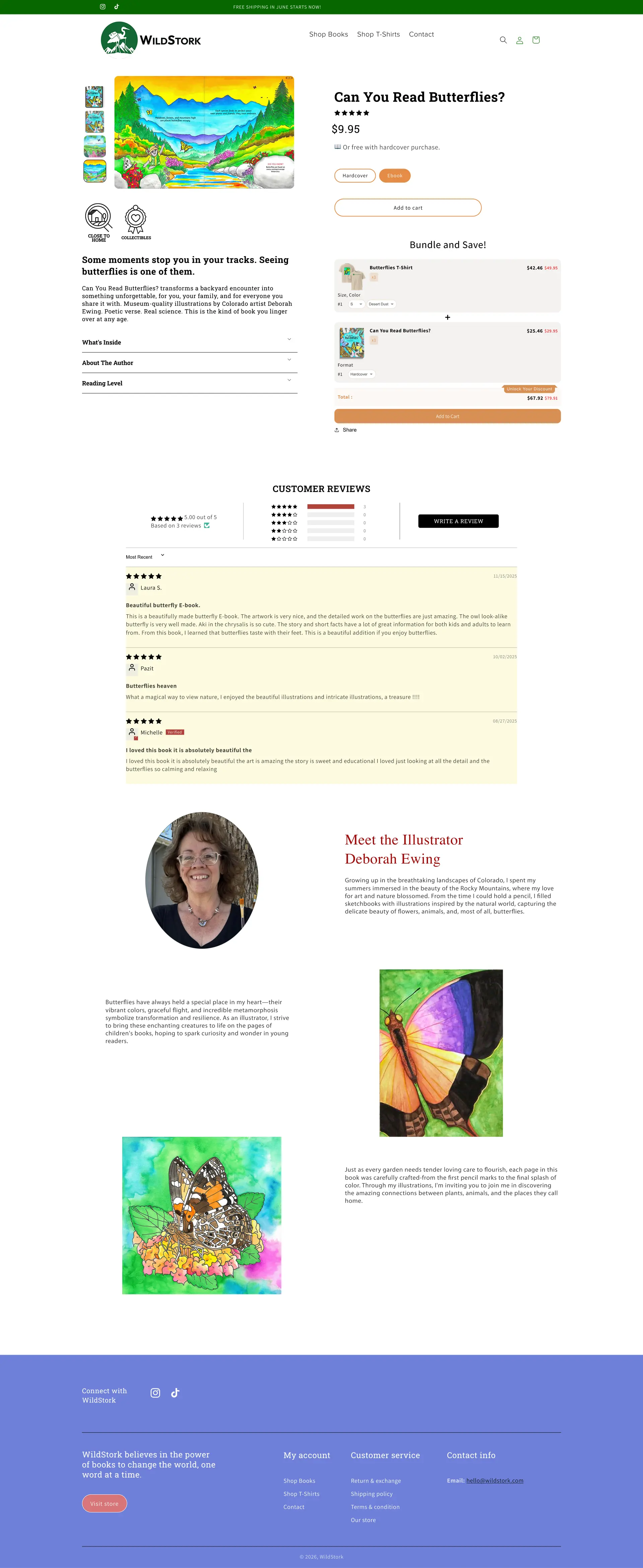
 After
Before
After
Before
What to take from this teardown.
The website has good branding and strong book presentation.
The buyer is the parent, not the child, so the site should speak to parents more clearly.
The main selling point should be parent-child connection and shared outdoor memories.
The website currently sells books instead of emotional outcomes.
Parents need a clearer path showing where to start.
Trail-based book journeys can increase repeat purchases.
The product page has confusing format messaging around ebook and hardcover options.
Bundles should appear after value is explained, not before.
Sticky add-to-cart can reduce friction on longer product pages.
The brand should sell curiosity, adventure, and family exploration, not just books.
What people ask about this teardown.
11 answers drawn from the recording and the written report — the questions store owners in children's books & education ask after watching this one.
Ask about your own store →
Who is this website actually selling to?
Parents, not children — and that is the core finding. The books are for kids, but the buyer reading the page is an adult, and some playful choices, particularly the comic-style font, reduce readability and speak past the person holding the card. Brand scored 7/10; the conversion structure scored 4/10.
Why sell the outcome instead of the book?
Because the thing a parent is buying is an outdoor afternoon with their child, not forty pages of paper. Positioning the books as the tool for shared discovery, curiosity and memories gives the purchase emotional weight that a description of format and page count cannot.
What is missing from the product journey?
A starting point. Visitors are shown several books with no guidance on which suits their child's age or interest, or in what order to read them. Parents who cannot tell where to begin often begin nowhere.
What is a trail-based book path and why does it help repeat purchases?
It sequences the collection into themed progressions — backyard explorers, tiny creatures, winged things, park giants, wild waters — so each book implies the next. It answers 'where do I start' on the first visit and 'what now' after the first read, which is what turns one sale into a series.
Why is the product title confusing?
It reads like a question, so visitors cannot tell whether it is the book's title or a prompt to them. On a product page the title carries the identity of the thing being bought and should not be ambiguous.
The ebook is free with the hardcover. What is the problem?
The offer is not legible. Visitors may not realise the ebook comes free with the hardcover purchase, so a genuine value-add reads as two competing options and creates hesitation instead of removing it. State it in one plain line next to the format choice.
When should a bundle offer appear?
After the value is established. The page currently asks visitors to bundle and save before it has explained why one book is worth buying, which is a discount conversation before a desire conversation. Move bundles below the value and proof sections.
Why move the artist content lower on the homepage?
The illustrator story is a real asset, but it currently arrives before the emotional value and product path are set up, interrupting the journey from curiosity to purchase. It works better as credibility after the parent knows what the books do for their family.
What should the product page show above the fold?
Why a parent should buy this book and what they get out of it, plus what is inside — sample spreads, the kind of questions it answers, what a child does with it outdoors. A sticky add-to-cart then keeps the purchase available while they read.
Should paid ads change too?
Yes — the audit recommends aligning ads with the same positioning. Creative showing parent-and-child outdoor moments, rather than book covers, sells the outcome the site should be selling, which also makes the landing page consistent with the promise that brought the visitor in.
How long is this audit and what was covered?
32:01, covering the homepage and product page with twelve issues and fifteen fixes across audience targeting, emotional positioning, exploration paths, format clarity, homepage flow and repeat-purchase design.
See what's quietly costing you sales.
Tell us about your store and we'll send a personalized 5-minute video showing exactly where you're losing buyers — and how to win them back.
Takes about 40 seconds. No call required.
-
5-minute video teardownA personalized walkthrough of your store, recorded by Eva.
-
Homepage & PDP reviewWhere attention leaks and buyers hesitate.
-
Mobile UX audit70% of your traffic — judged on its own terms.
-
Trust & credibility checkThe signals that make first-time buyers convert.
-
Prioritized CRO roadmapRanked by impact vs. effort, ready to ship.