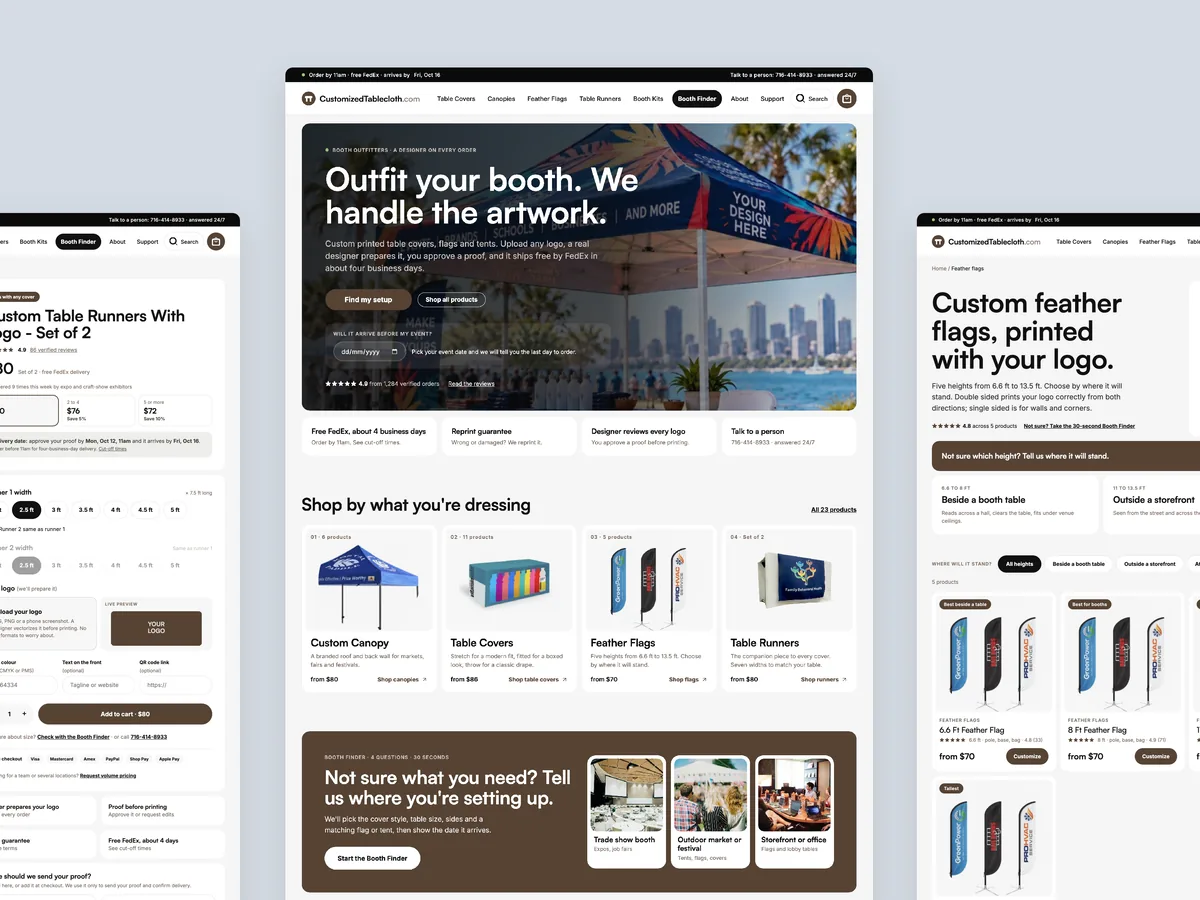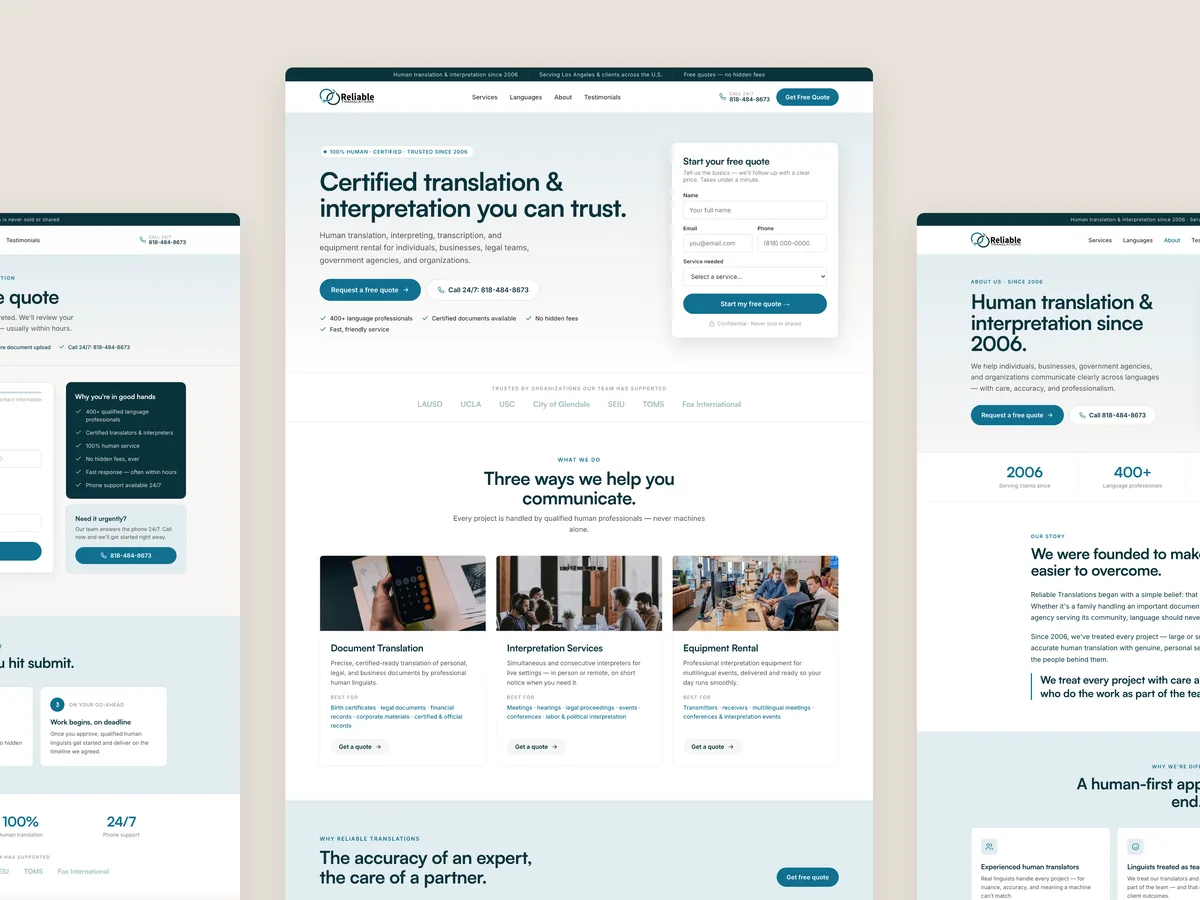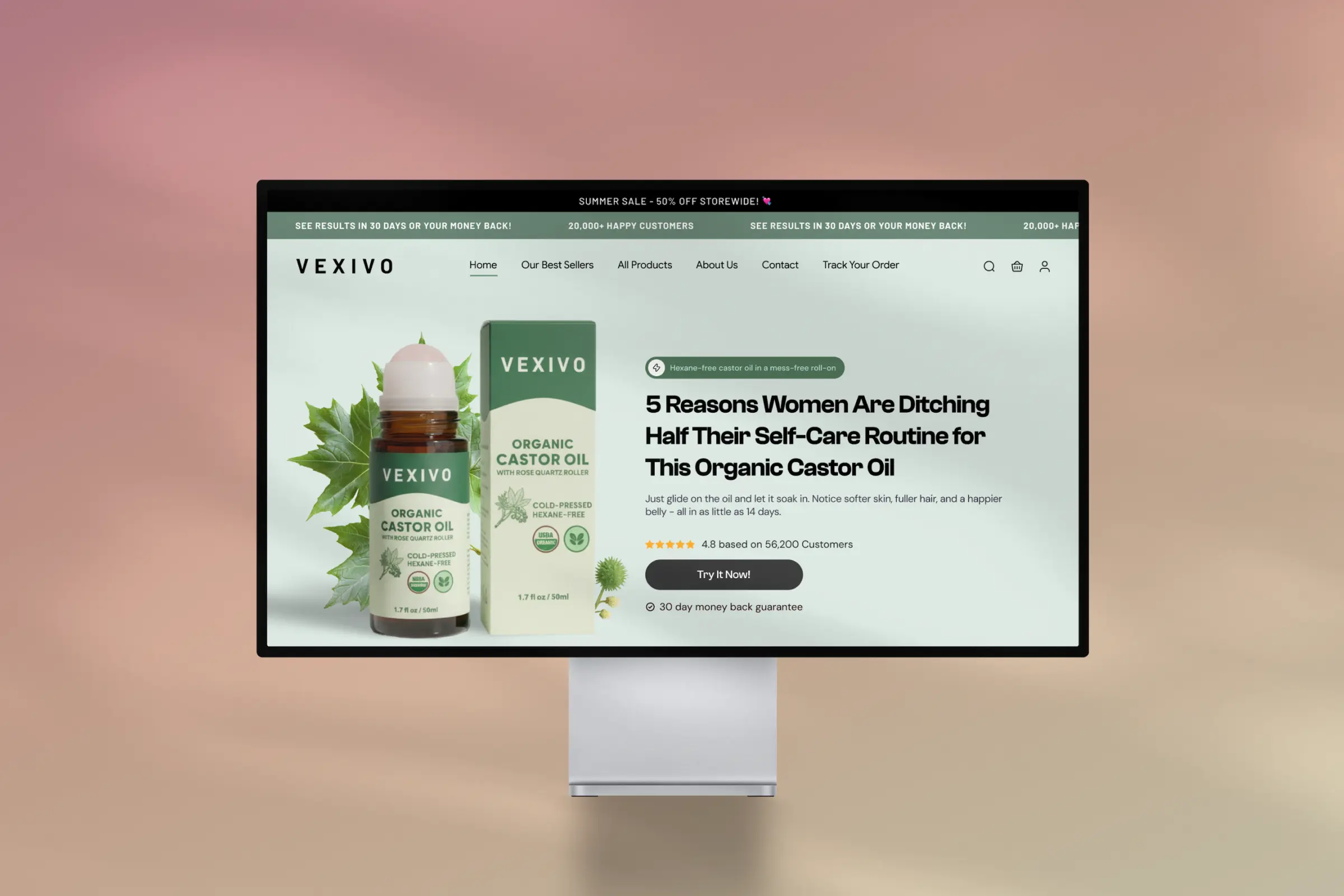
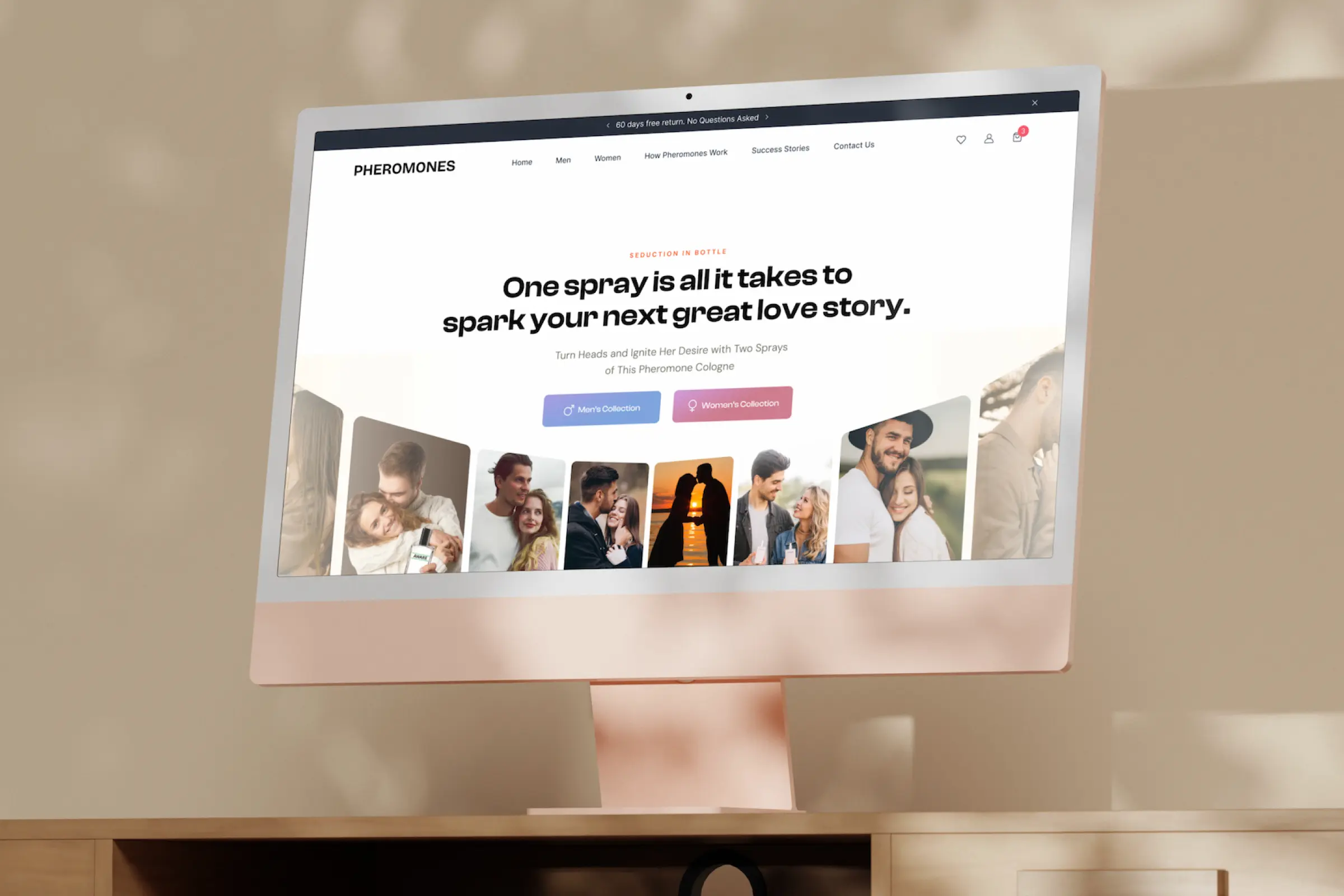
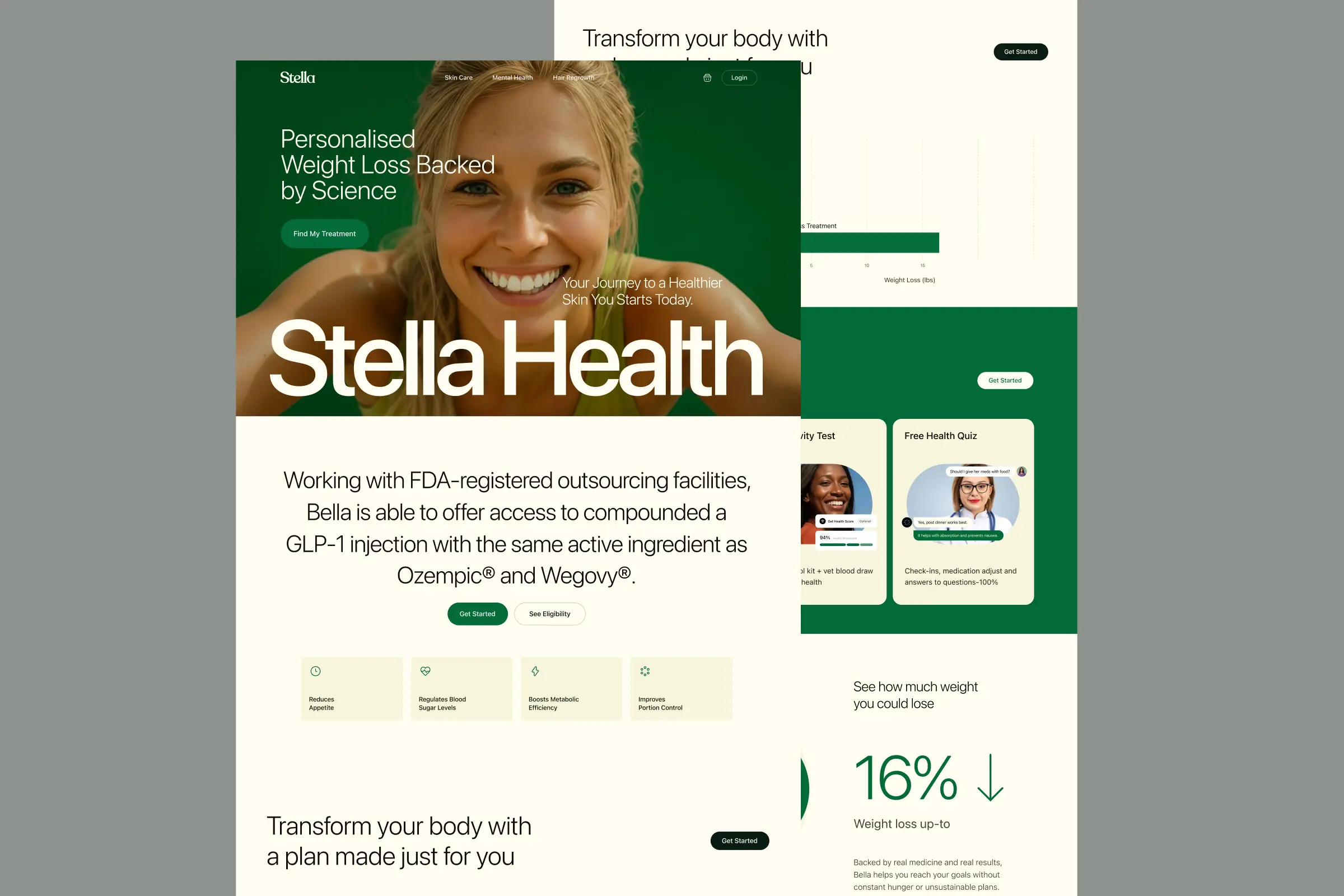
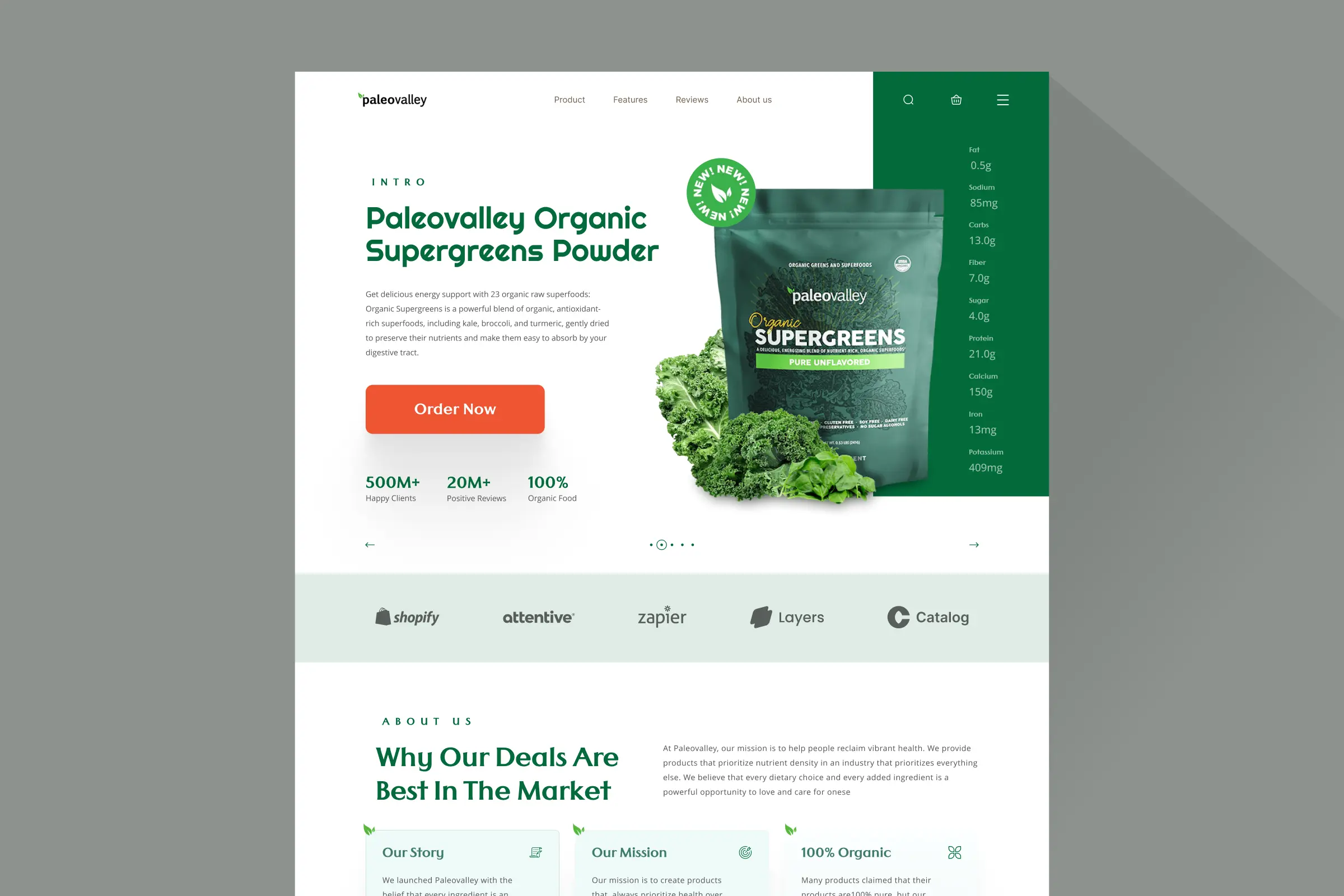
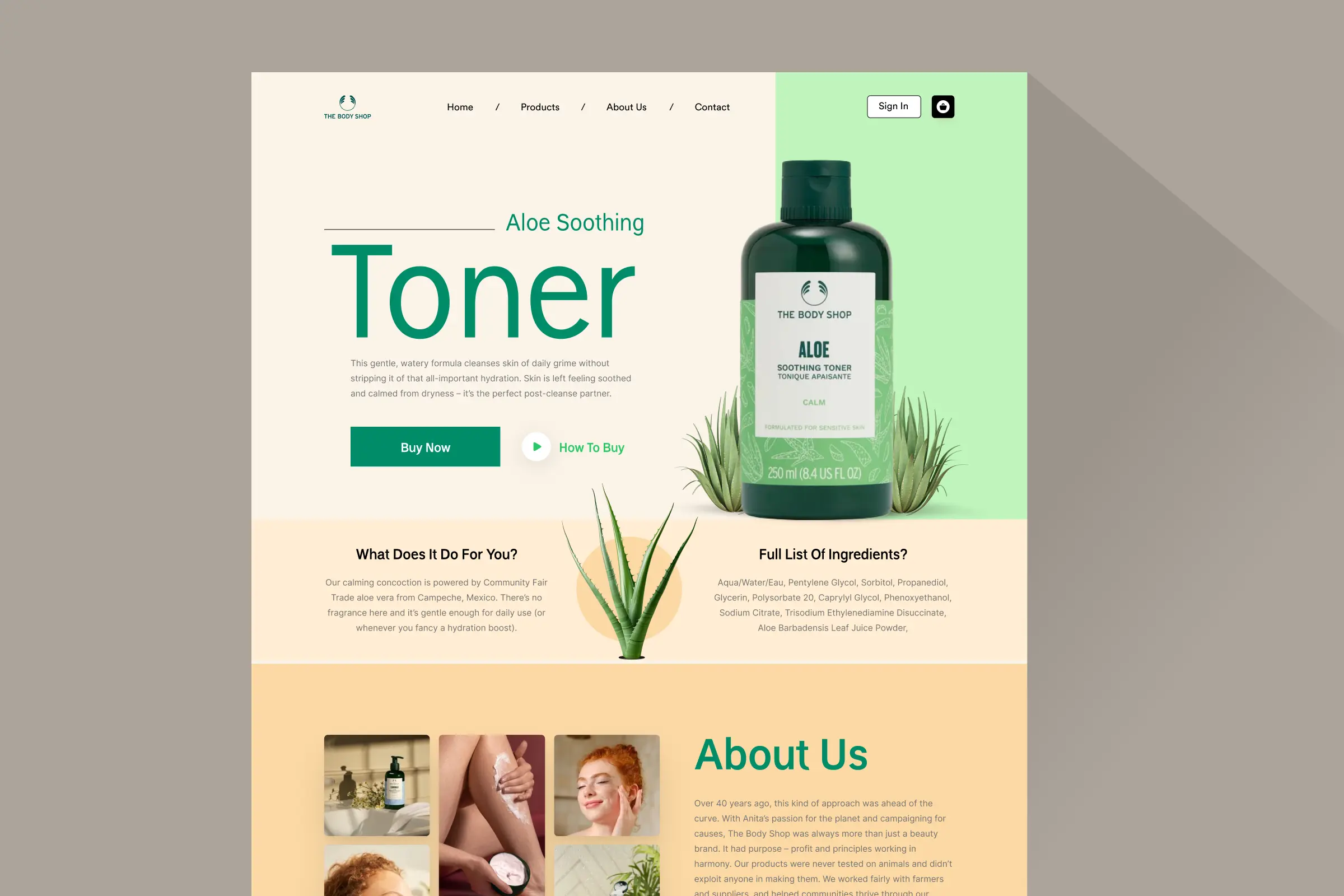
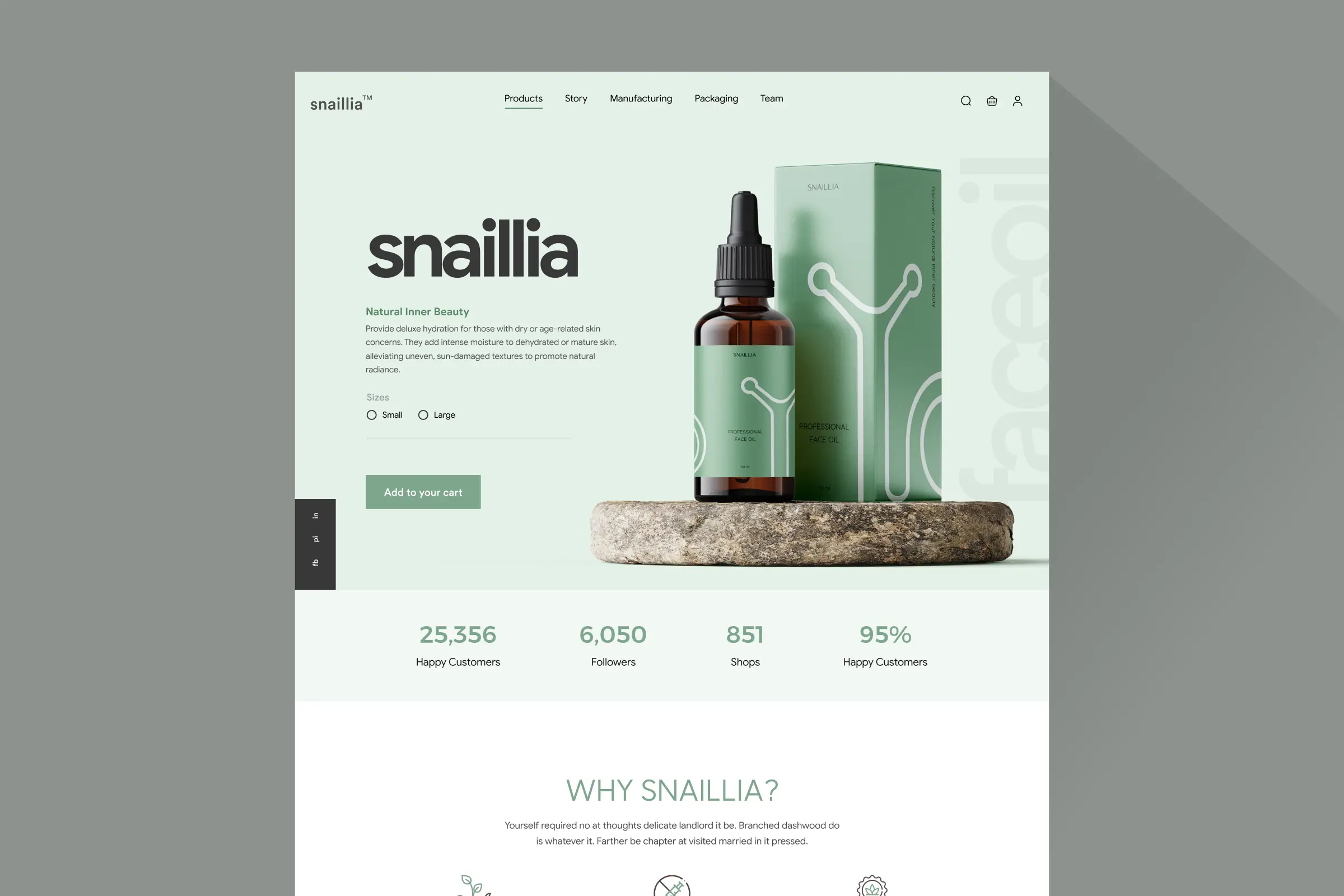
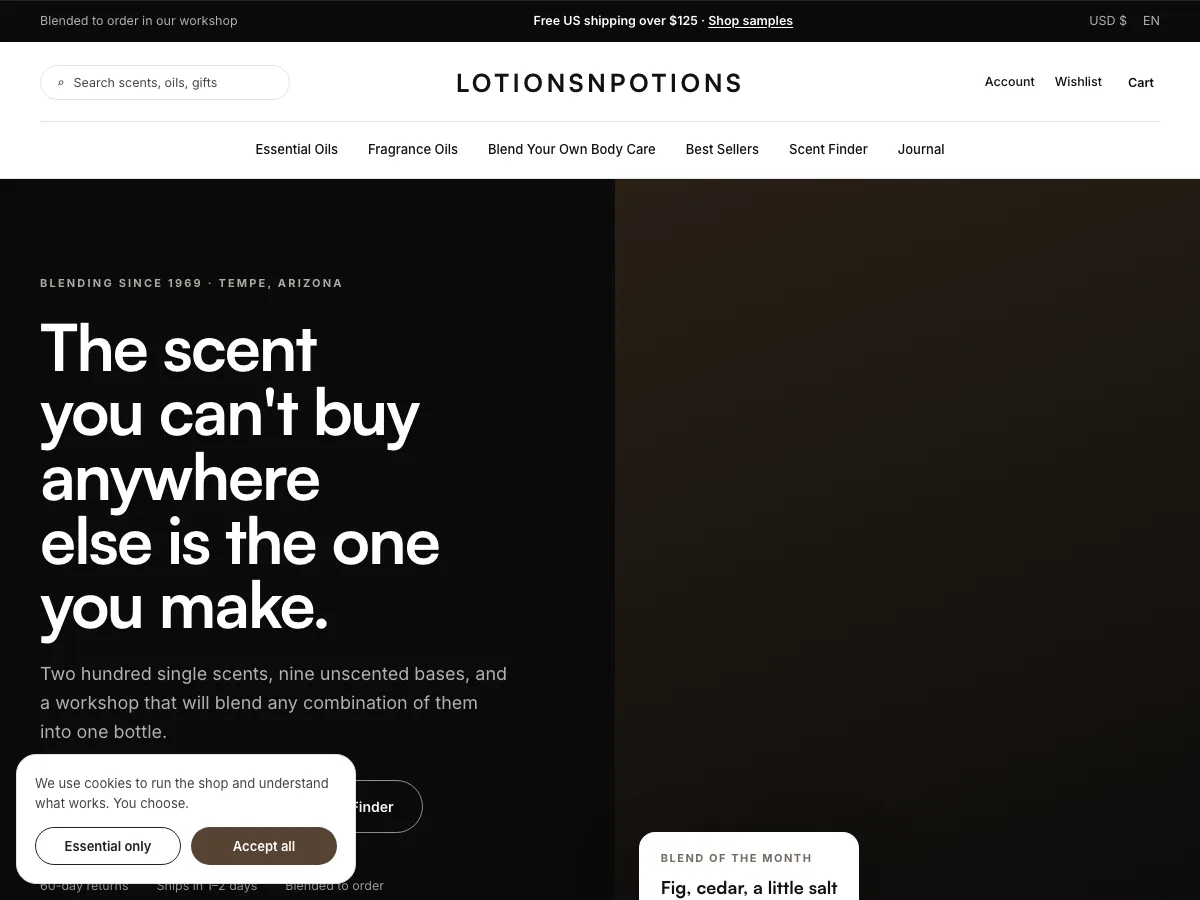
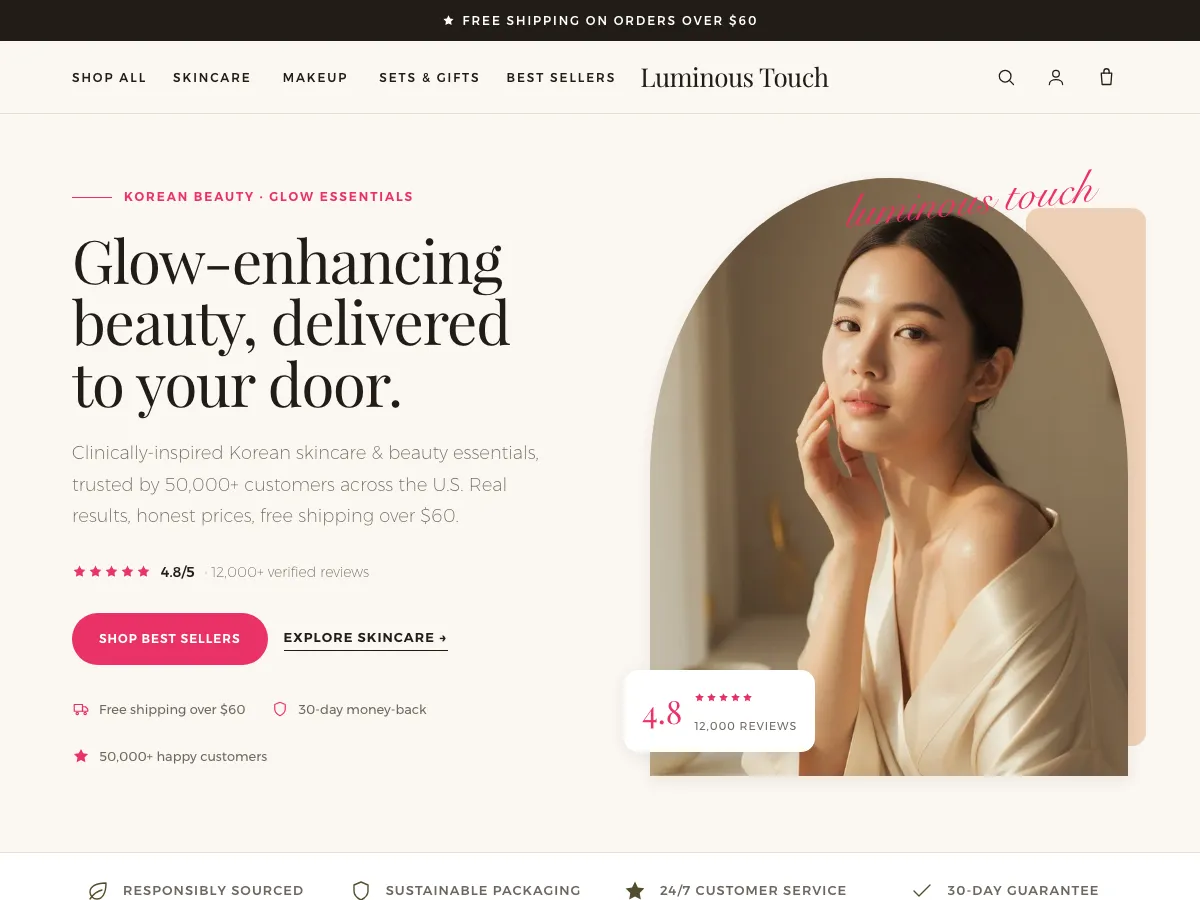
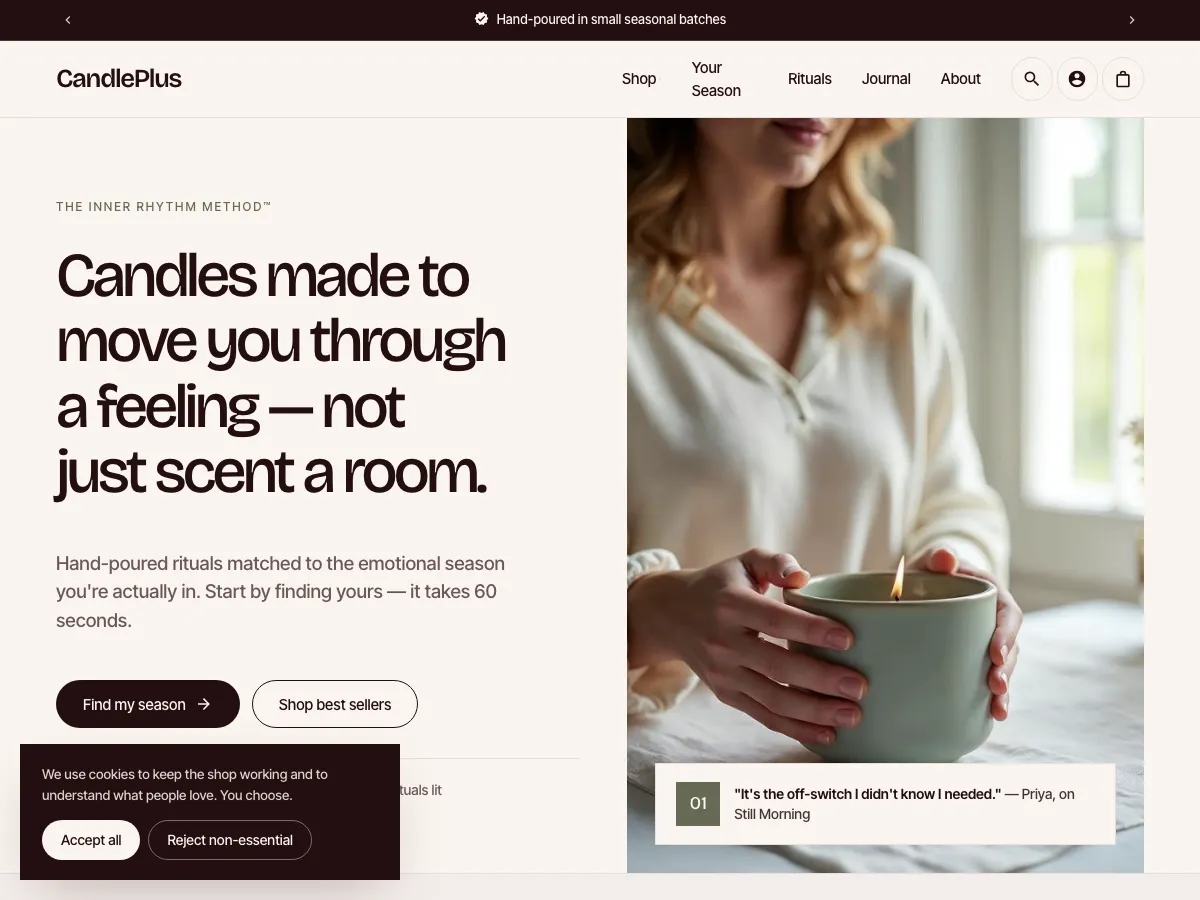
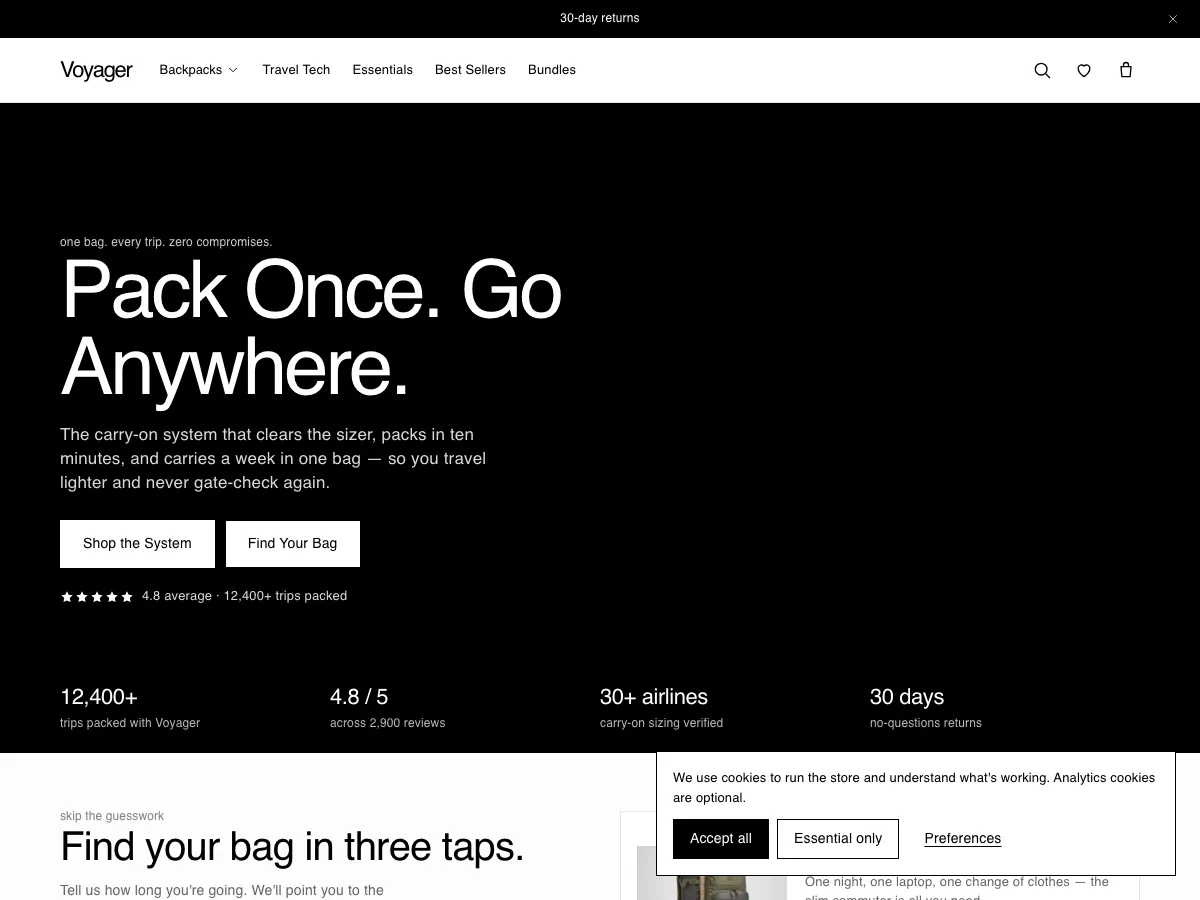
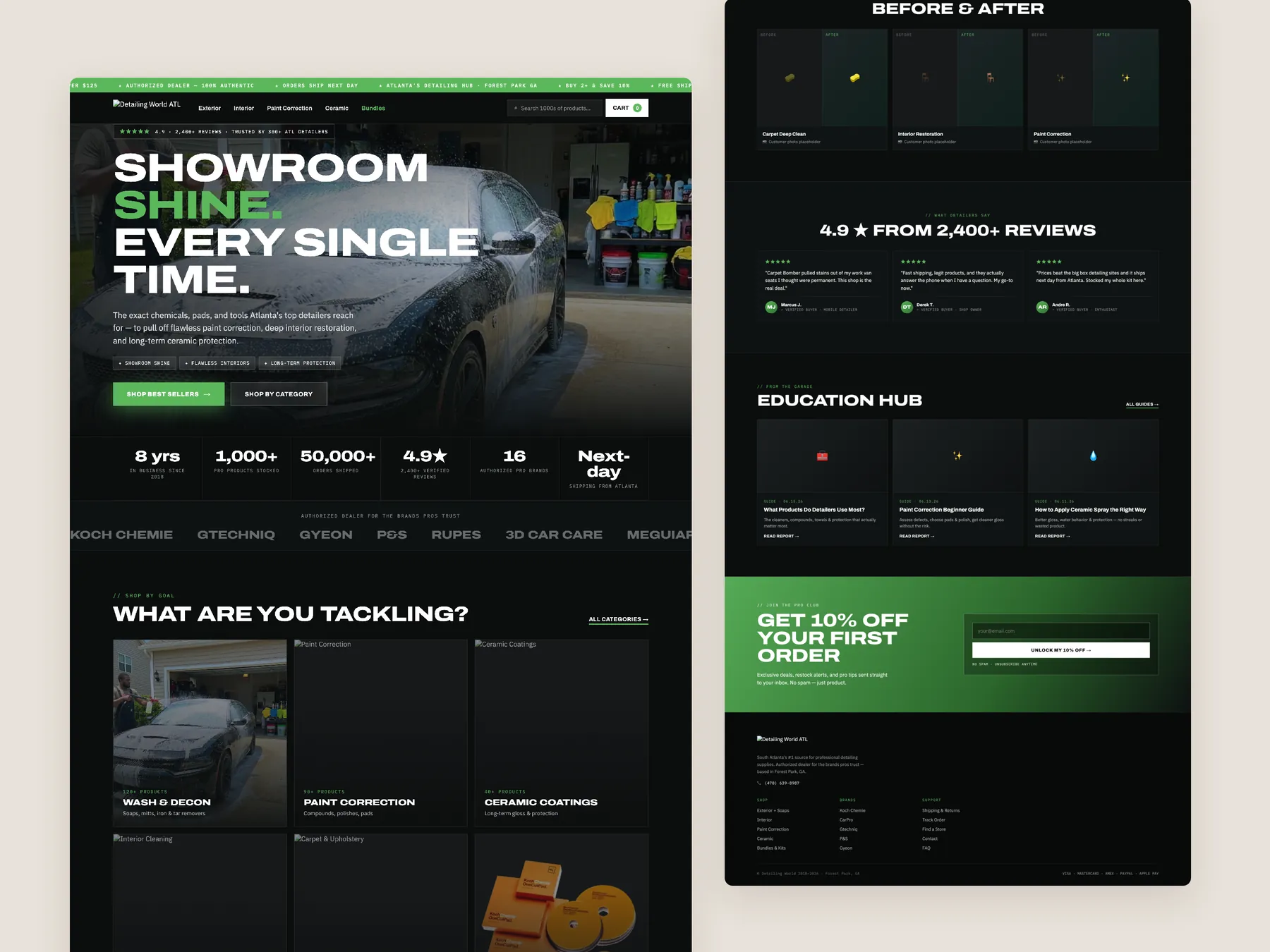
Homepage, two tall columns
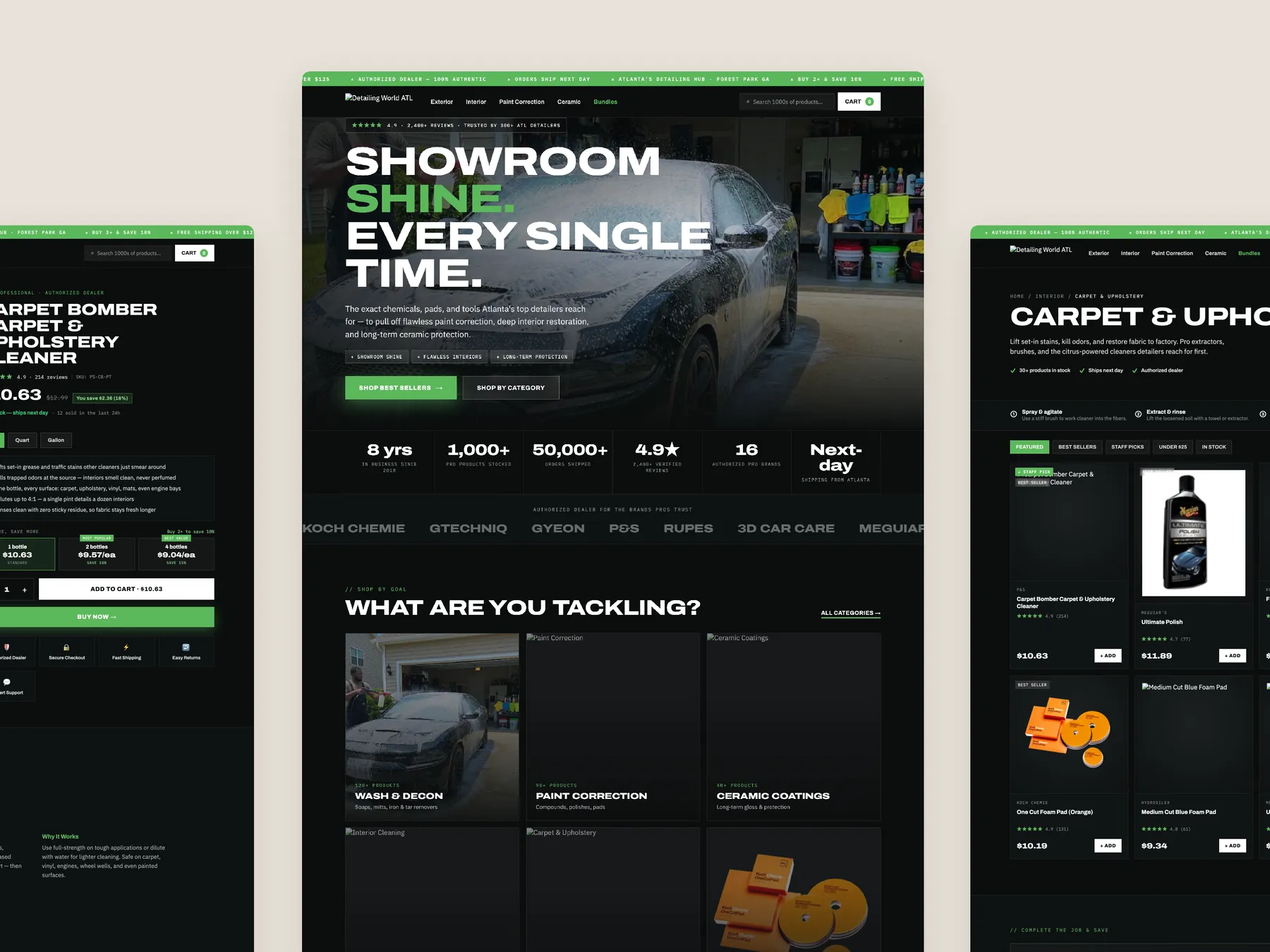
Homepage: the whole page as two tall columns, from the first screen through the job categories and best sellers down to the footer.
Storefronts we designed and built, across supplements, fragrance, health, wellness and skincare.
All 35 projectsFour engagements, measured before and after. What changed, why it changed, and by how much.
All case studiesDiagnosis, design and development from one studio — so the recommendation and the build never disagree.
All five services147 real Shopify stores torn down page by page, scored, and shown beside the version we would build. Free to watch.
Browse all teardownsSix conversion-first themes, each built for one industry’s buying journey. Zero required apps, $300, one licence.
Compare all sixA CRO audit of an auto detailing ecommerce store focused on homepage trust, collection page merchandising, product page conversion, authorized dealer positioning, kits, bundles, and average order value growth.
Pressing play loads the video from YouTube — you can allow it for every teardown under cookie preferences.
This audit found that Detailing World Atlanta already has several strong conversion foundations in place. The branding is intact, the navigation is clean, trust elements such as free shipping and secure checkout are visible, and the homepage already feels more credible than many ecommerce stores.
The homepage and collection pages are not the main conversion problem. They need improvements, especially around the hero section, trust-building content, testimonials, newsletter positioning, and better product visibility, but they are generally usable and fairly well structured.
The product page is the primary conversion issue. It currently shows the product title, price, quantity discount message, and add-to-cart area, but it does not provide enough trust, product context, social proof, benefits, authorized dealer credibility, reviews, cross-sells, or upsells to encourage confident buying.
The recommendation is to rebuild product pages into stronger sales engines. Product pages should prove legitimacy, explain why the product is worth buying, show shipping and stock confidence, encourage quantity purchases, and recommend related products or full detailing kits to increase average order value.
The homepage and collection pages are relatively strong, but the product page is severely underdeveloped and is likely the biggest conversion blocker.
Turn the product page into a conversion engine by adding trust signals, authorized dealer proof, product benefits, quantity discounts, bundles, cross-sells, usage guidance, FAQs, and reviews.
Higher product page conversion, improved buyer trust, increased average order value, stronger customer confidence, and more repeat purchases through kits, bundles, and email retention.
Five dimensions, each scored out of ten.
16 issues found, 21 fixes proposed.
The homepage hero section uses valuable above-the-fold space to say “now serving Atlanta,” but it does not strongly explain the brand, value proposition, trust signals, or reasons to buy.
The top of the homepage does not fully capitalize on social proof, review counts, authorized brand relationships, years of experience, shipped orders, or other authority signals.
Users are quickly pushed into categories before the homepage clearly establishes who the company is, why it is trustworthy, and why buyers should choose it.
Customer reviews and user proof are not used strongly enough on the homepage to convert new visitors into buyers.
Best sellers and product categories are hidden behind tabs, which requires user interaction and reduces product visibility.
The site does not clearly compare products or help users understand which product is right for their detailing goal.
The email signup area does not give users a strong reason to subscribe, such as discounts, exclusive deals, guides, or product education.
Collection pages show sold-out products near the top, which can reduce motivation and make users feel the store does not have what they need.
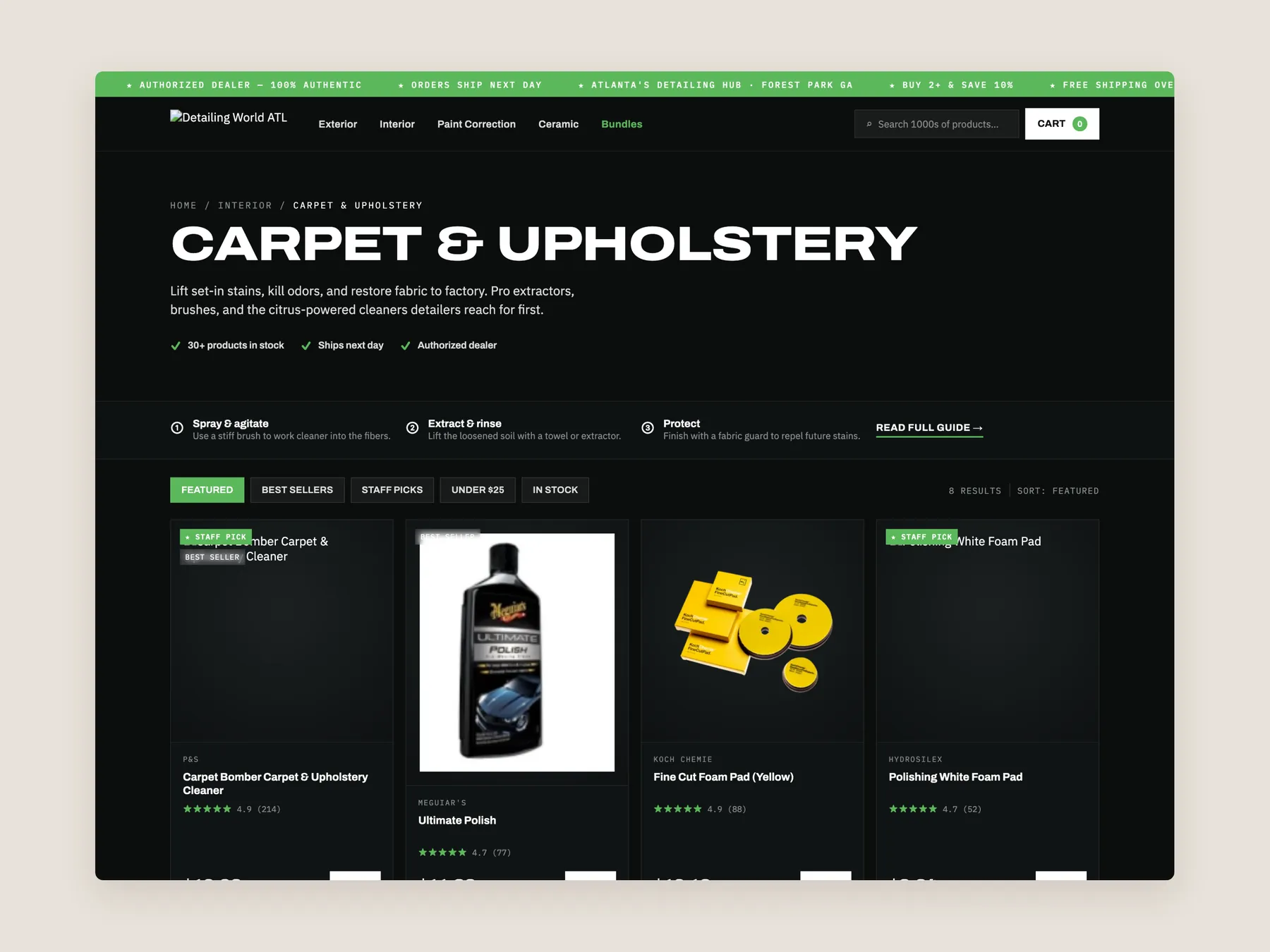
Category pages use simple titles such as “Exteriors” without enough explanation, product guidance, featured items, or category value framing.
The product page is the biggest conversion weakness because it lacks enough information, hierarchy, proof, persuasion, and purchase support.
The buy 2+ and save message appears as a note, but users do not see the discount reflected clearly in real time.
The product page does not provide enough immediate explanation of what the product does, why it matters, or who it is for.
Product pages lack visible review ratings near the purchase area, weakening trust at the most important decision point.
The page does not clearly state that Detailing World Atlanta is an authorized dealer for relevant professional brands.
The product page does not recommend complementary towels, chemicals, kits, or related products that could increase order value.
The page treats the add-to-cart section as the end of the journey instead of the beginning of a deeper sales experience.
Use the hero section to communicate a stronger value proposition such as achieving showroom shine every single time.
Show review ratings, years in business, number of shipped orders, authorized brands, next-day shipping from Atlanta, and secure checkout near the top of the homepage.
Instead of only showing categories, ask users what goal brought them to the site, such as wash and decon, paint correction, coatings, interiors, towels, or tools.
Display best sellers, discounted products, bundles, and category highlights in visible rows instead of hiding them behind tabs.
Help customers understand which detailing product or kit is right for their specific job.
Give users a reason to subscribe, such as exclusive deals, detailing guides, restock alerts, product education, and limited promotions.
Collect emails and send promotions, product education, deals, and seasonal offers to drive repeat purchases.
Keep sold-out products indexed for SEO, but move them lower on collection pages or default filters to in-stock products only.
Add category descriptions, product counts, use cases, authorized dealer reassurance, and shipping confidence to collection headers.
Use filters and labels such as featured, best seller, staff pick, under $25, and in stock to guide decisions.
Promote relevant kits within collection pages to increase order value and help customers buy complete solutions.
Add authorized dealer badges, ratings, reviews, stock status, next-day shipping, savings information, secure checkout, easy returns, and expert support near the product purchase area.
Replace text-only quantity discount messaging with clear buy-more-save-more options, such as buy 2 and save 10% or buy 4 and save 15%.
Show the exact dollar amount and percentage customers save so they feel rewarded for choosing larger quantities.
Briefly explain what the product does, why it works, who should use it, and what result it helps create.
Add complete-the-job sections recommending towels, applicators, cleaners, coatings, or other related detailing items.
Allow customers to build a kit from related products and unlock bundle discounts.
Include how-to-use sections, what to do, what not to do, and product-specific tips.
Use FAQs, customer reviews, and expert advice to continue building trust after the purchase area.
Use real result images showing carpets, interiors, paint correction, coatings, or restoration outcomes to increase confidence.
Drag to compare the current store with the redesign.
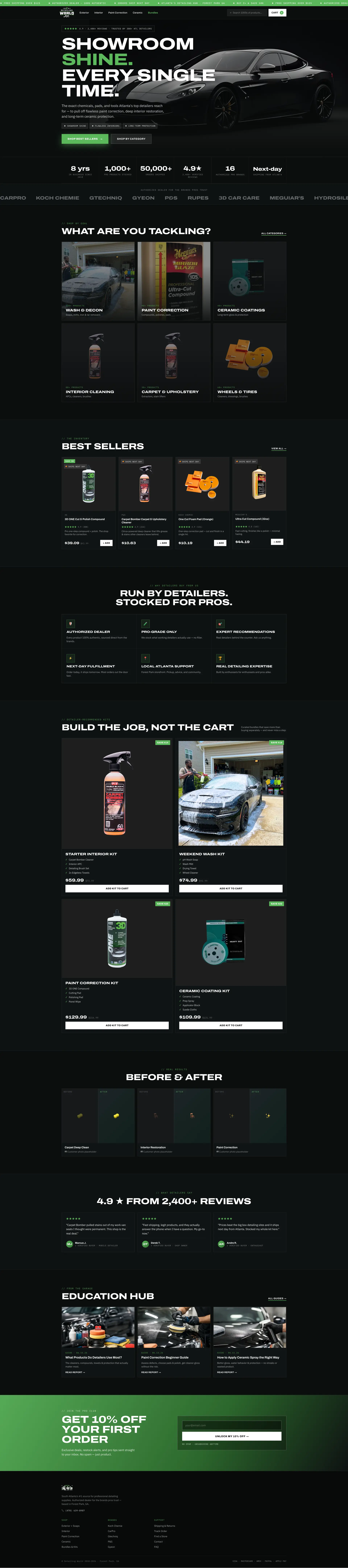
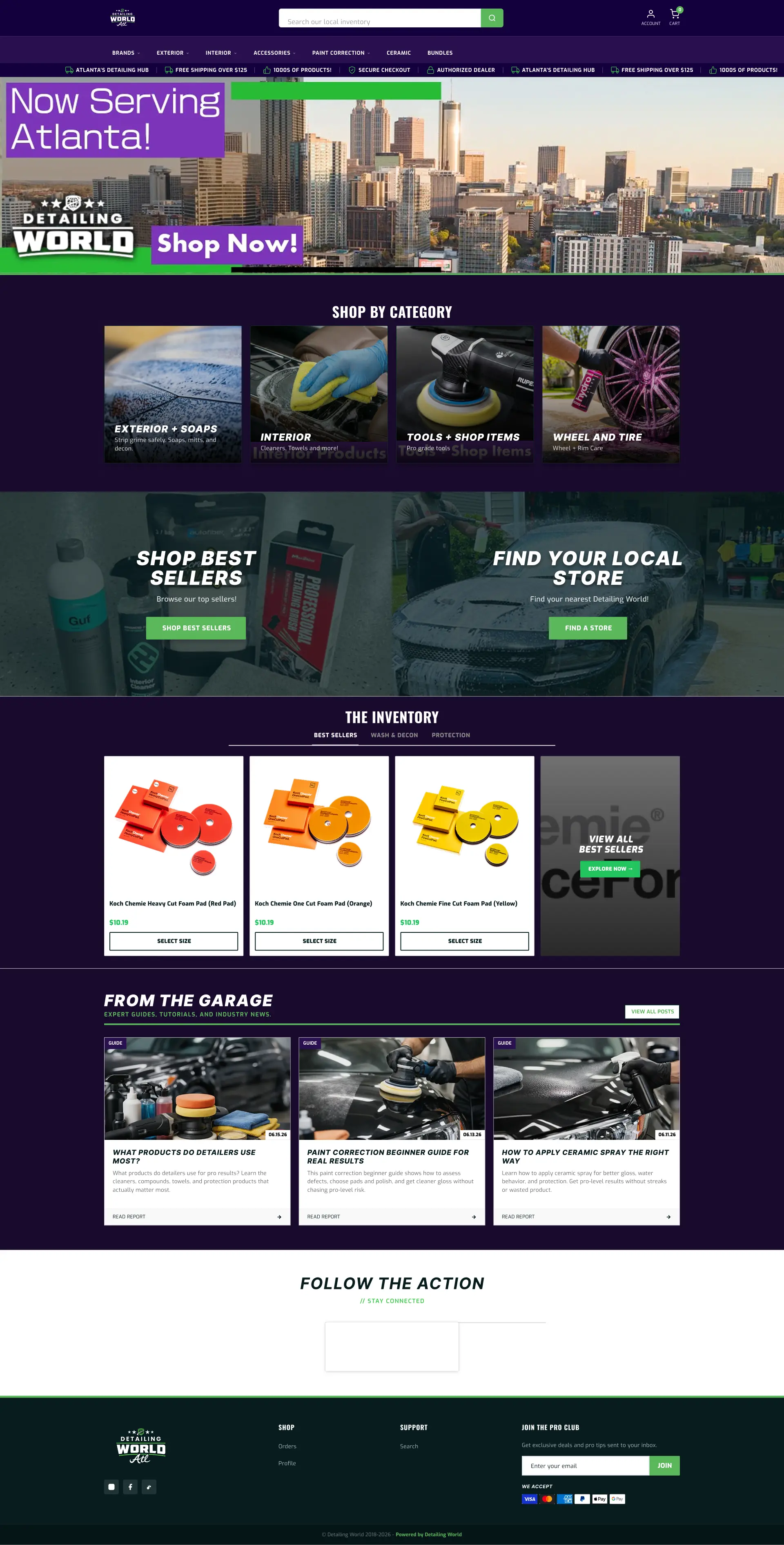
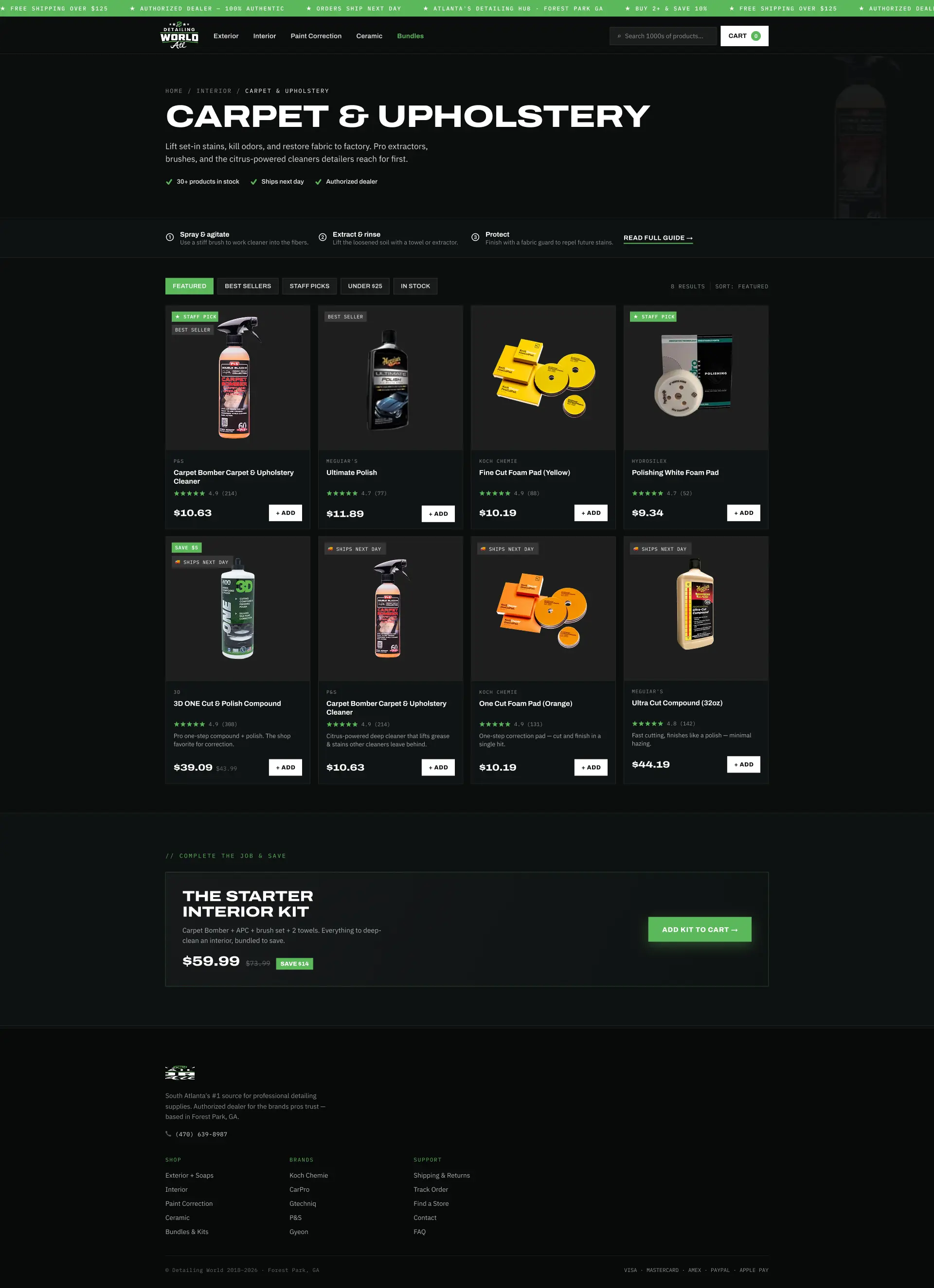
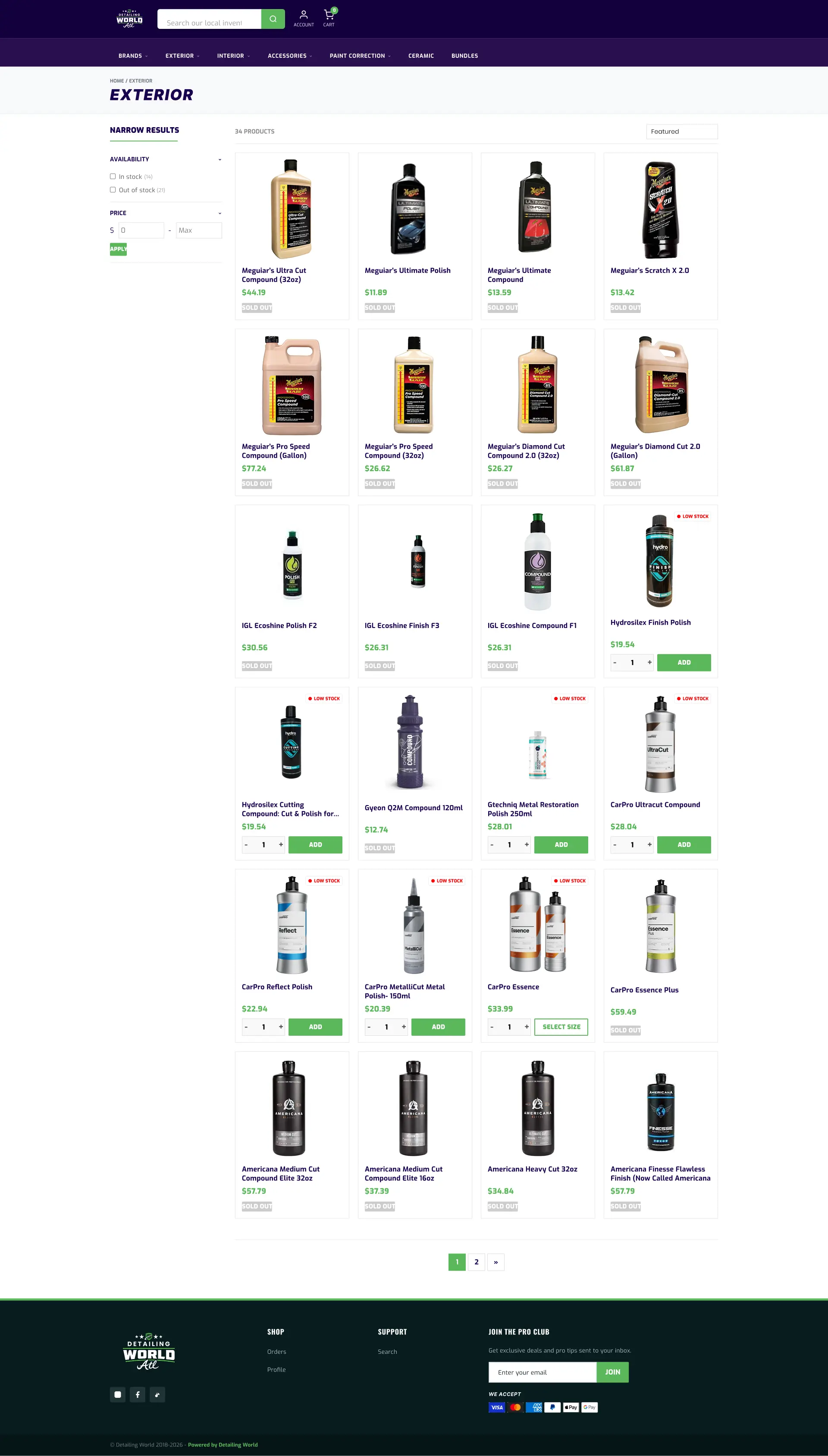
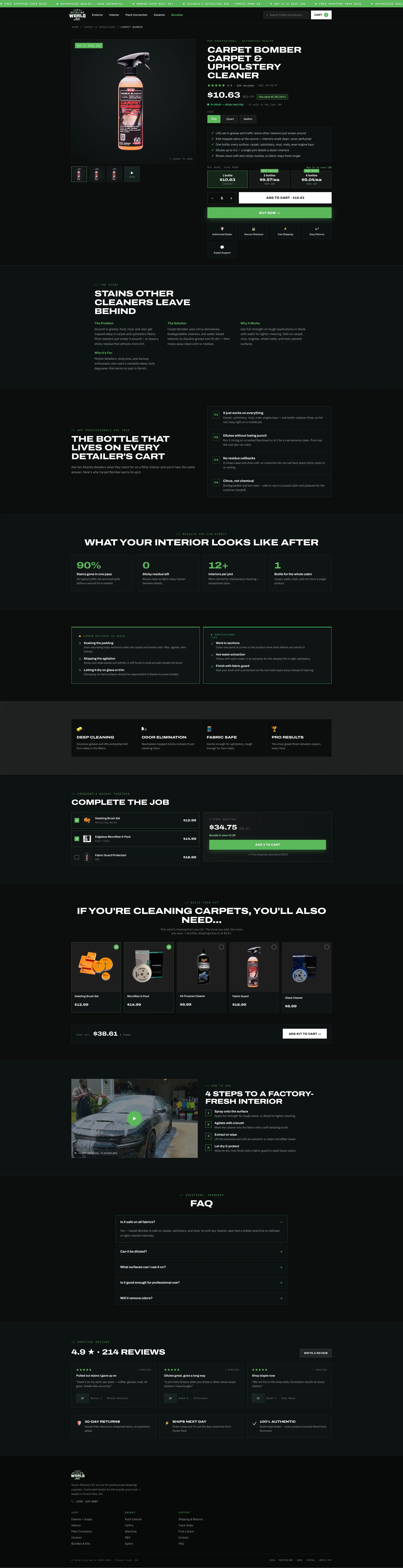
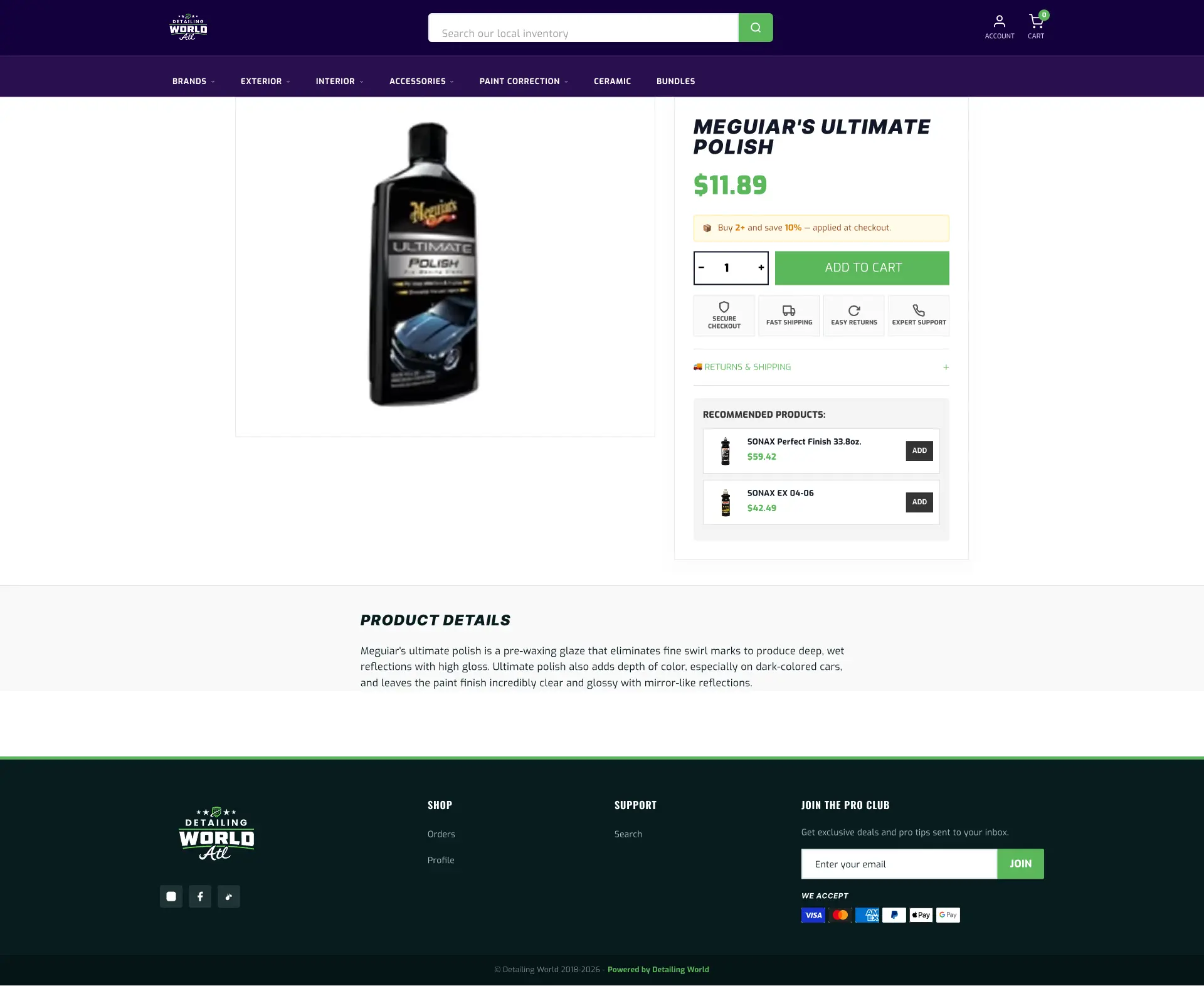
A concept redesign created by Convertica Studio from this audit. It shows how the store could work, it is not the live store.
Homepage: the whole page as two tall columns, from the first screen through the job categories and best sellers down to the footer.
Three pages side by side: the homepage in the centre, the product page on the left with its buy column, and the category page on the right with its header and filters.
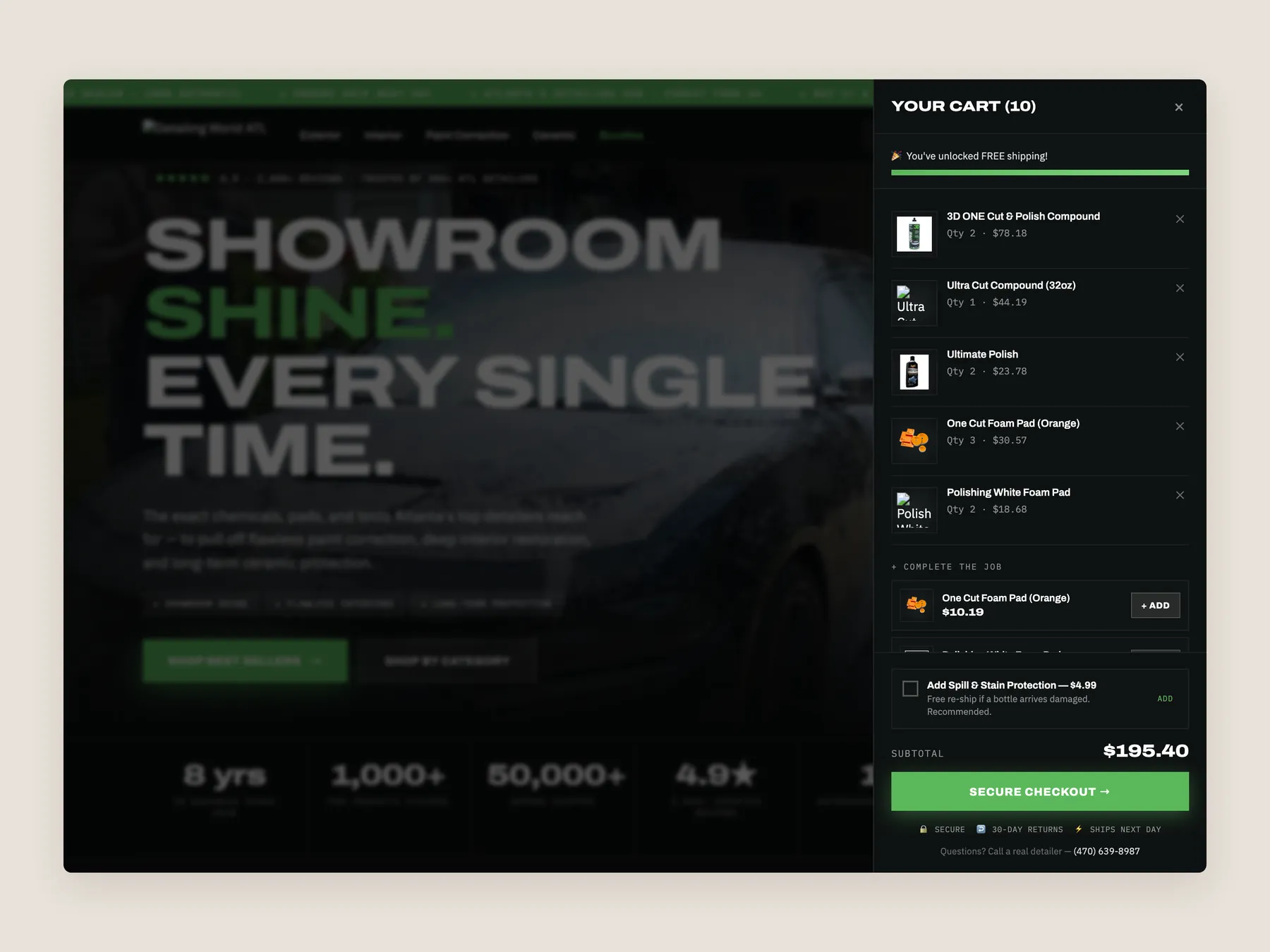
Bag slide-over: the whole screen with the bag open over the home screen, five lines in the bag and the free shipping bar full.
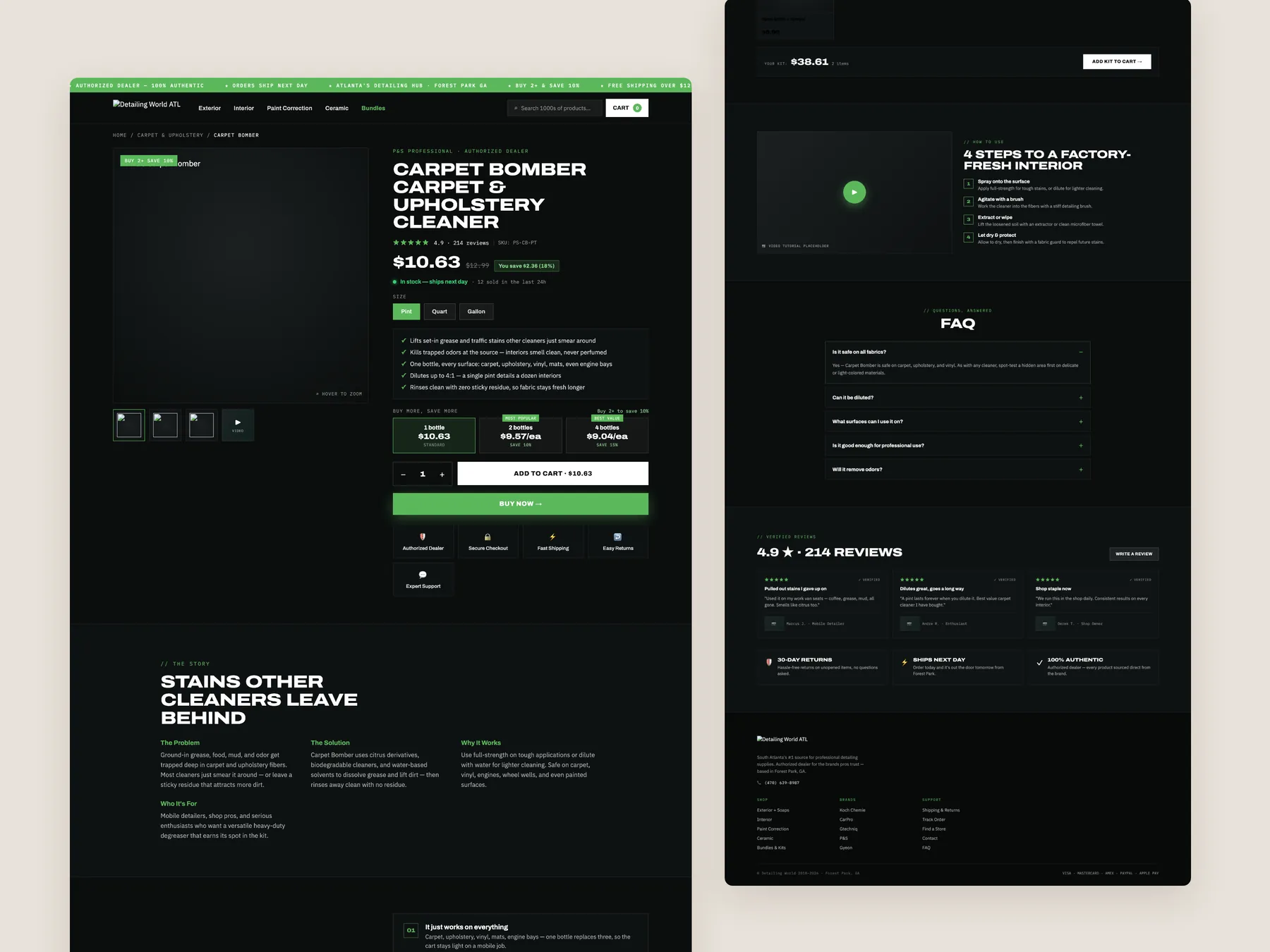
Product page: the full page as two tall columns, buy box at the top and the details and related products running down to the footer.
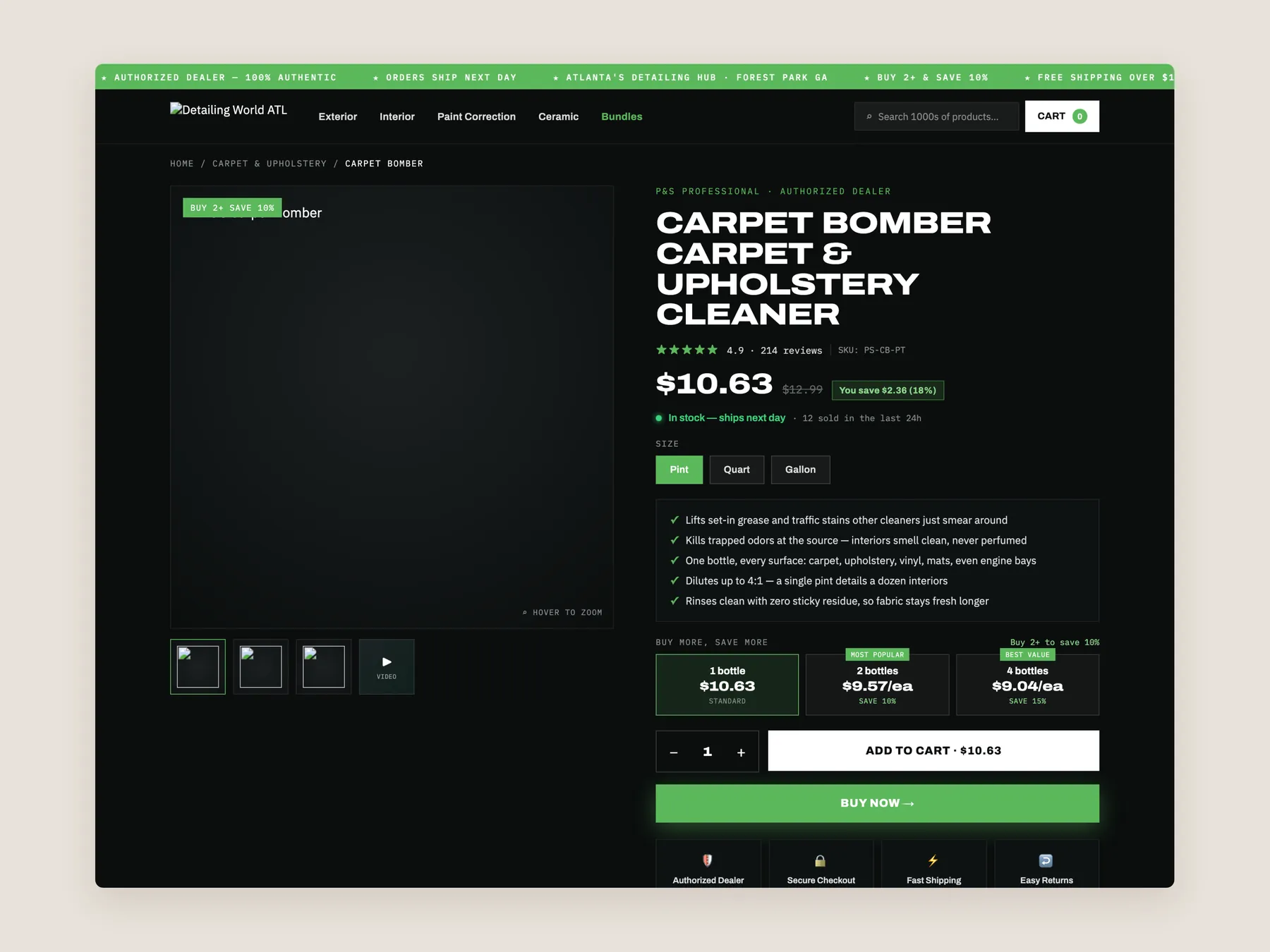
Product page first screen: the header and the buy box on one screen, with the options and the add button in view.
Category page first screen: the header, the how-to strip, the filter chips and the first row of products.
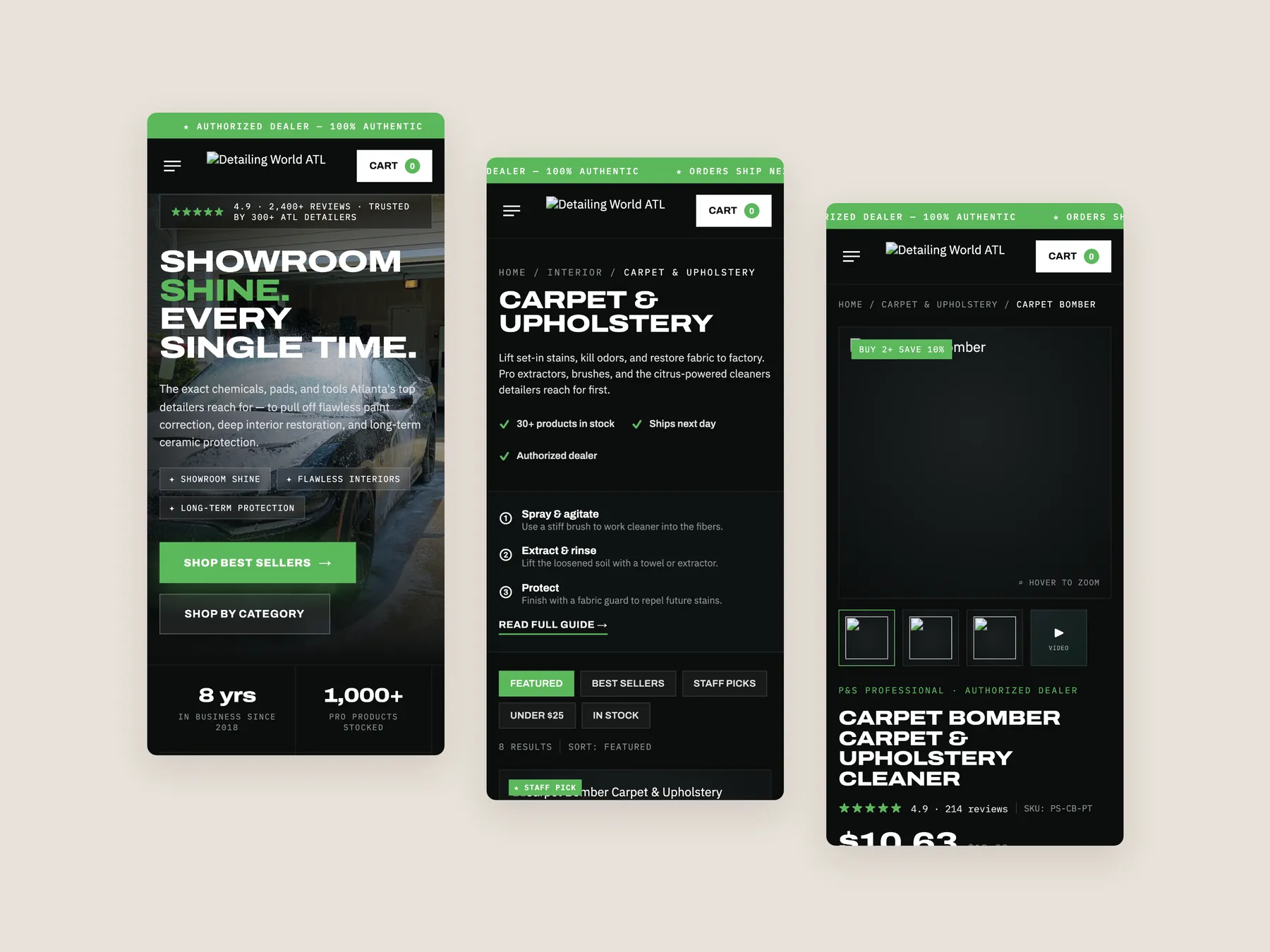
Phone screens: home, category and product on a phone, staggered left to right.
The homepage and collection pages are relatively strong, but the product page is severely underdeveloped and is likely the biggest conversion blocker.
Turn the product page into a conversion engine by adding trust signals, authorized dealer proof, product benefits, quantity discounts, bundles, cross-sells, usage guidance, FAQs, and reviews.
A CRO audit of an auto detailing ecommerce store focused on homepage trust, collection page merchandising, product page conversion, authorized dealer positioning, kits, bundles, and average order value growth. The recorded teardown runs 40 minutes, documents 16 issues found and pairs them with 21 proposed fixes.
Right on this page — the full Detailing World Atlanta teardown is a free recorded video running 40 minutes, free to watch in full.
Tell us about your store and we'll send a personalized 5-minute video showing exactly where you're losing buyers — and how to win them back.
Takes about 40 seconds. No call required.