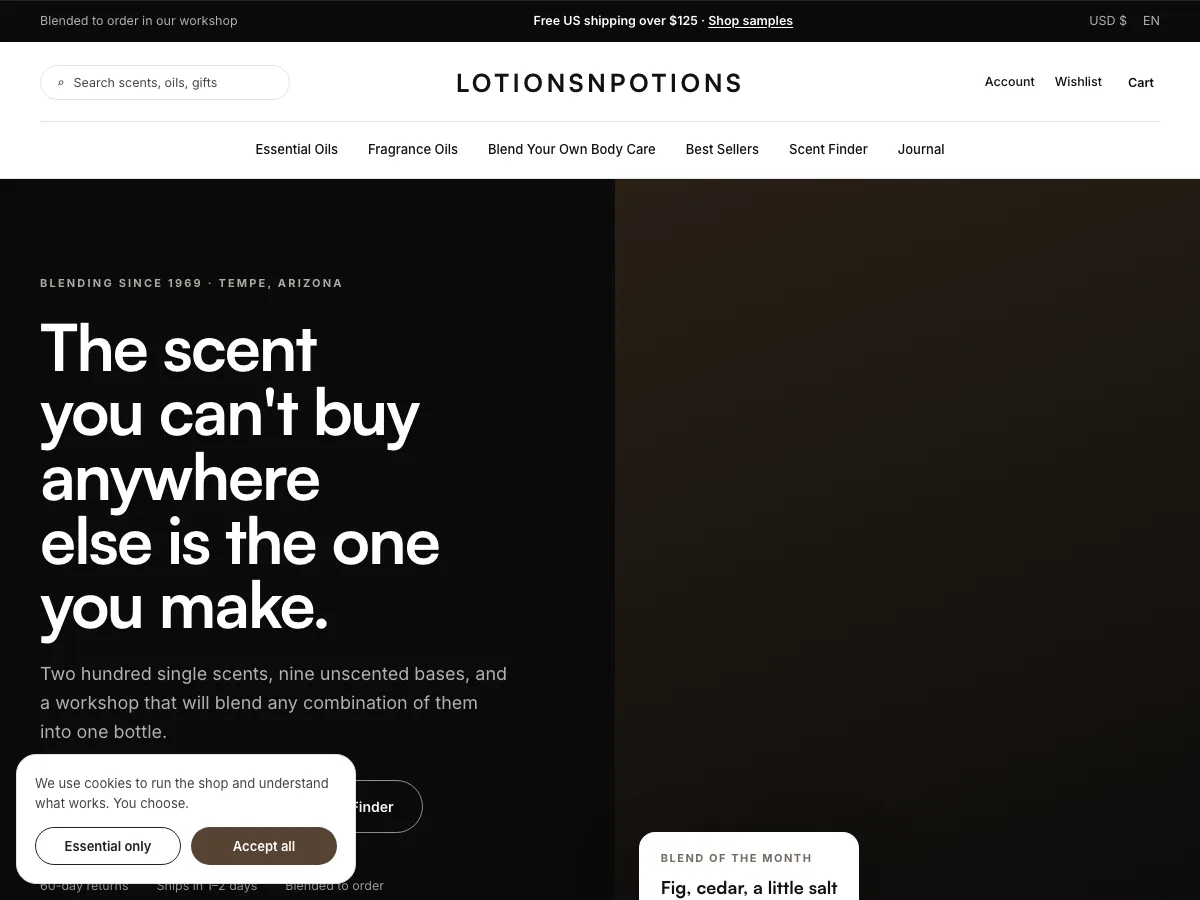
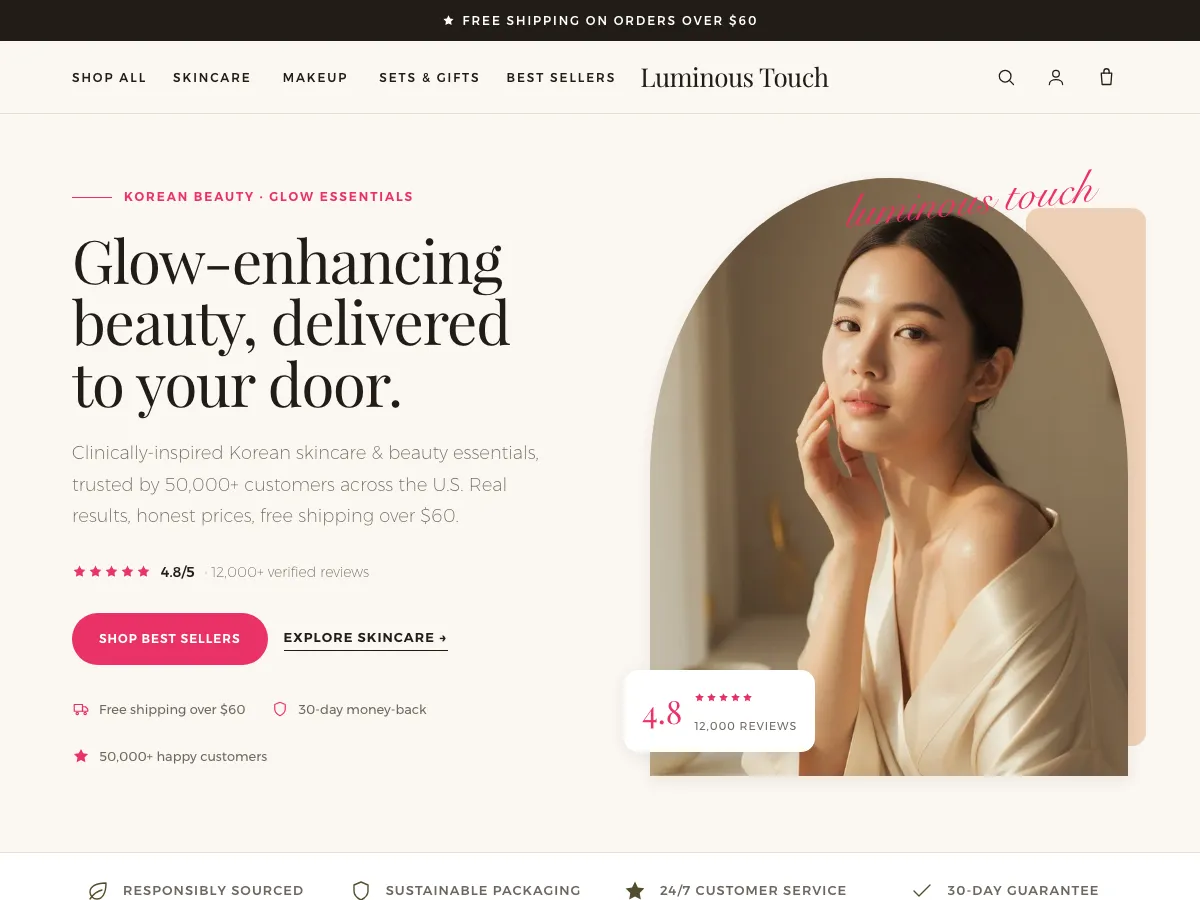
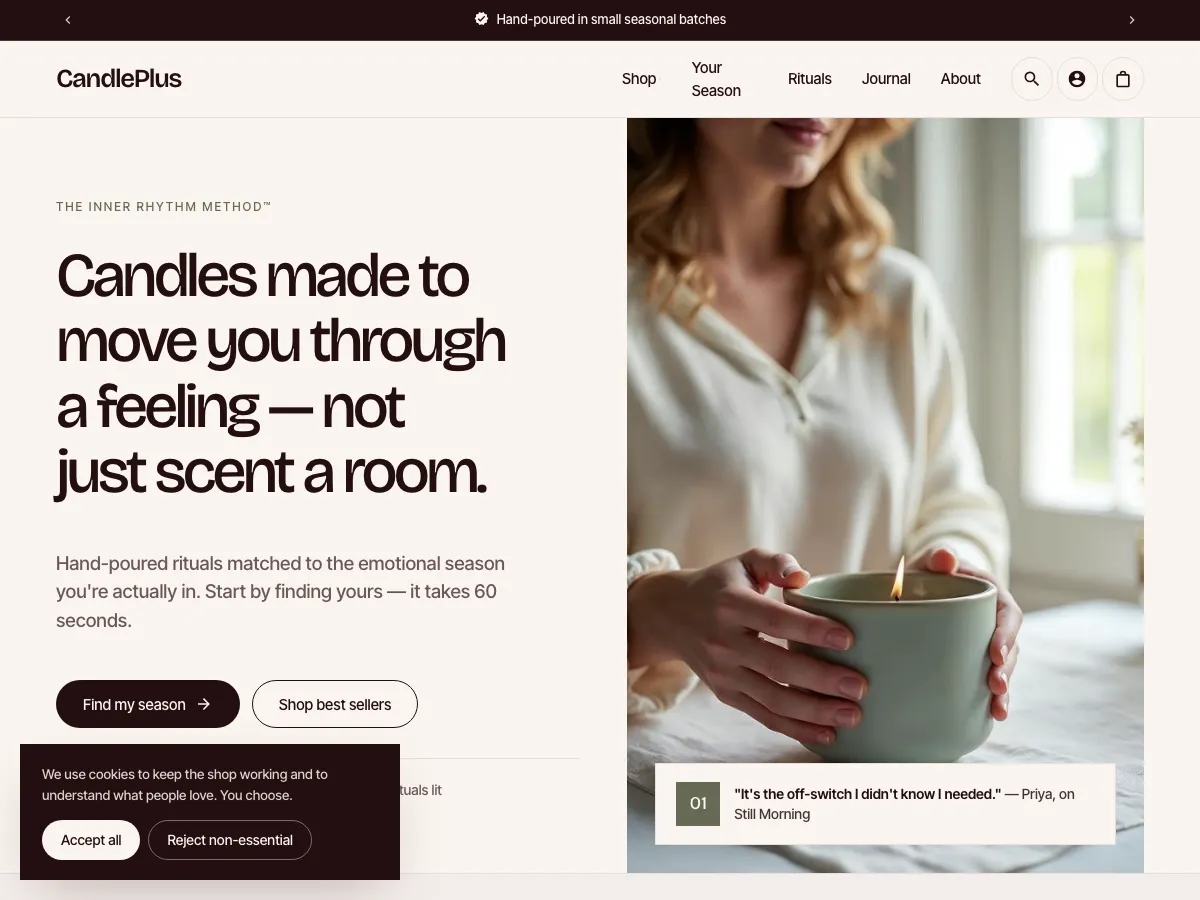
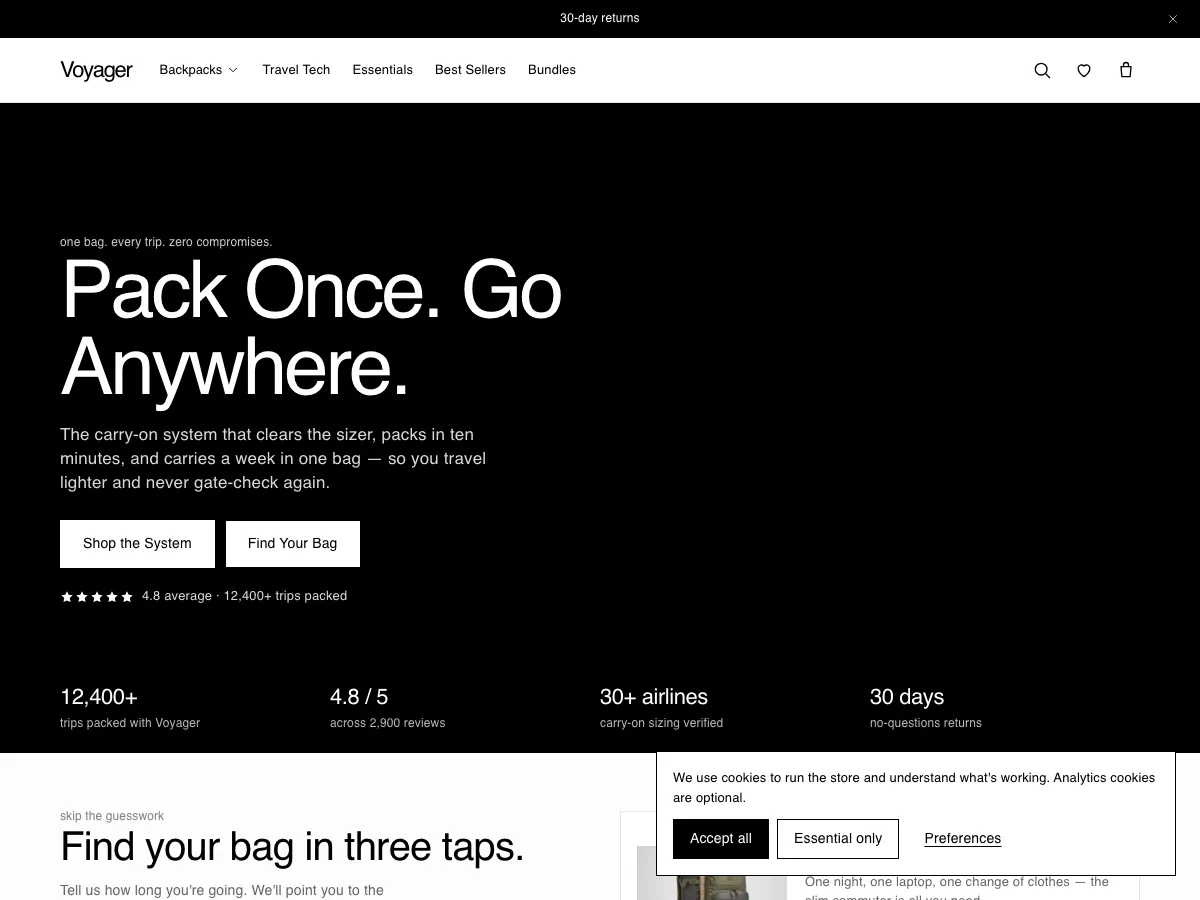
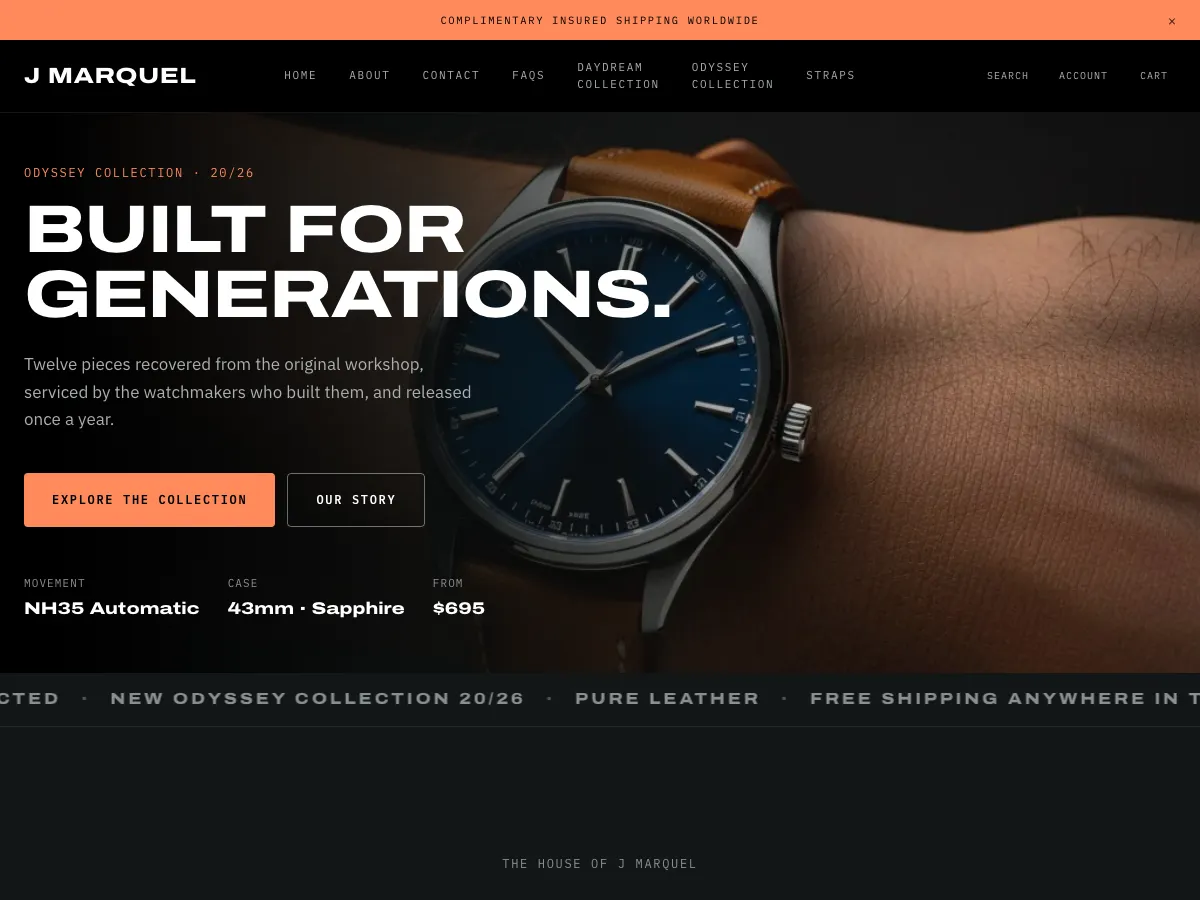
Homepage, two tall columns
Homepage in two tall columns: the top of the page on the left, the page running down to the footer on the right.
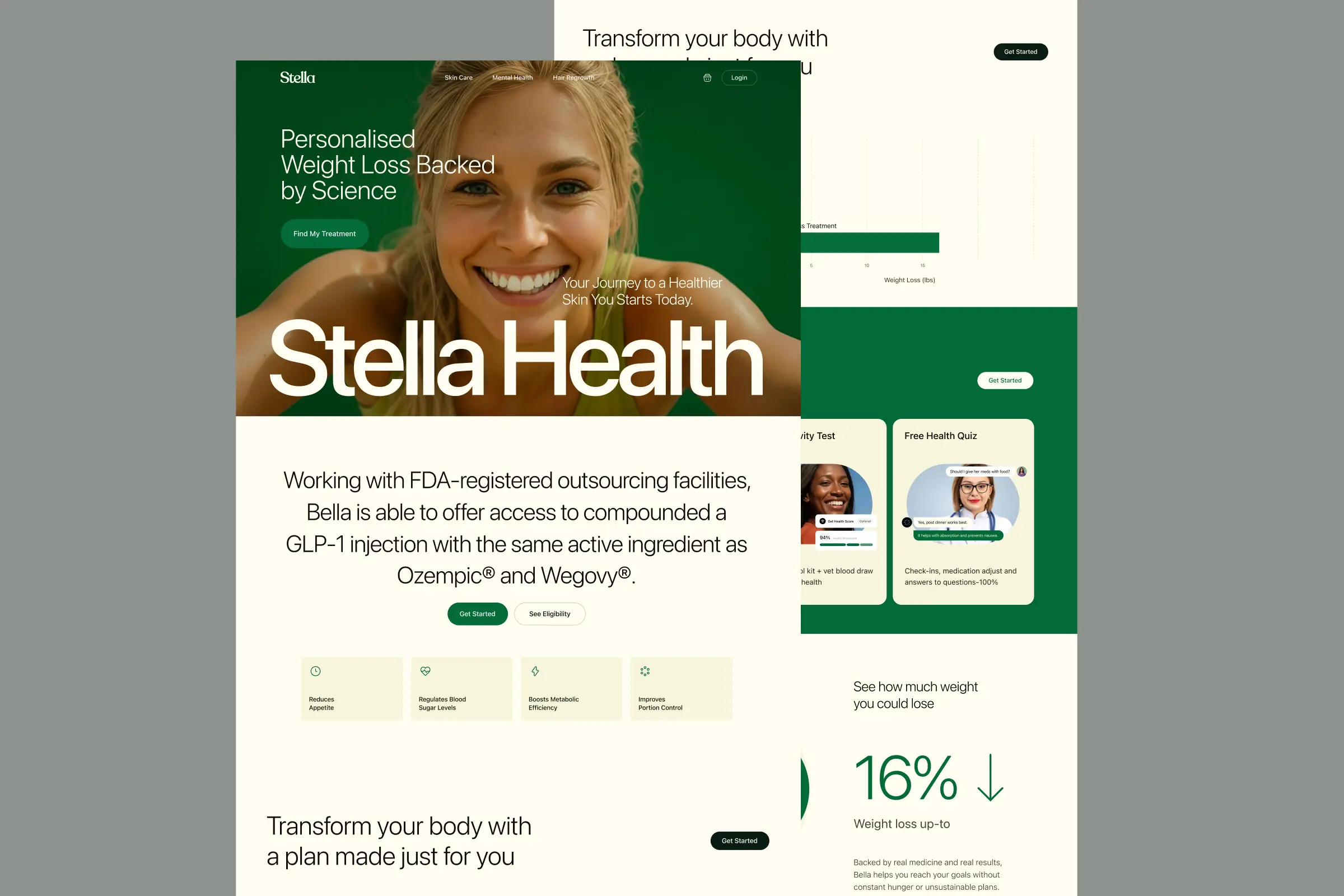
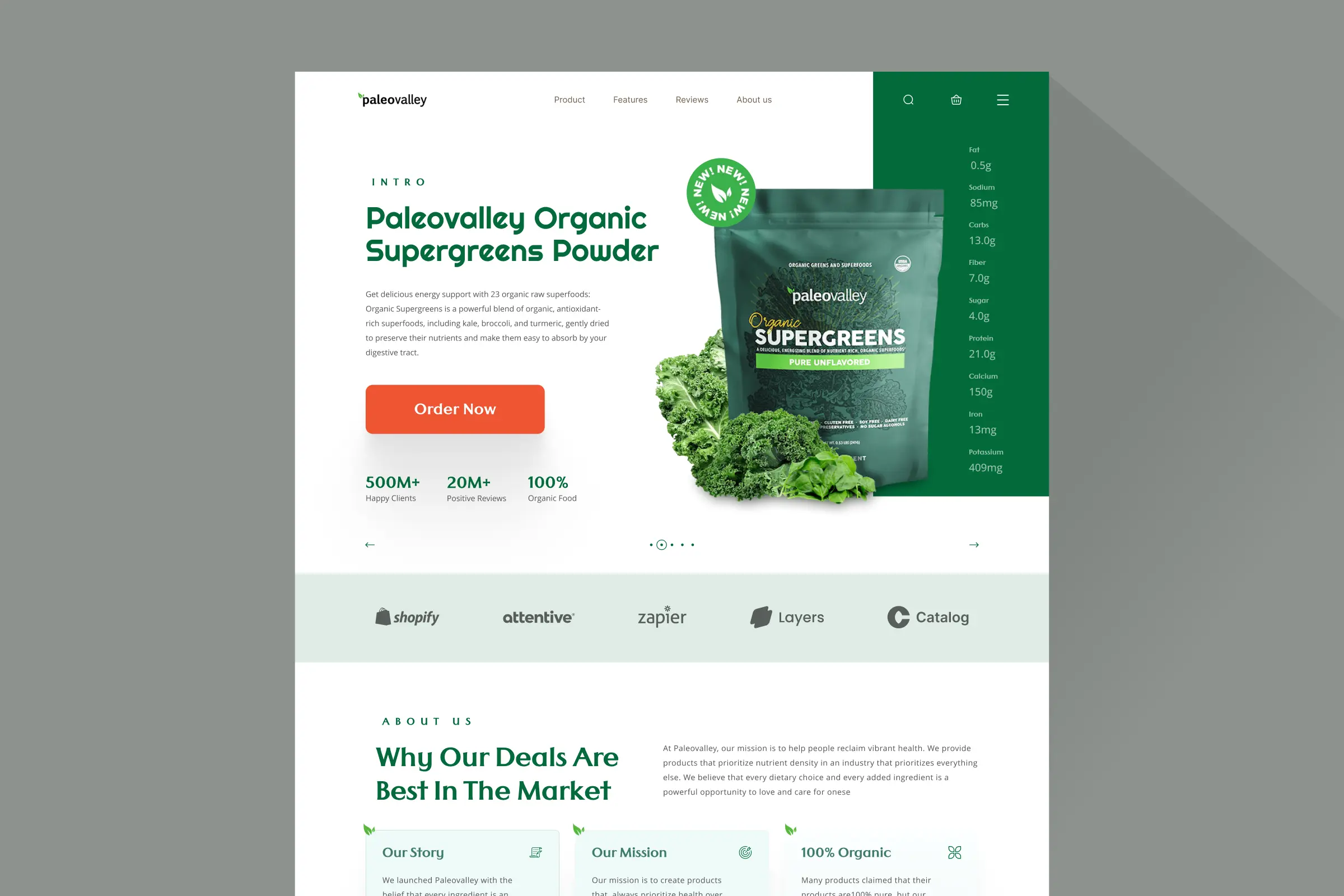
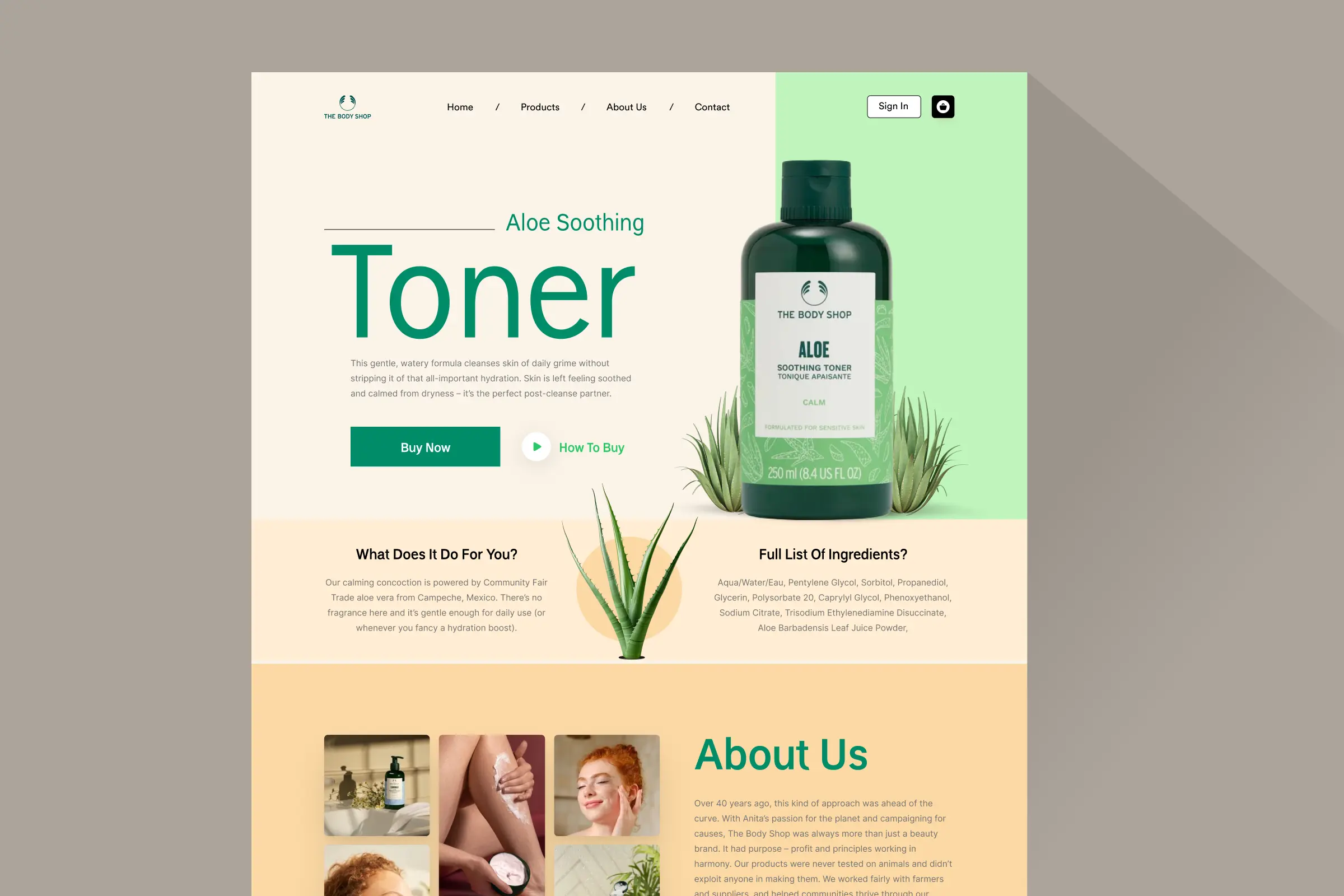
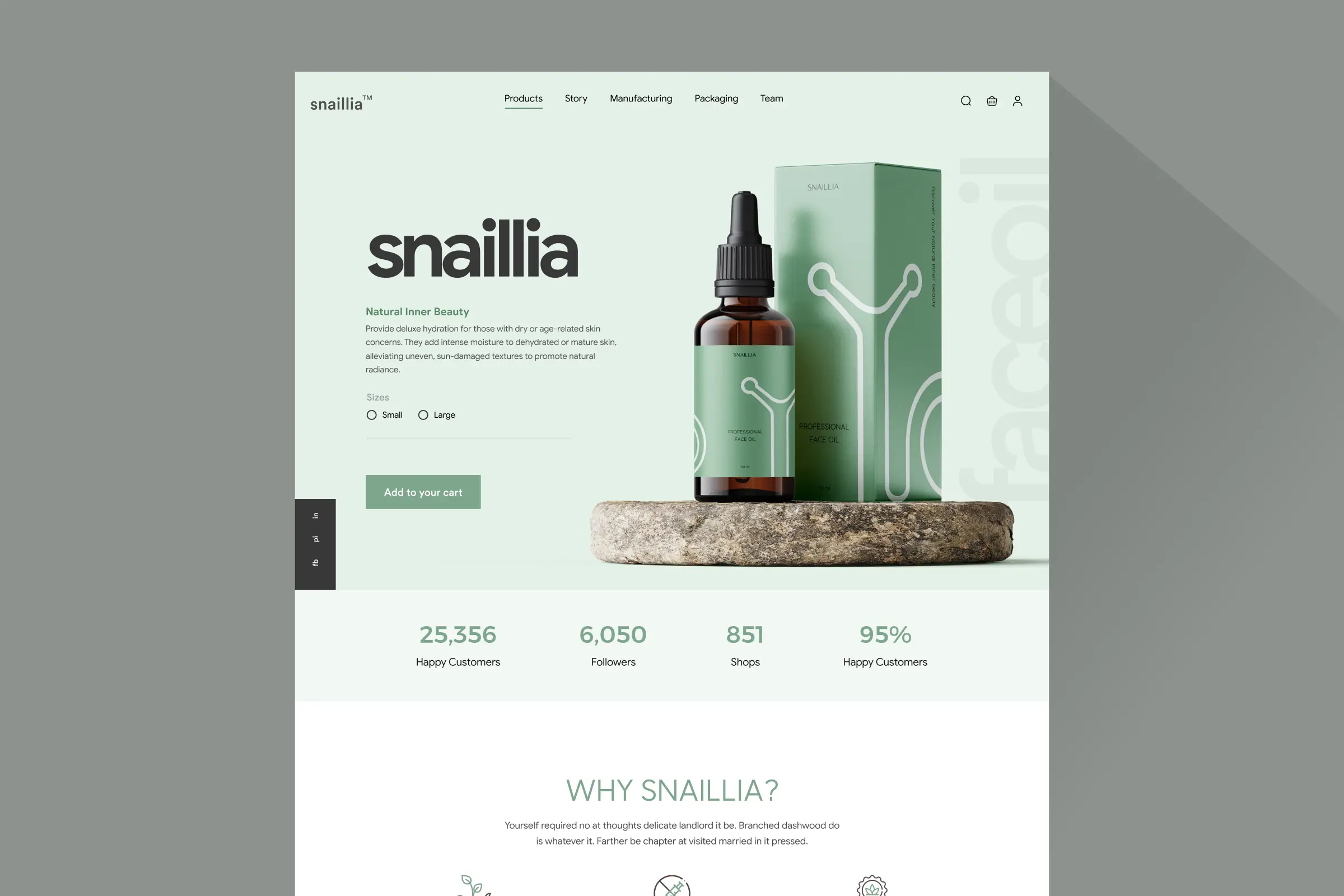
Storefronts we designed and built, across supplements, fragrance, health, wellness and skincare.
All 35 projectsFour engagements, measured before and after. What changed, why it changed, and by how much.
All case studiesDiagnosis, design and development from one studio — so the recommendation and the build never disagree.
All five services147 real Shopify stores torn down page by page, scored, and shown beside the version we would build. Free to watch.
Browse all teardownsSix conversion-first themes, each built for one industry’s buying journey. Zero required apps, $300, one licence.
Compare all sixThe watches feel premium, but the website presents them like a mid-market ecommerce store rather than a premium watch brand.
Pressing play loads the video from YouTube — you can allow it for every teardown under cookie preferences.
This audit identifies a major gap between the perceived quality of the watches and the overall website experience. While the products appear premium, the website currently feels more like a standard ecommerce store than a luxury watch brand.
The biggest opportunity is brand positioning. The site does not clearly communicate what J Markul stands for, what story sits behind the watches, or why customers should emotionally connect with the brand. Since luxury purchases are often driven by emotion, identity, gifting, and perceived value, this missing brand narrative weakens trust and conversion potential.
The audit also highlights several practical conversion issues, including a broken collection link, product names being cut off, a weak collection page experience, missing trust signals above the fold, and a product page that does not sufficiently support the buying decision.
Overall, the recommendation is to shift the website from a product-focused ecommerce layout to a brand-led premium experience supported by stronger storytelling, lifestyle photography, social proof, warranty messaging, and clearer product value communication.
The watches feel premium, but the website presents them like a mid-market ecommerce store rather than a premium watch brand.
Improve brand storytelling, premium presentation, trust-building elements, and product page structure to better justify the price point.
Stronger perceived value, increased trust, better product engagement, and improved conversion potential.
Reframed to look as premium as the watches — and justify the price.
Average of the five scores below, as judged at the time of recording. Weak overall — the detail is in which dimension is dragging.
Every finding below was called out on the recording. Open one to read what was found and what we would change. Nothing is hidden from the page source.
A collection link in the navigation leads to a 404 page. This creates an immediate trust issue and can cause visitors to leave the website.
Repair the collection link that leads to a 404 page, or remove it from the navigation if the collection does not exist.
The website feels like it sells premium watches, but it does not yet feel like a premium watch brand. The brand story, identity, and emotional positioning are not strong enough.
Reposition the website around J Markul as a premium watch brand, not just a store selling premium watches. Communicate the brand story, values, heritage, and emotional meaning earlier on the homepage.
The story exists lower on the homepage, but most visitors may not scroll far enough to see it. This means the emotional hook is missed early in the journey.
This one is addressed by the wider recommendations below rather than a single change.
There is a mismatch between the product price and the website experience. At a $500 to $700 price point, customers expect a more premium, polished, and reassuring experience.
Use stronger visual hierarchy, more breathing room, richer photography, and story-led sections to create a more elevated first impression.
The collection page mainly shows a grid of products without helping visitors choose. There are no strong recommendation badges, buying cues, proof points, or storytelling elements.
Add helpful buying cues such as Best Seller, Signature, Recommended, or Limited Stock badges. The collection page should guide users, not just list products.
Some product names are cut off with ellipses, which makes the page feel unfinished and can reduce trust in the brand.
Remove truncated product titles and ensure visitors can see the complete product name on collection cards.
The product image gallery appears broken or does not work as expected, which damages the premium experience and weakens product confidence.
Fix broken gallery behavior and use stronger product photography, including close-ups, angle shots, wrist shots, and lifestyle images.
Important reassurances such as free shipping, warranty, return policy, delivery expectations, and review ratings are not clearly visible near the purchase area.
Place free shipping, warranty, return policy, secure checkout, and review rating near the Add To Cart area to reduce purchase anxiety.
The product description contains useful information, but it is presented in a way that requires too much reading. Most users scan product pages, so key benefits may be missed.
Convert long descriptions into short benefit-led sections, bullet points, feature cards, and visual highlights.
The site needs more lifestyle imagery showing the watches being worn and experienced. This is important for creating emotional attachment and justifying premium pricing.
Use photos of people wearing the watches to create aspiration, emotional connection, and stronger perceived value.
The reviews are valuable, but the review count and star rating should appear higher on the product page and connect directly to the review section.
Show star ratings and review count near the product title, and make the rating clickable so it scrolls down to the review section.
The premium packaging and unboxing experience should be shown more clearly because it helps justify the price and supports gifting decisions.
Add a section that explains the packaging, included items, delivery expectations, and the overall unboxing experience.
Move the Daydream collection closer to the Shop link or remove unnecessary collection links that interrupt the buying journey.
Create dedicated sections for key features such as Sapphire Crystal, NH35 Automatic Movement, InfinityWeave Dial, and Exhibition Caseback.
Instead of relying mainly on product specs, structure product pages around emotional value, craftsmanship, proof, trust signals, and ownership experience.
Drag each frame to move between what is live today and the version built on the recommendations above.

 After
Before
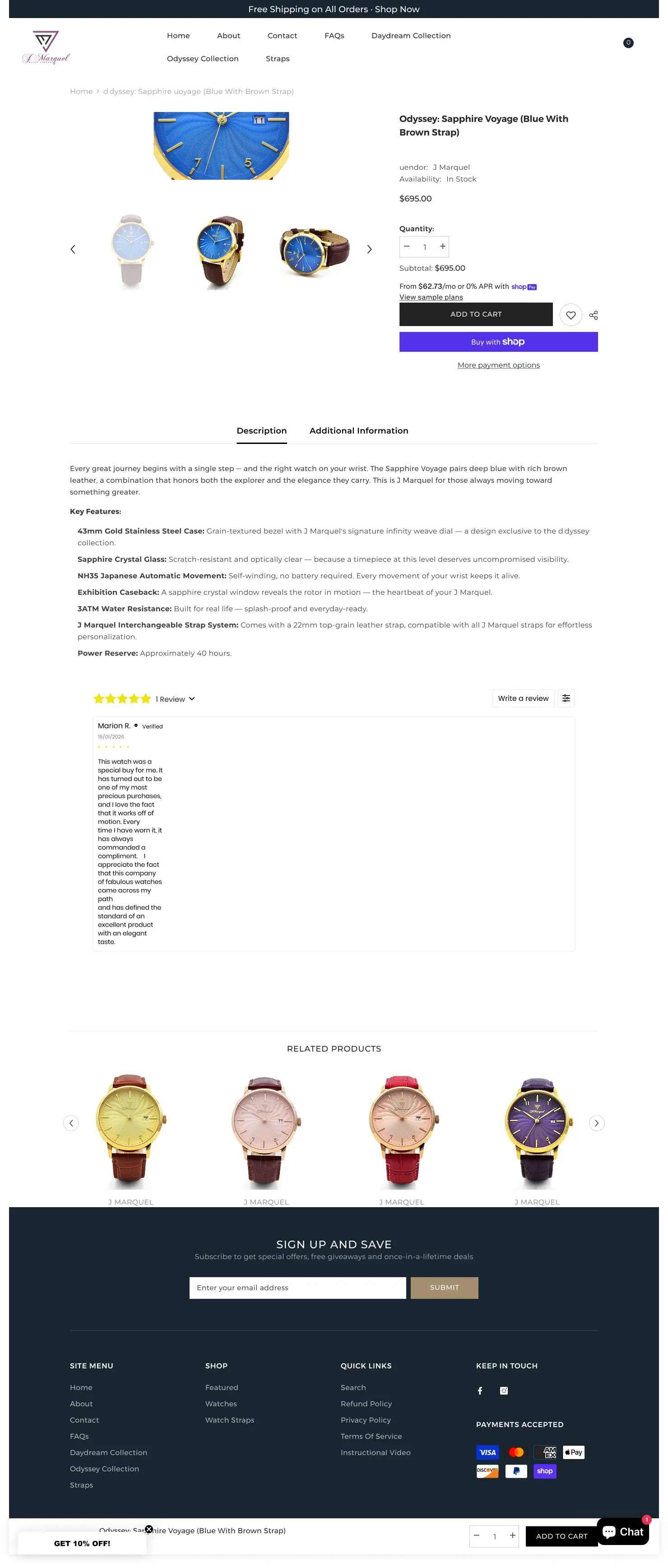
 After
Before
The website has a premium product but does not yet create a premium brand experience.
The biggest conversion opportunity is stronger brand positioning and storytelling.
A broken collection link is an urgent trust issue that should be fixed immediately.
The collection page needs better buying guidance and product merchandising.
The product page needs stronger trust signals near the Add To Cart area.
Product descriptions should be easier to scan and more benefit-driven.
Lifestyle photography and packaging presentation can help justify the premium price point.
Reviews should be shown higher on the product page to build confidence earlier.
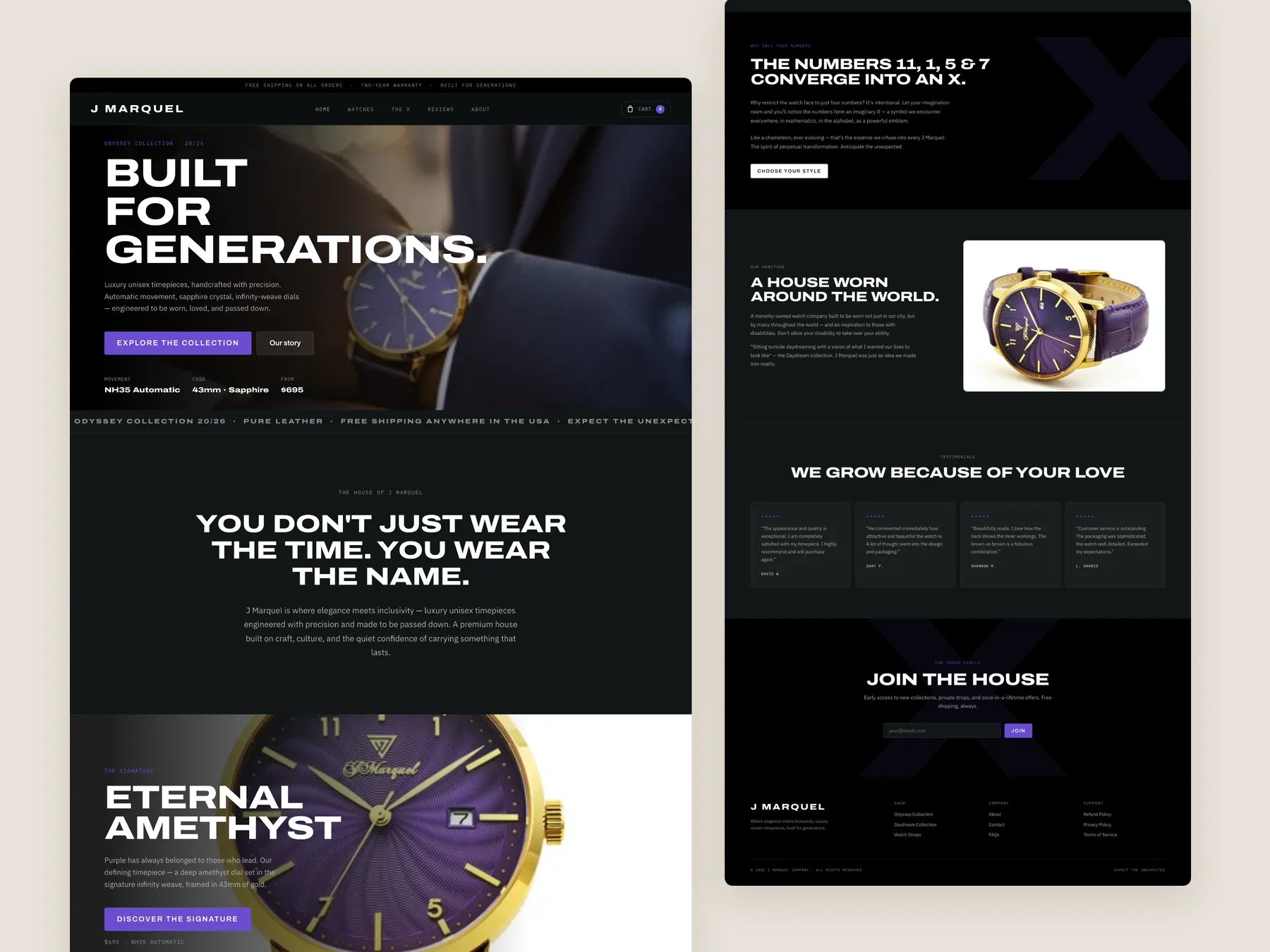
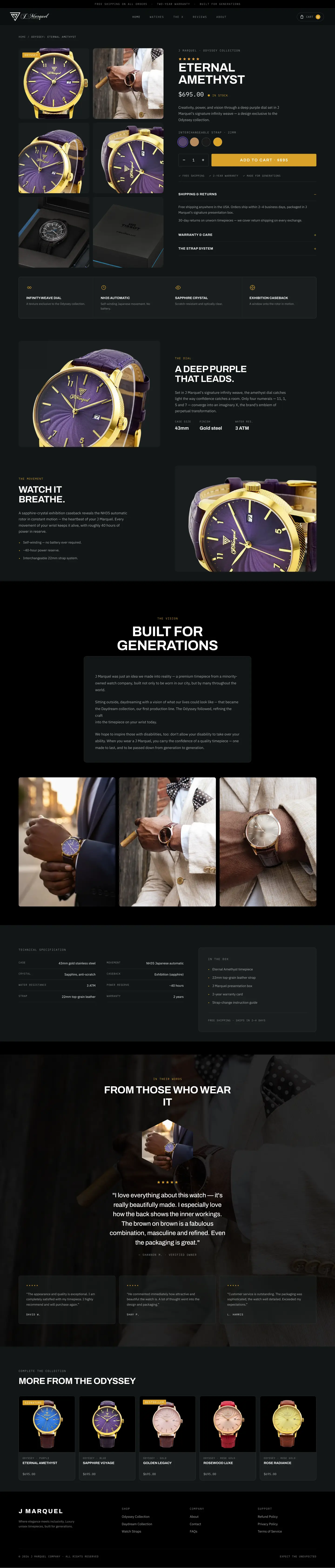
A concept redesign created by Convertica Studio from this audit. It shows how the store could work, it is not the live store.
Homepage in two tall columns: the top of the page on the left, the page running down to the footer on the right.
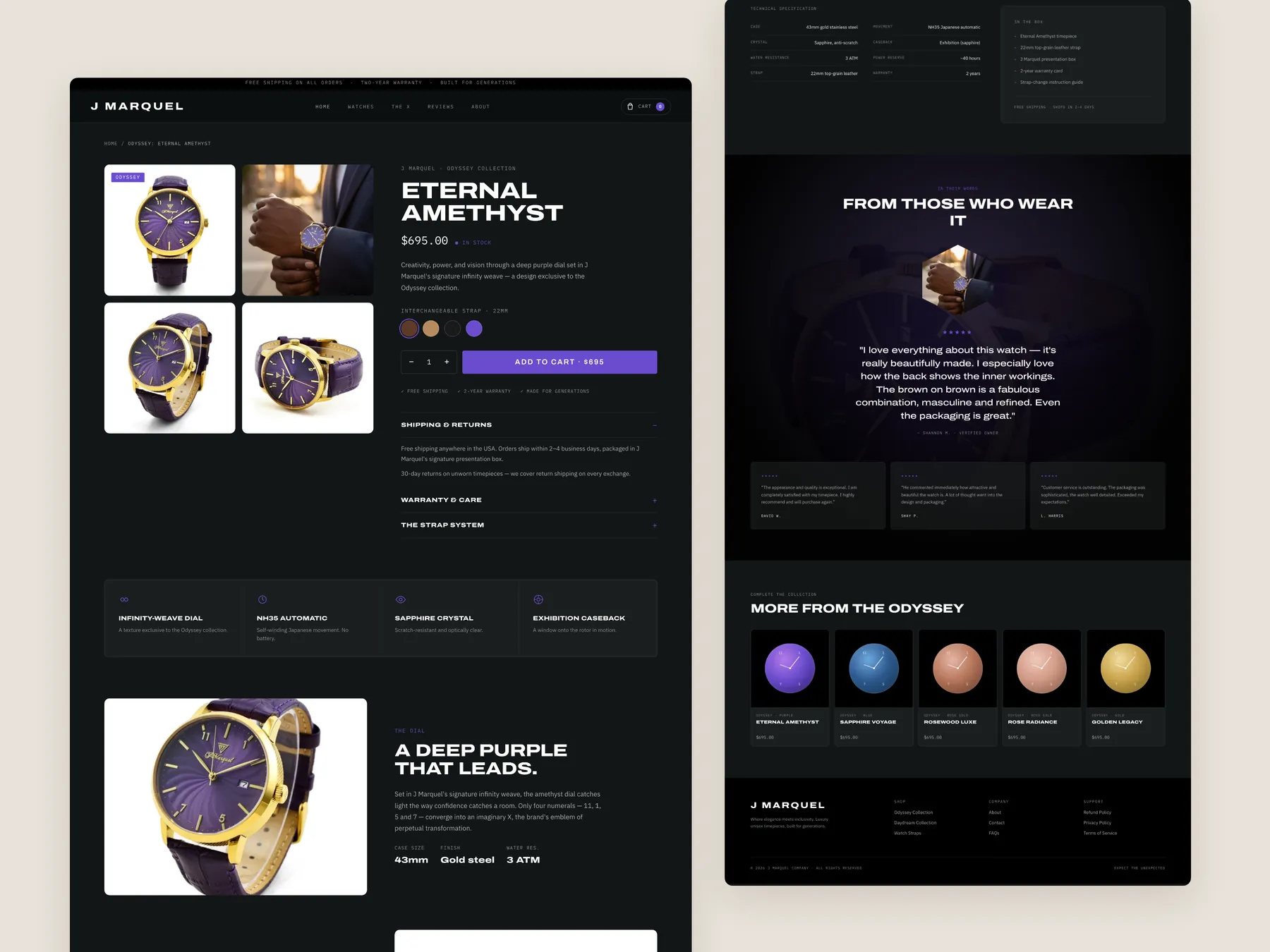
Product page in two tall columns: the photos and buy column first, then the details running down to the footer.
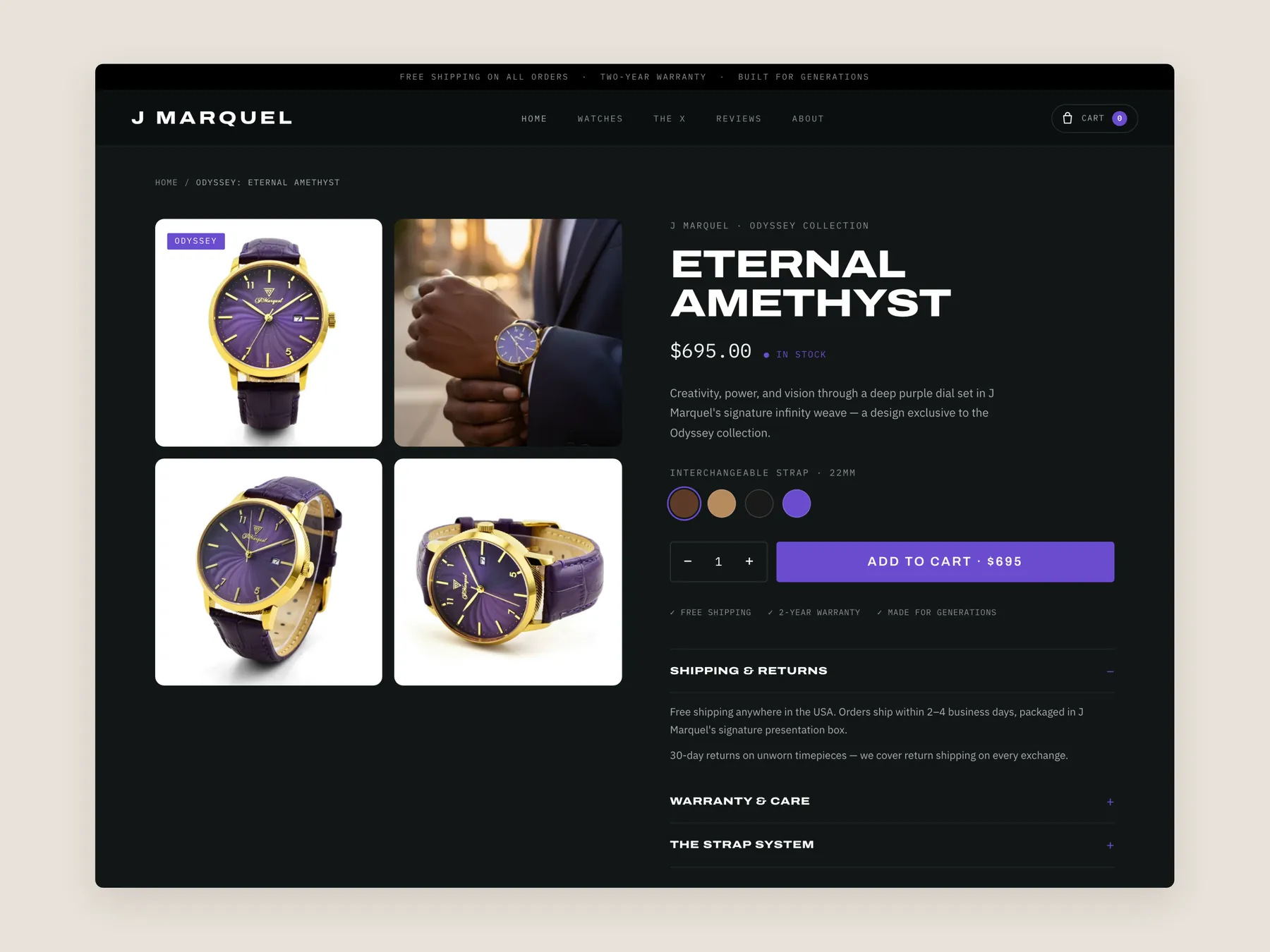
Product page first screen: header, four photos, strap swatches, quantity, the Add to Cart button and the shipping and returns answers on one screen.
10 answers drawn from the recording and the written report — the questions store owners in watches ask after watching this one.
Ask about your own store →Brand positioning, not usability. The site reads as a store that sells premium watches rather than as a premium watch brand, so at a $500–$700 price point visitors have no story, identity or emotional reason to justify the spend. UX scored 6/10 while brand and trust both scored 4/10 — the mechanics work, the meaning is missing.
One navigation link leads to a 404 page. On a $500+ purchase that single dead end reads as neglect: if the shop cannot keep its own menu working, a buyer has no reason to believe the warranty, the shipping promise or the after-sales service. It is the cheapest fix on the list and the most urgent — repair the collection or remove the link from the menu.
Lead with the brand, not the catalogue. In this audit that means moving the founder story up from the bottom of the homepage where most visitors never reach it, adding lifestyle photography of the watches being worn, showing the packaging and unboxing experience, and giving the page more breathing room and a stronger visual hierarchy. Specs like Sapphire Crystal or the NH35 automatic movement should be presented as designed feature sections, not paragraphs.
The story exists — it is just placed where only a scroll-to-the-end visitor sees it. Luxury and gift purchases are emotional decisions, so the narrative has to arrive before the price does. Placing it above or immediately beside the first product row is what converts interest into willingness to pay.
It is a grid, not a guide. Products are listed without recommendation badges, buying cues, proof points or any storytelling, so a visitor deciding between models gets no help. Some product names are also truncated with ellipses, which makes the page feel unfinished.
Three things, in order: fix the image gallery, which does not behave as expected; move the star rating and review count up next to the title and link them to the review section; and put free shipping, warranty, returns and delivery expectations directly beside the Add to Cart button. After that, break the long description into scannable benefit-led sections instead of a block of text.
Reviews are already there and they are good — they are just below the point where the decision is made. Star rating and count next to the product title, linked down to the full reviews, means confidence arrives before hesitation does.
Twelve issues were identified and fourteen fixes written, covering navigation, homepage positioning, the collection page, the product gallery, trust signals, description structure, photography, reviews and packaging presentation. Nine of the twelve findings have a directly matched fix; the rest are handled by the broader recommendations.
Reframe the site so it looks as premium as the watches, and justify the price on the page. Practically that means brand story above the fold, lifestyle photography, visible warranty and returns, and proof near the buy button — the broken link gets fixed the same afternoon because it costs nothing.
It was a free CRO teardown recorded by Convertica Studio, 25:28 long, covering three pages: the homepage, the collection page and the product page. The same format is available for any Shopify store on request.
Tell us about your store and we'll send a personalized 5-minute video showing exactly where you're losing buyers — and how to win them back.
Takes about 40 seconds. No call required.