Homepage
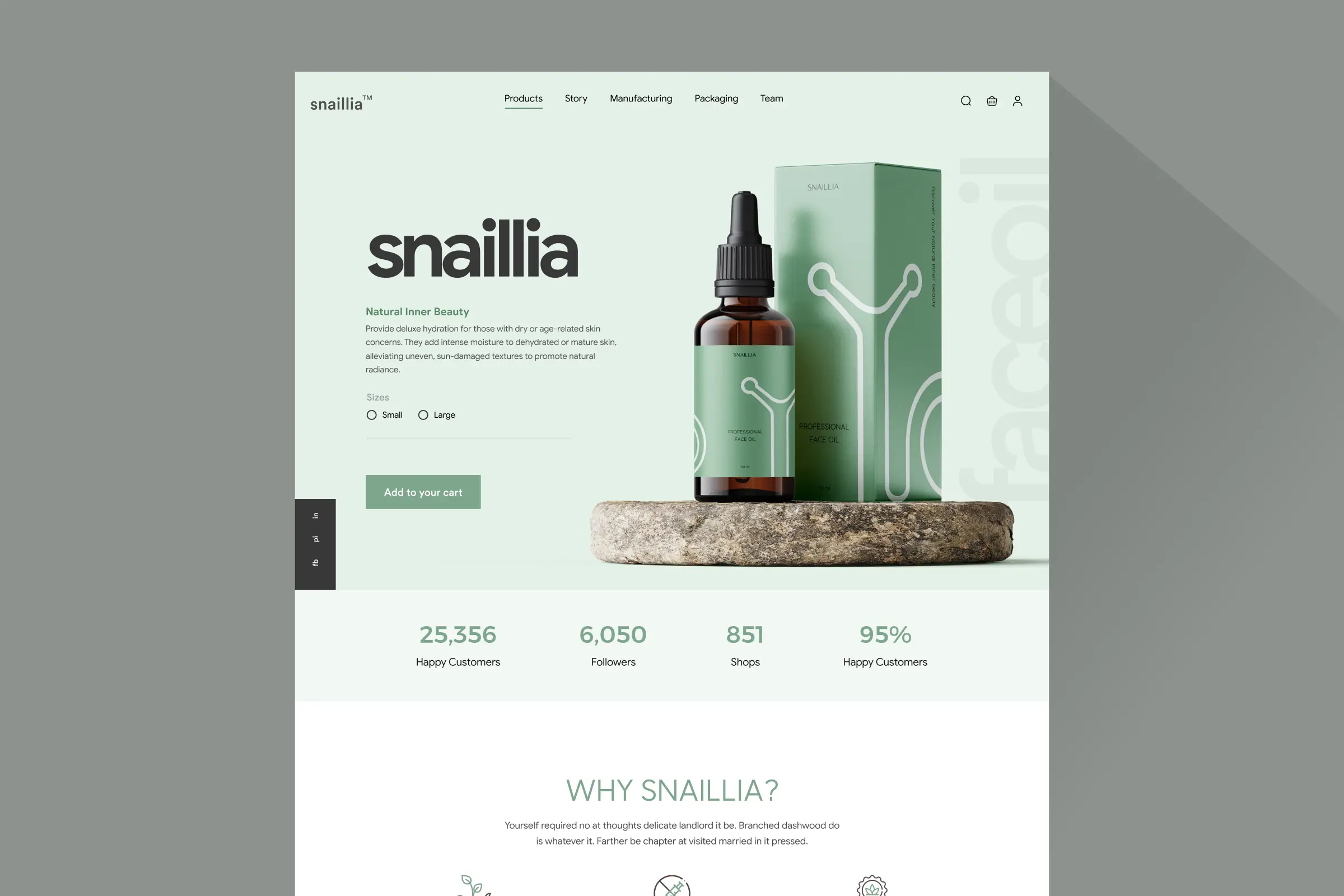
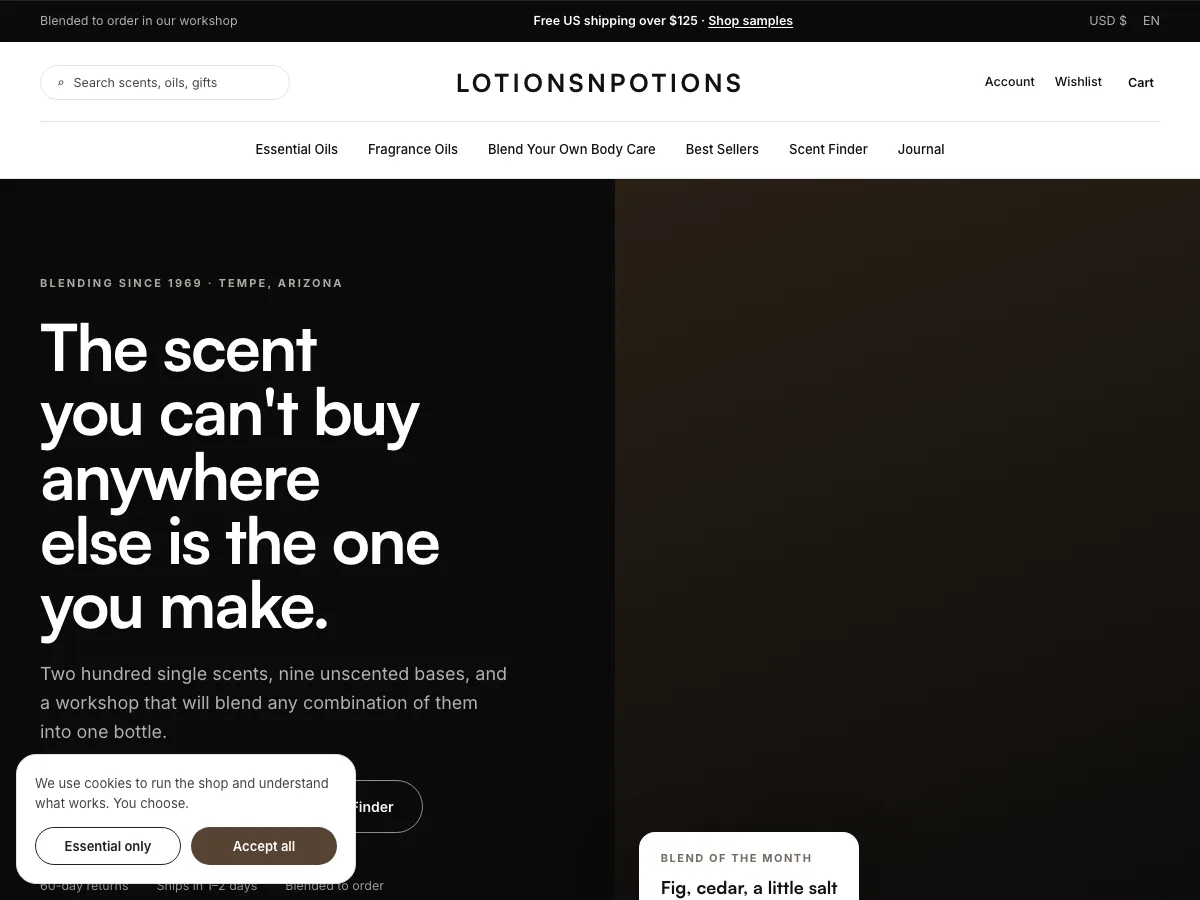
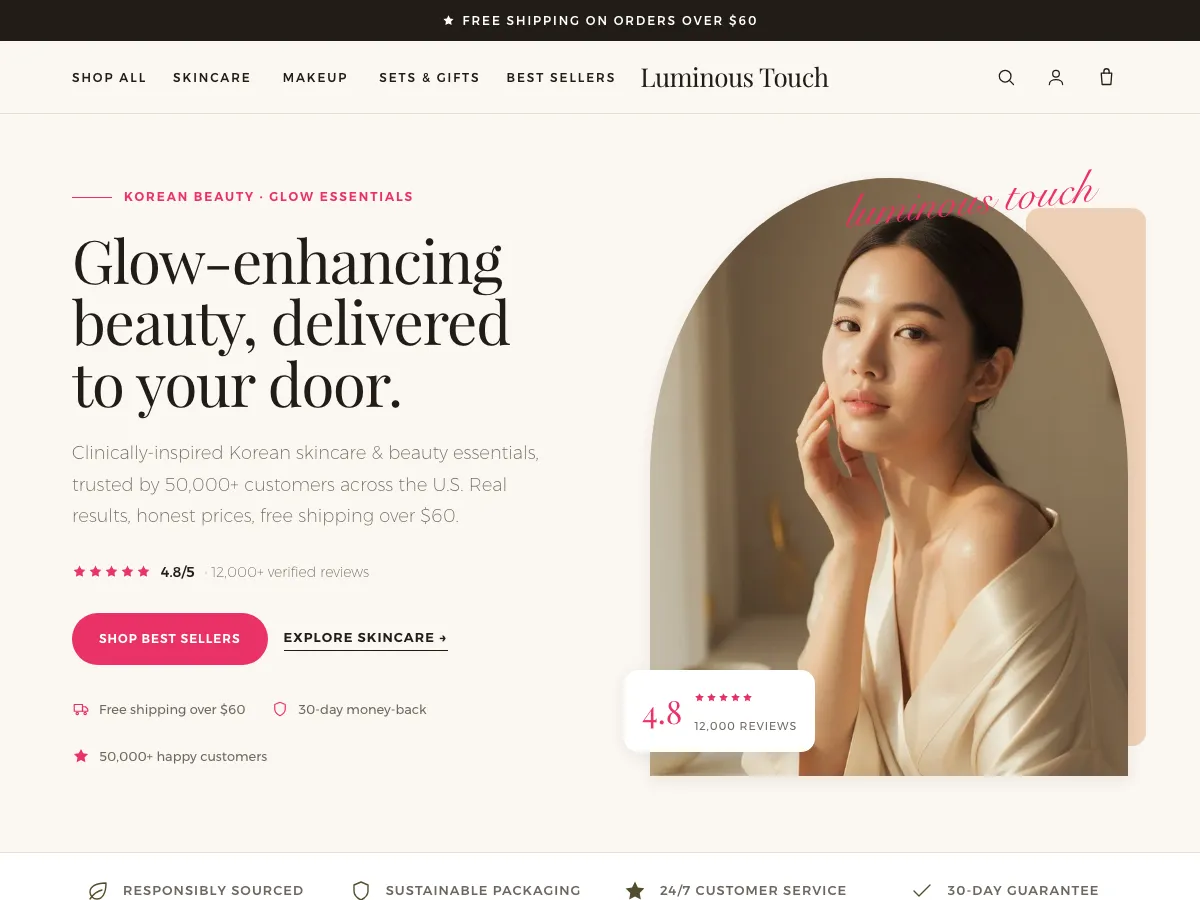
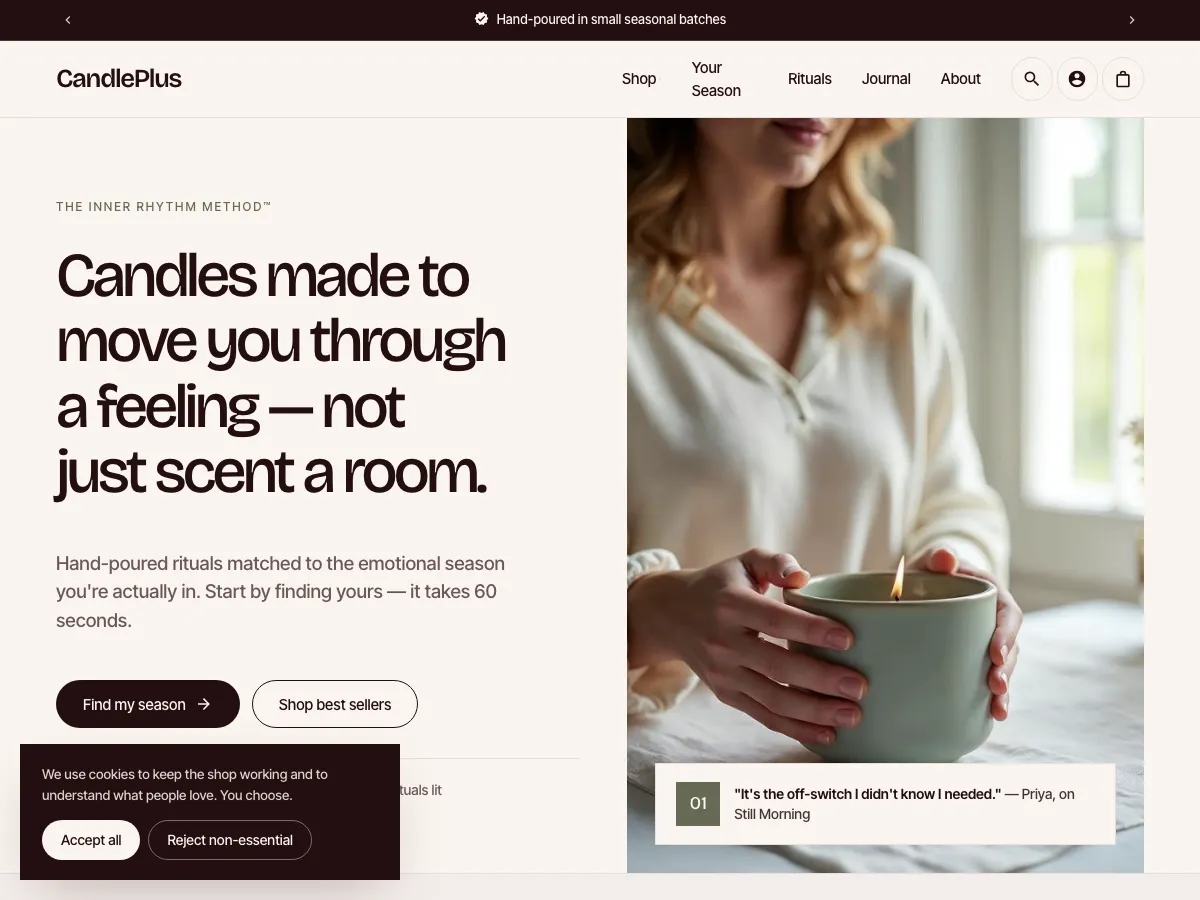
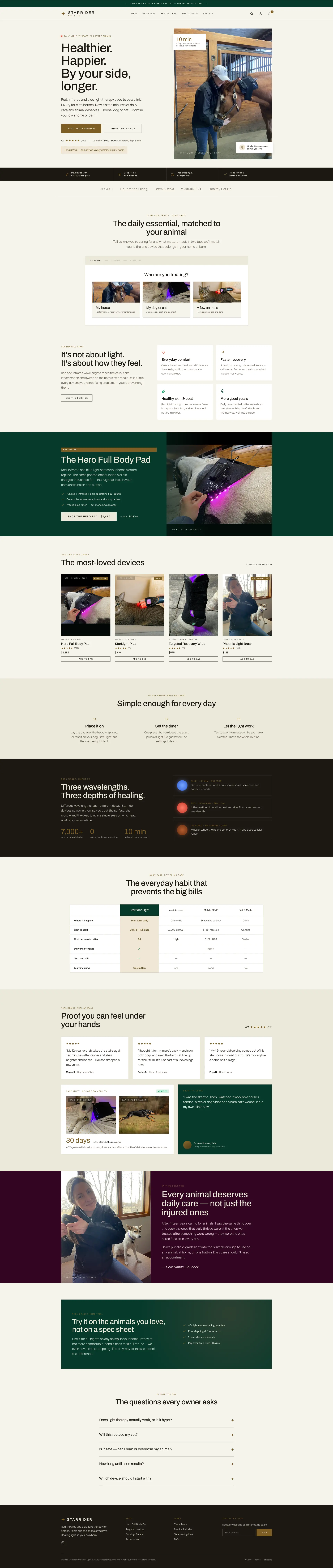
The full page shown as two tall columns, from the first screen to the footer, so you can read the order of the sections from top to bottom.
Storefronts we designed and built, across supplements, fragrance, health, wellness and skincare.
All 35 projectsFour engagements, measured before and after. What changed, why it changed, and by how much.
All case studiesDiagnosis, design and development from one studio — so the recommendation and the build never disagree.
All five services147 real Shopify stores torn down page by page, scored, and shown beside the version we would build. Free to watch.
Browse all teardownsSix conversion-first themes, each built for one industry’s buying journey. Zero required apps, $300, one licence.
Compare all sixThe website sells light therapy devices as reactive products for injured or unwell animals, but it does not build enough trust, emotion, or product education to justify high-ticket purchases.
Pressing play loads the video from YouTube — you can allow it for every teardown under cookie preferences.
This audit found that Star Rider Wellness has a meaningful product category with strong emotional potential, especially because pet and horse owners deeply care about their animals’ comfort, wellness, and longevity.
The main strategic issue is positioning. The current website presents the products more like reactive tools used only when an animal is hurt or unwell. The audit recommends repositioning the products as proactive wellness tools that can be used regularly to help animals feel better, recover better, and stay by their owner’s side longer.
The website also needs stronger brand trust. Right now, the experience feels more like a website selling light therapy devices rather than a credible wellness company. For high-ticket products, visitors need more proof, reviews, safety reassurance, use cases, comparison, and education before they feel comfortable purchasing.
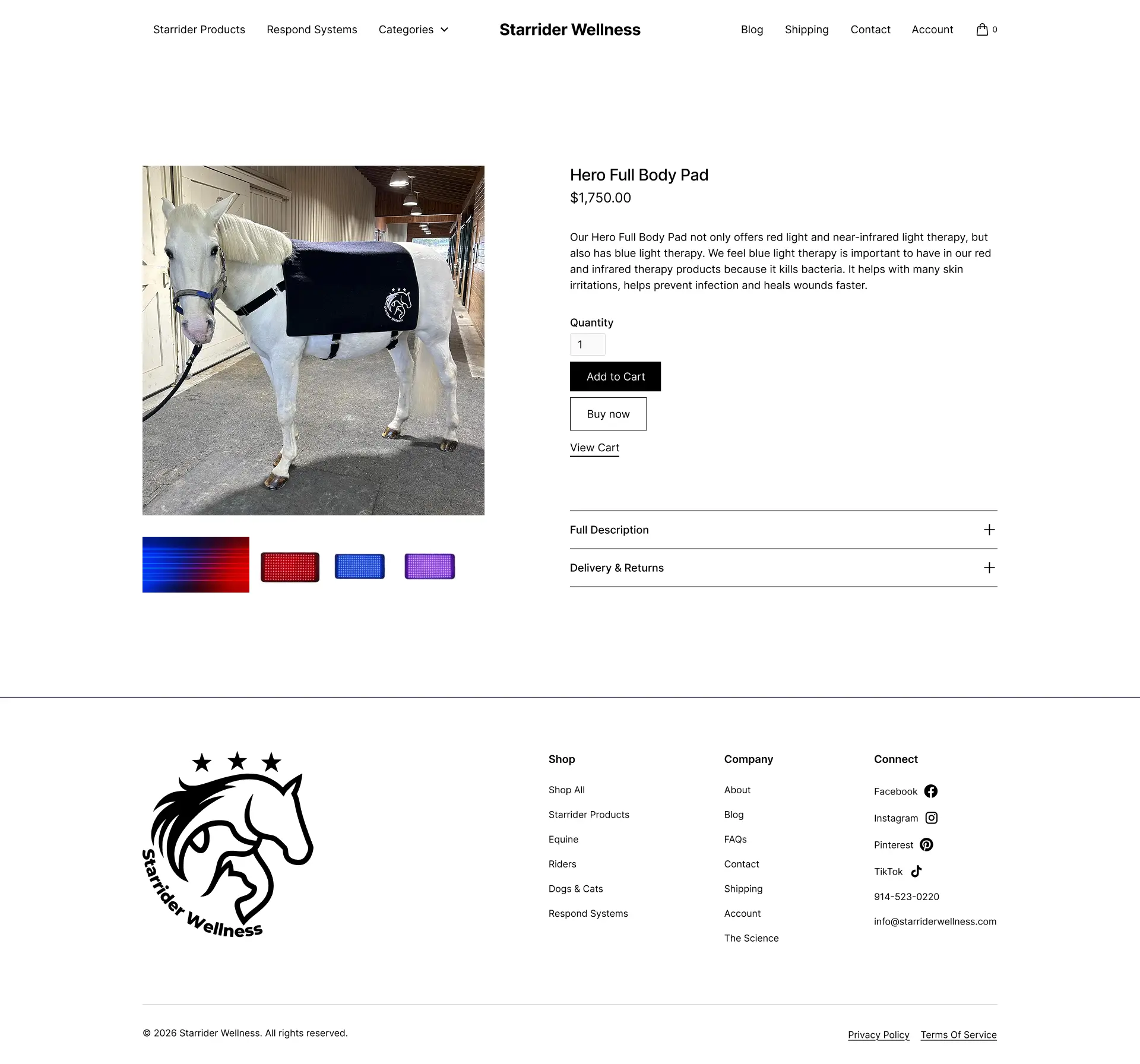
The biggest conversion issue is the product page. A product priced around $1,750 cannot convert well with only a few lines of copy and basic product information. The page needs to explain how the product works, why it is safe, who it is for, how it compares to vet or therapy alternatives, and why it is worth the investment.
The website sells light therapy devices as reactive products for injured or unwell animals, but it does not build enough trust, emotion, or product education to justify high-ticket purchases.
Reposition the products as proactive wellness tools that help pets and horses feel better, stay healthier, and remain by their owner’s side longer.
Stronger emotional positioning, improved trust, clearer product selection, higher product page confidence, and better conversion potential for both high-ticket and lower-cost devices.
Average of the five scores below, as judged at the time of recording. Critical overall — the detail is in which dimension is dragging.
Every finding below was called out on the recording. Open one to read what was found and what we would change. Nothing is hidden from the page source.
The products are currently positioned as something customers need only when their pet or horse is hurt or not feeling well.
Use real images of the product being used on horses, dogs, and other animals to build trust and reduce uncertainty.
The site does not strongly communicate that the products can be used regularly to support comfort, wellness, recovery, and longevity.
Move from reactive injury-based messaging to proactive wellness messaging focused on comfort, recovery, longevity, and everyday support.
The website talks about the product, but it does not strongly connect with the emotional reason people buy: wanting their animals to feel better and stay with them longer.
Use messaging such as healthier, happier, by your side longer to connect with pet and horse owners emotionally.
The site feels like it sells light therapy tools, but it does not yet feel like a strong, trusted wellness brand.
Use simple, non-technical explanations showing how light therapy supports wellness, comfort, and recovery.
Reviews, testimonials, customer stories, and real proof are not visible enough to help new visitors trust the products.
Show testimonials, real customer stories, animal photos, before-and-after examples, and real-life use cases throughout the site.
The site does not clearly show enough shipping, guarantee, return, or trust-building information near important conversion areas.
Add a clear founder story with a real image to explain why the company exists and why customers should trust it.
The products page lists products but does not guide users toward the right product for their animal, goal, or situation.
Guide users by animal type, goal, and product need so they can quickly find the right device.
Visitors are not helped through a clear decision-making process based on animal type, wellness goal, or product fit.
Add filters for animal type, use case, price range, light type, best seller, and product category.
A $1,700+ product needs far more explanation, proof, comparison, and reassurance than the current product page provides.
Product pages should explain who the product is for, where it works, how it helps, why it is safe, and what results customers can expect.
The page does not clearly explain the value of owning the device compared with vet visits, clinic lasers, mobile PEMF, or repeated therapy appointments.
Compare Star Rider devices against clinic laser, mobile PEMF, vet visits, and other therapy options to clarify value.
Visitors need reassurance that the product is safe, easy to use, drug-free, non-invasive, and suitable for home use.
Highlight drug-free care, non-invasive use, vet and rehab compatibility, guarantees, shipping clarity, and customer support early on the homepage and product pages.
The site does not compare the product against alternatives such as vet appointments, clinic lasers, or mobile therapy services.
Compare the one-time investment against repeated vet visits, clinic laser sessions, mobile PEMF, and travel or appointment costs.
The collection and product pages do not strongly encourage bundles, kits, or multi-product purchases to increase average order value.
Offer kits or bundles that encourage customers to buy multiple devices or accessories together.
Focus on the outcome customers want: helping their animal feel better, stay active, recover comfortably, and enjoy a better quality of life.
Present Star Rider Wellness as a credible wellness company with a clear mission, identity, story, and trust-building structure.
Instead of only listing products, recommend specific devices based on the customer’s goal so the brand feels helpful and expert-led.
Use badges such as Best Seller, Most Loved, For Horses, For Small Pets, or Starter Pick to guide decisions.
Explain that customers place the device, set the timer, and let it work, making the product feel easy and approachable.
For expensive products, clearly show payment plans or installment options to reduce sticker shock.
Use lower-cost products such as StarLight Plus as the main paid-ad entry point, then build trust and upsell larger devices later.
Drag each frame to move between what is live today and the version built on the recommendations above.
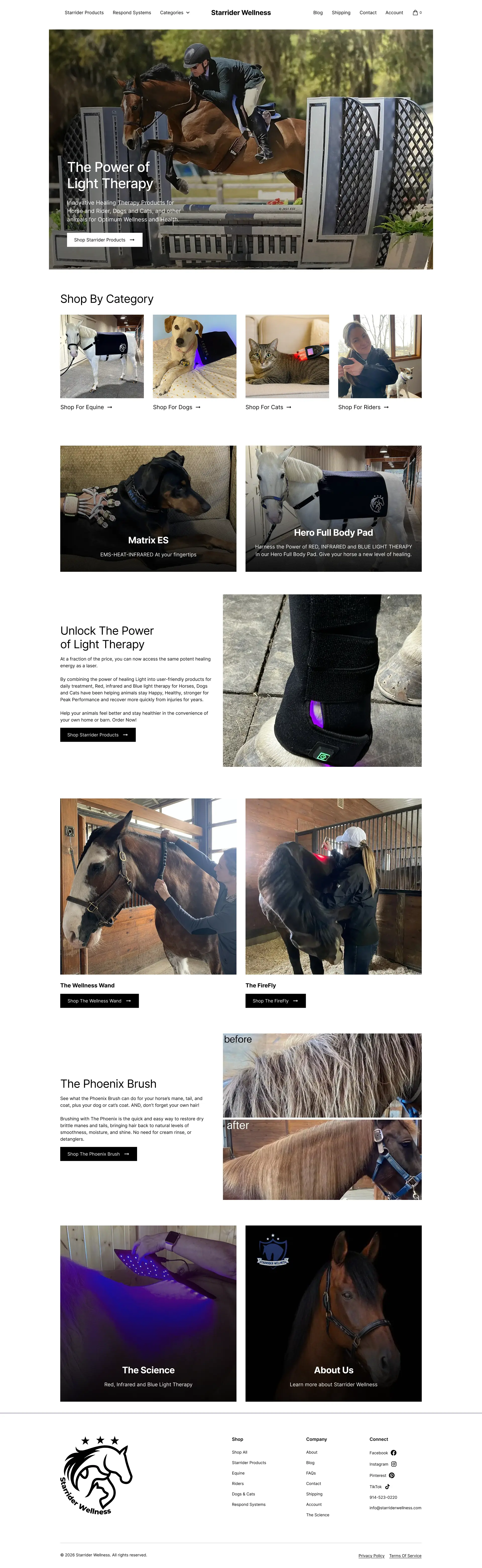
 After
Before
 After
Before
 After
Before
The strongest opportunity is repositioning the product from reactive care to proactive wellness.
Pet and horse owners should feel the product helps their animals stay healthier and happier for longer.
The website needs stronger emotional storytelling and brand trust.
The homepage should sell the outcome, not the device.
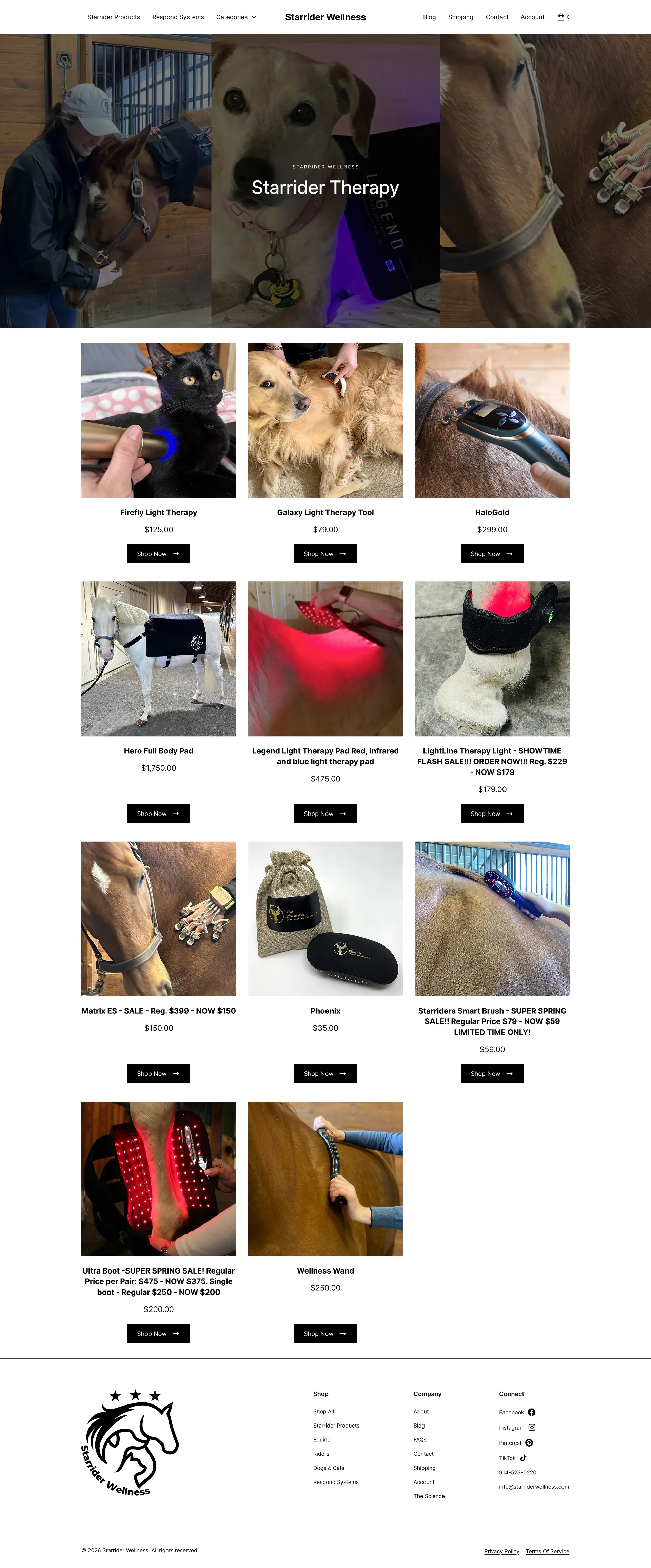
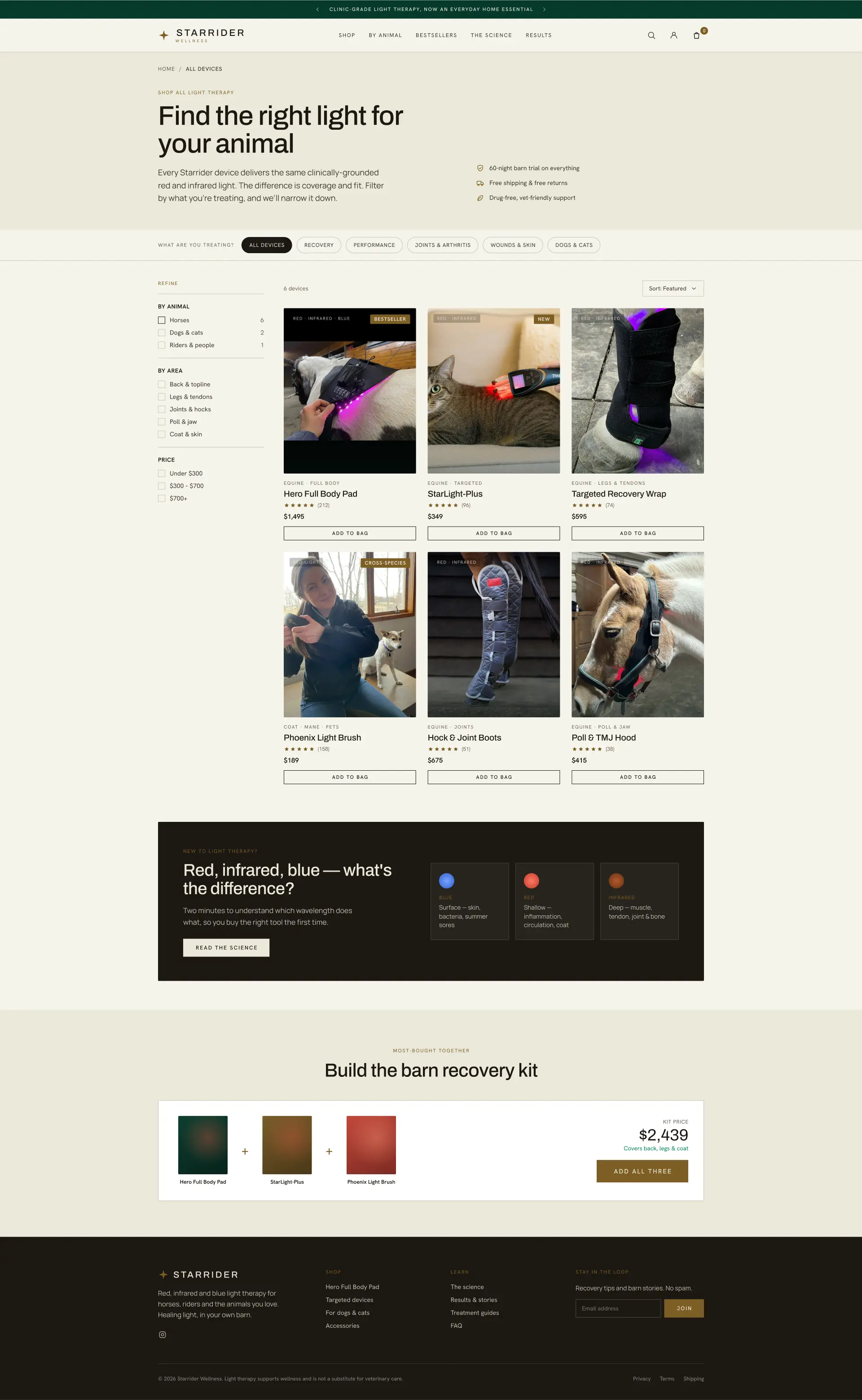
The collection page should guide users to the right product instead of acting like a catalog.
High-ticket product pages need much more proof, education, safety reassurance, and value justification.
Reviews, real images, and customer stories are essential for trust.
Comparison against vet visits, clinic lasers, and mobile PEMF can justify pricing.
Bundles and kits can increase average order value.
Lower-cost devices can work better as paid-ad entry products.
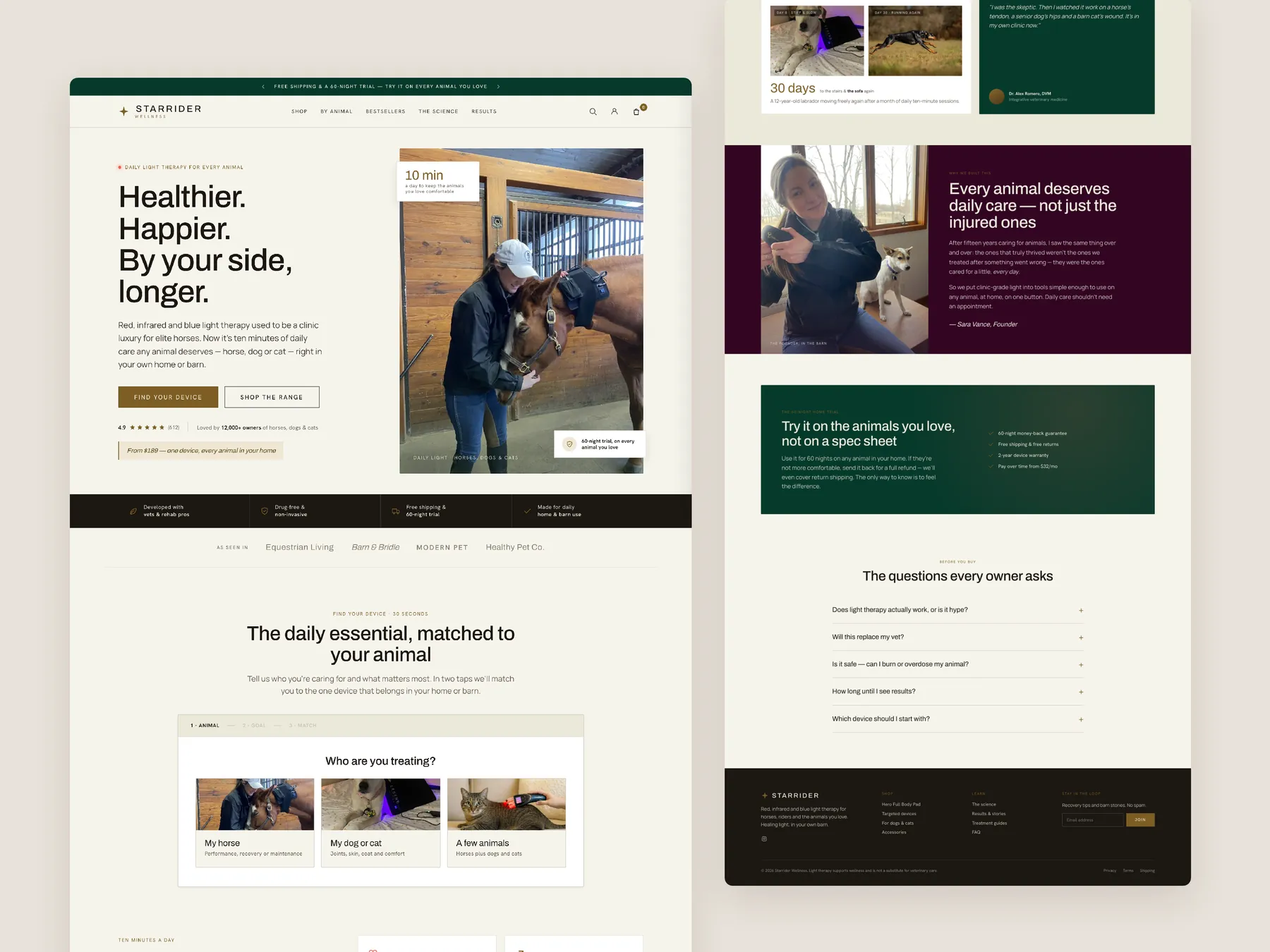
A concept redesign created by Convertica Studio from this audit. It shows how the store could work, it is not the live store.
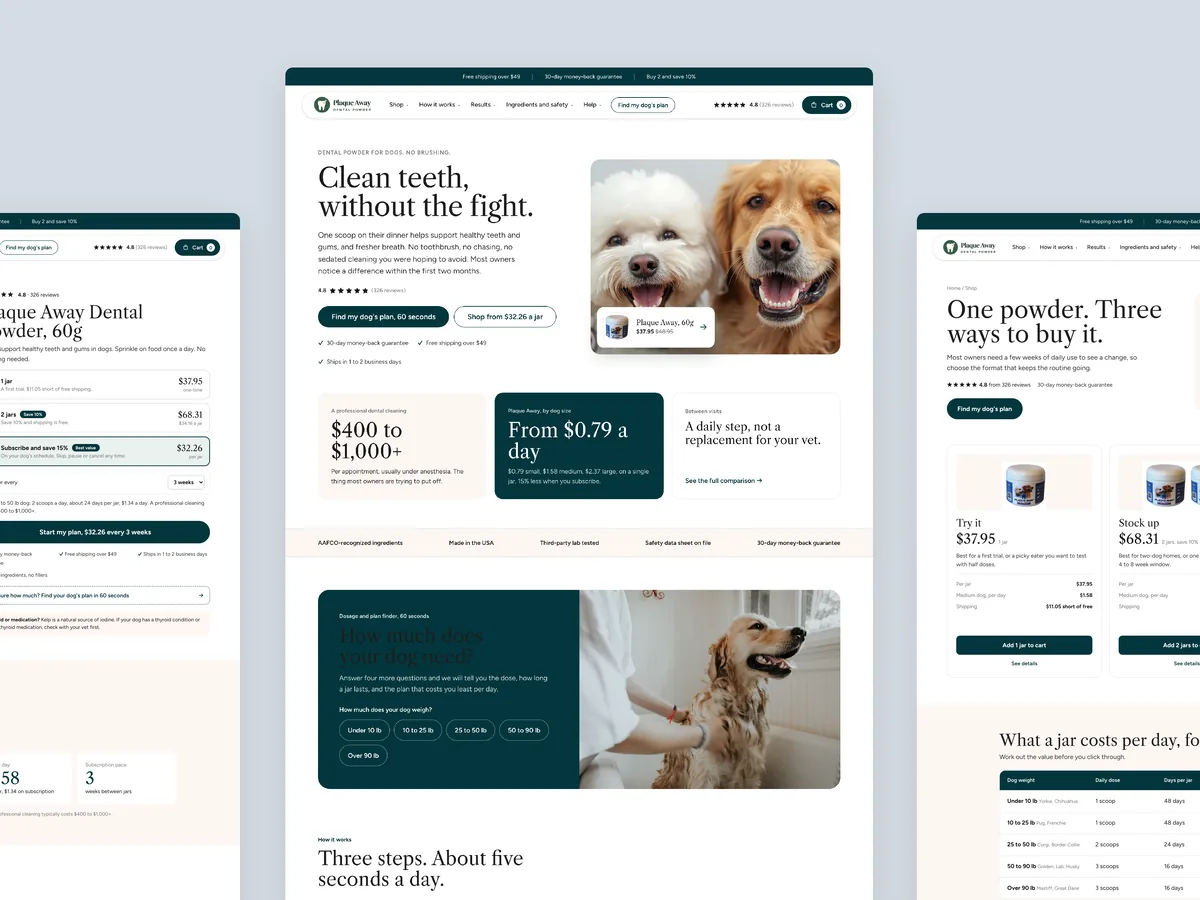
The full page shown as two tall columns, from the first screen to the footer, so you can read the order of the sections from top to bottom.
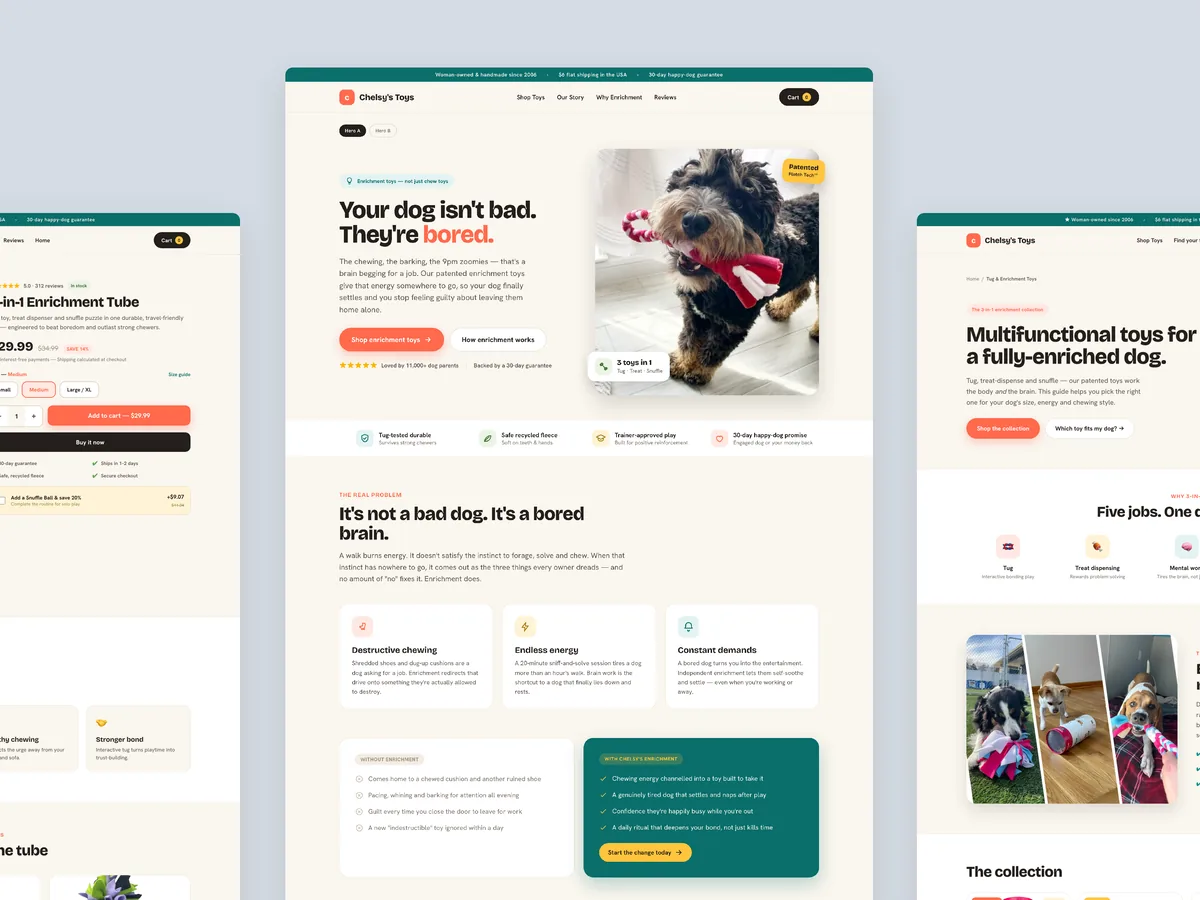
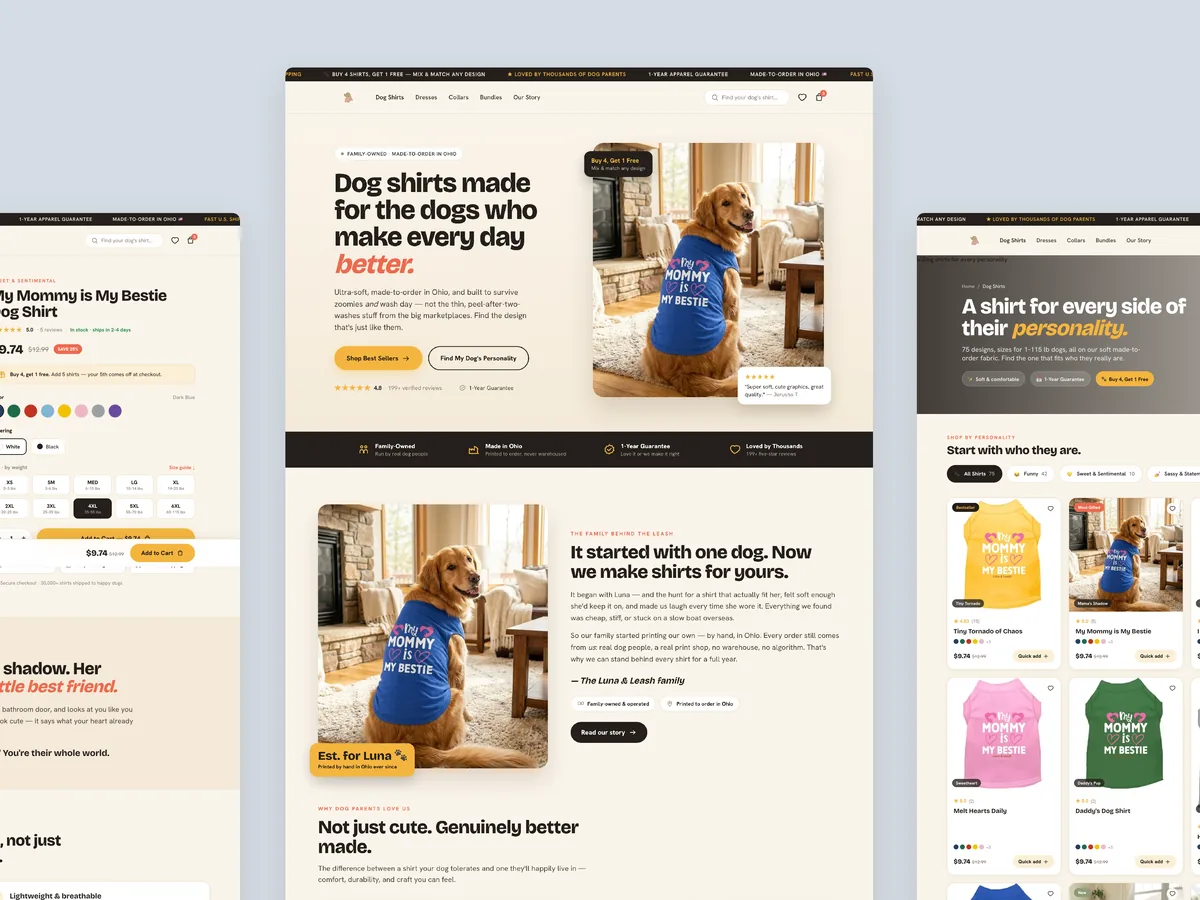
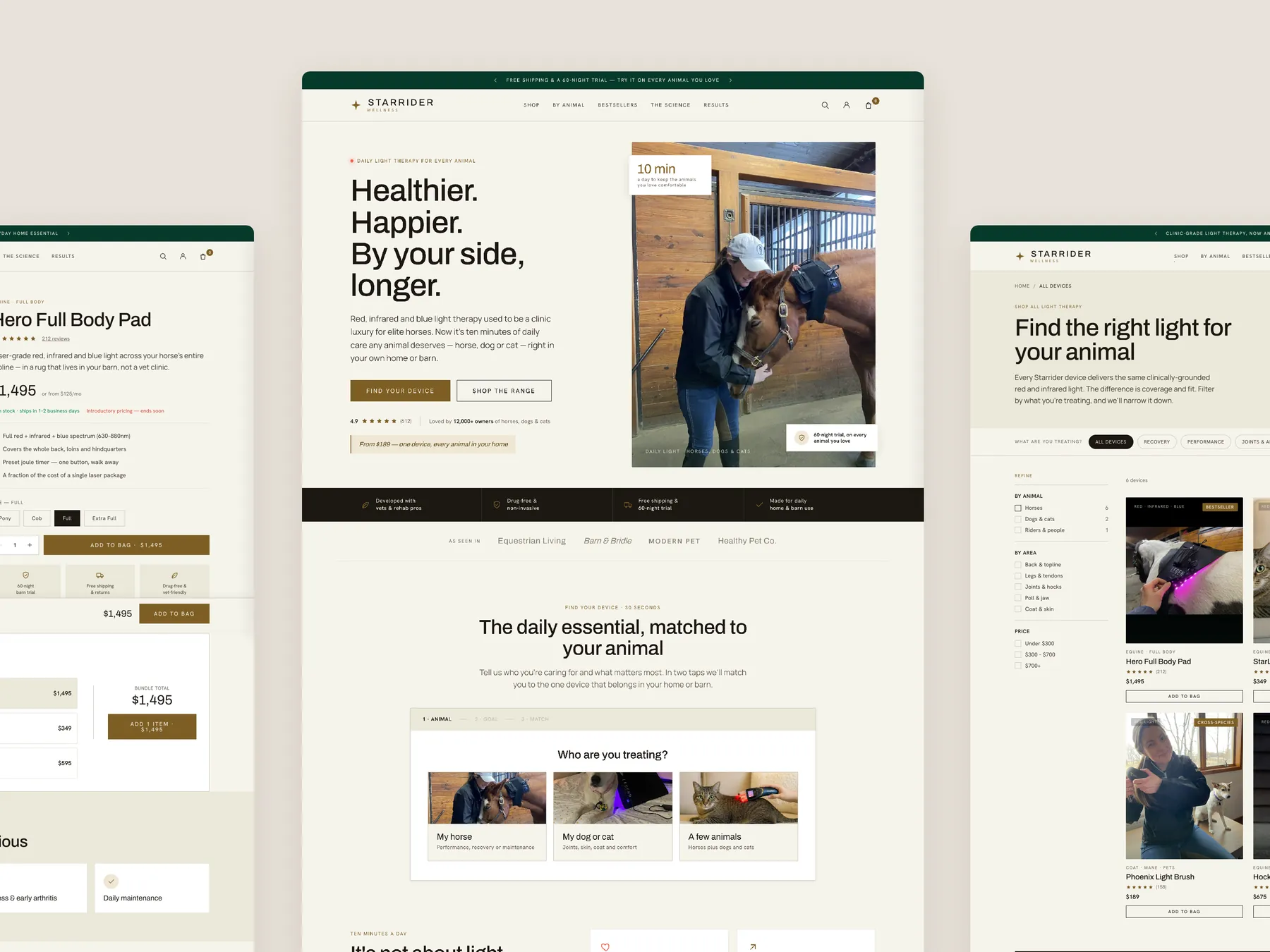
The homepage in the centre, the product page on the left and the collection page on the right, so the shared look and header read at a glance.
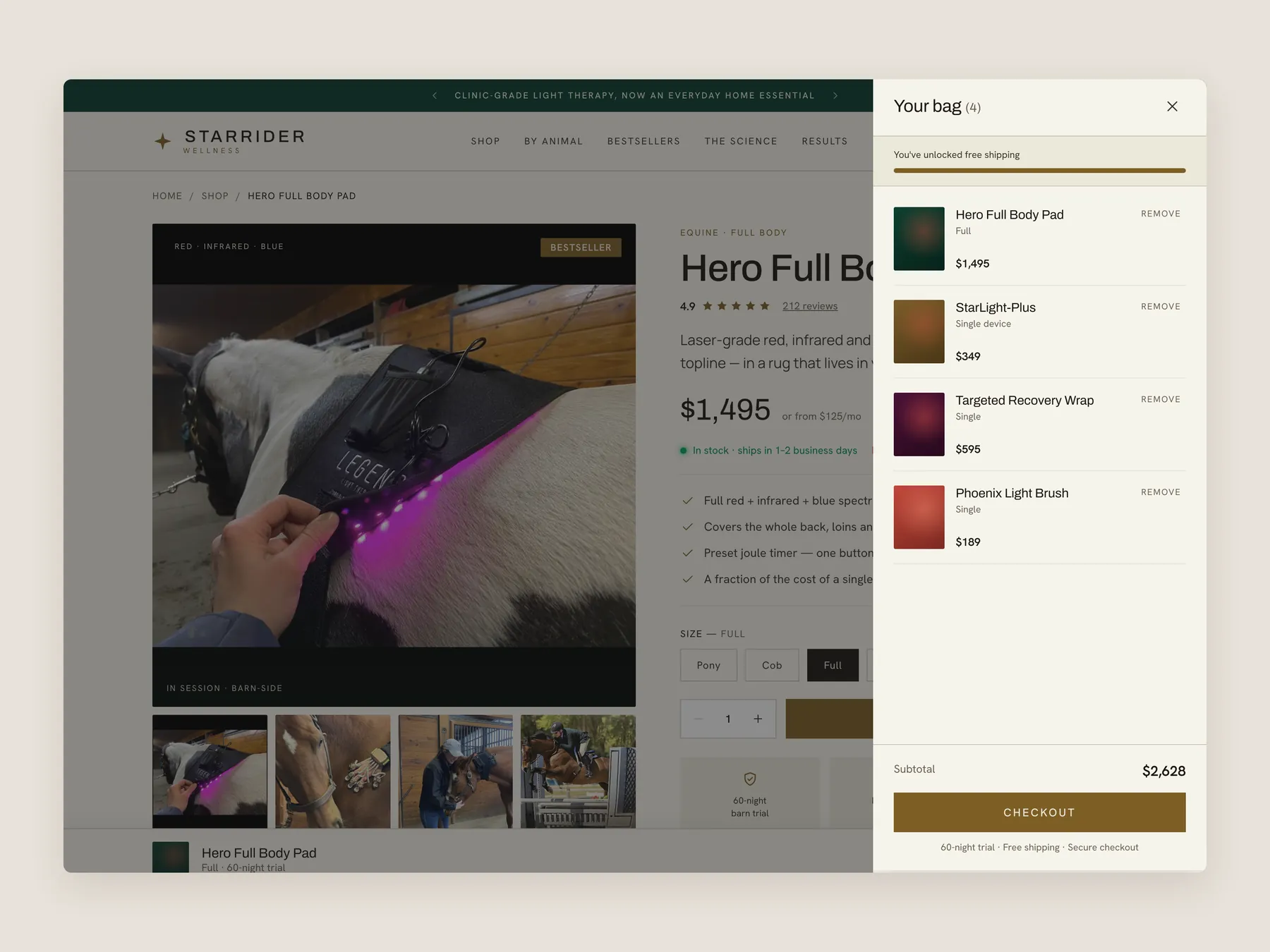
A slide-over opens on top of the product page with four devices in it, the subtotal and one clear checkout button, while the page behind stays readable.
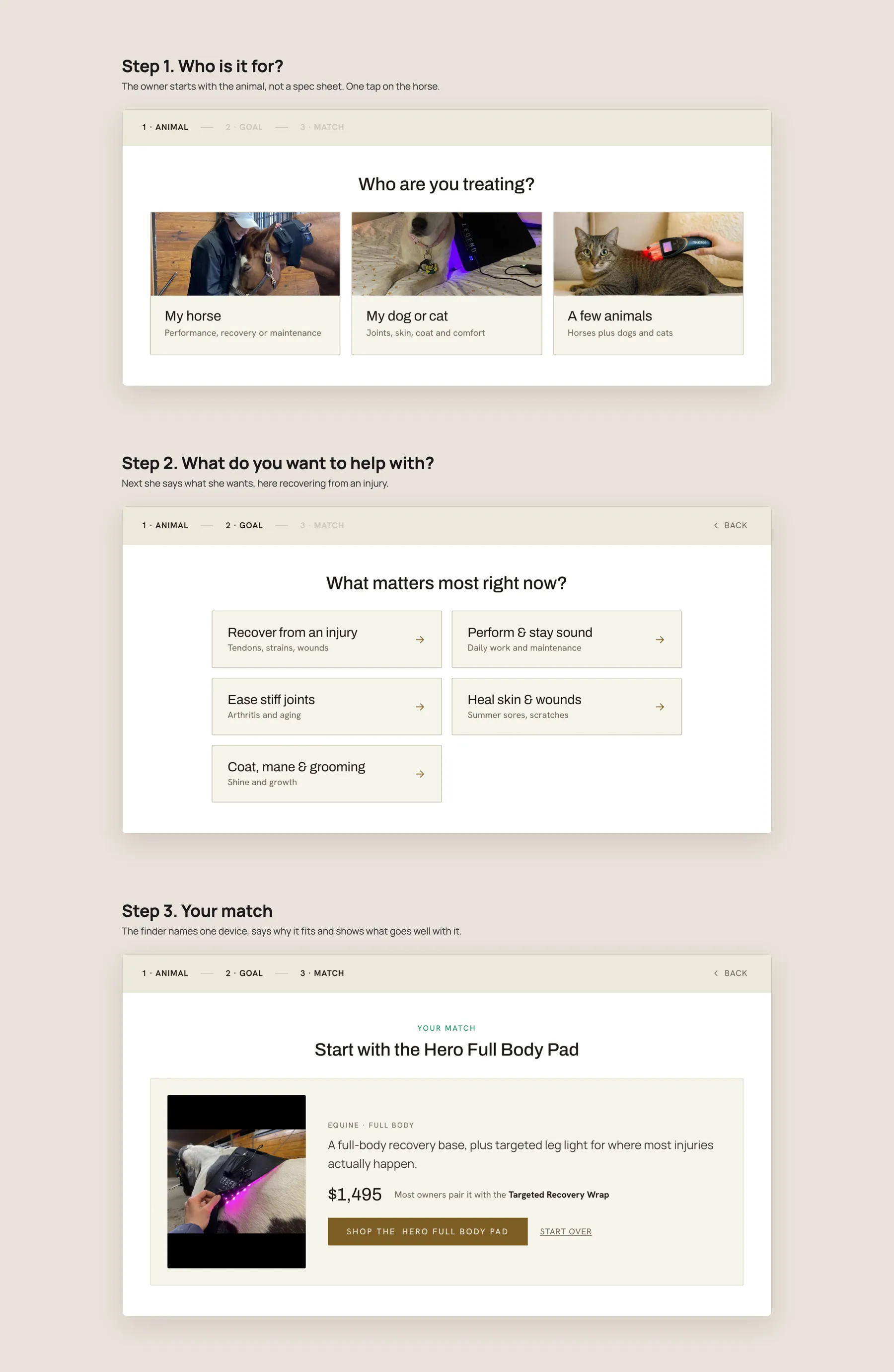
The owner picks the animal, then the goal, and the finder names one device with the reason it fits and what goes well with it.
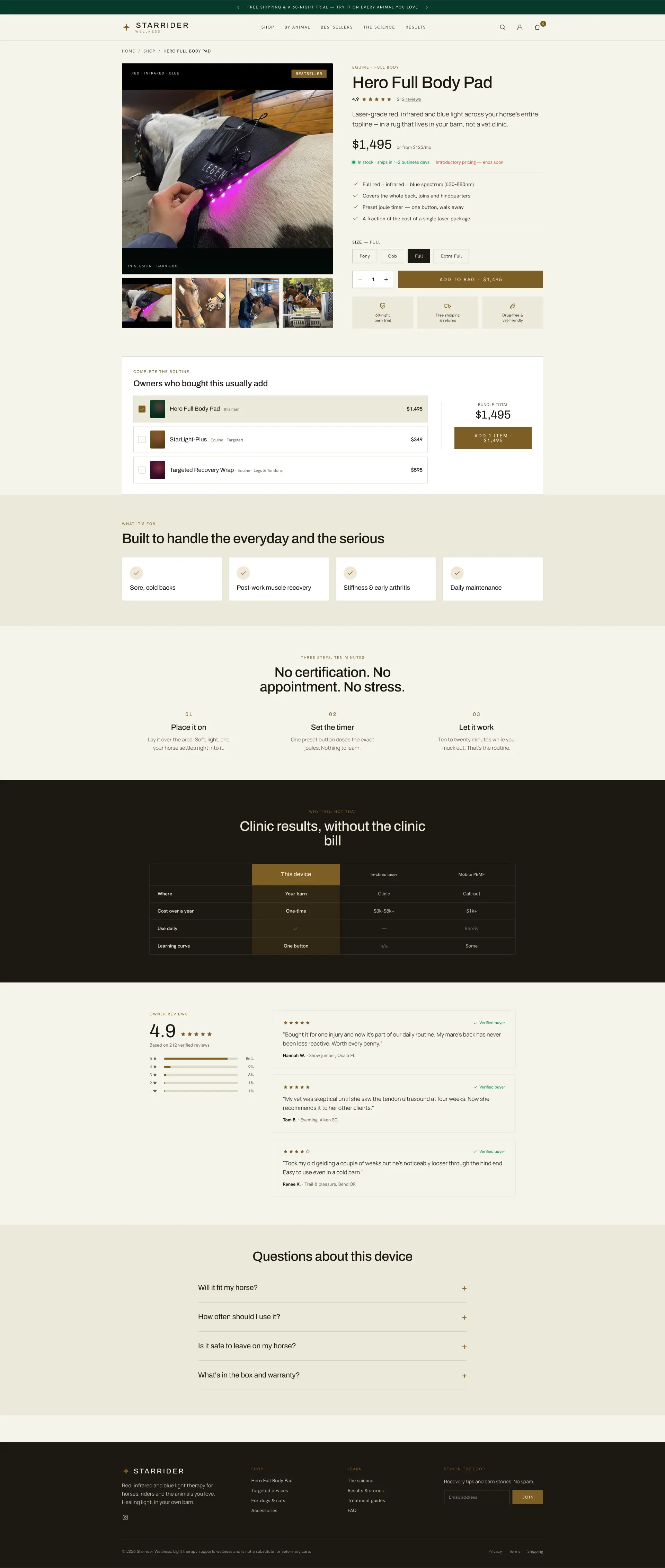
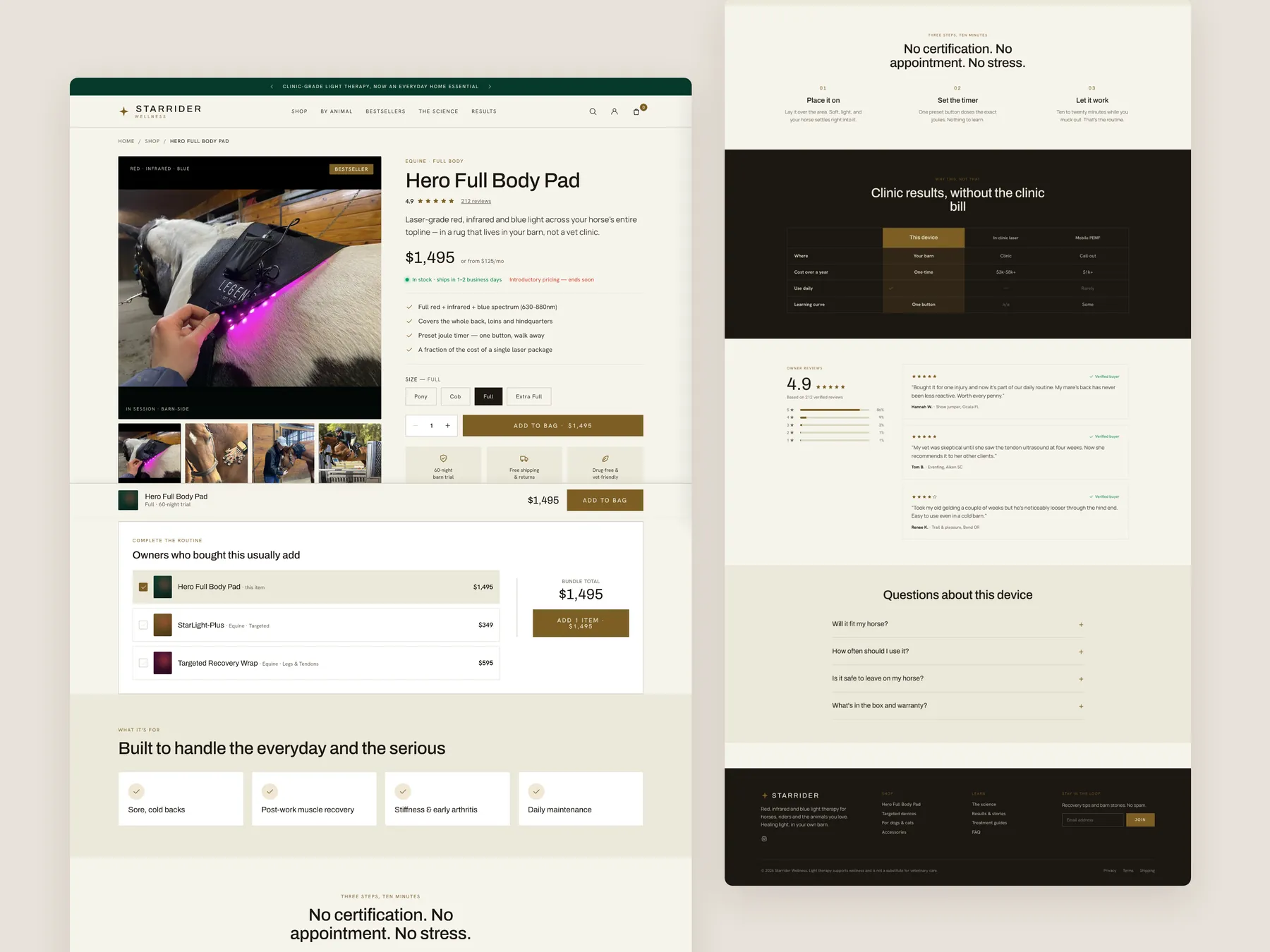
The whole page in two tall columns: the buy box and its details first, then the proof and the questions an owner asks down to the footer.
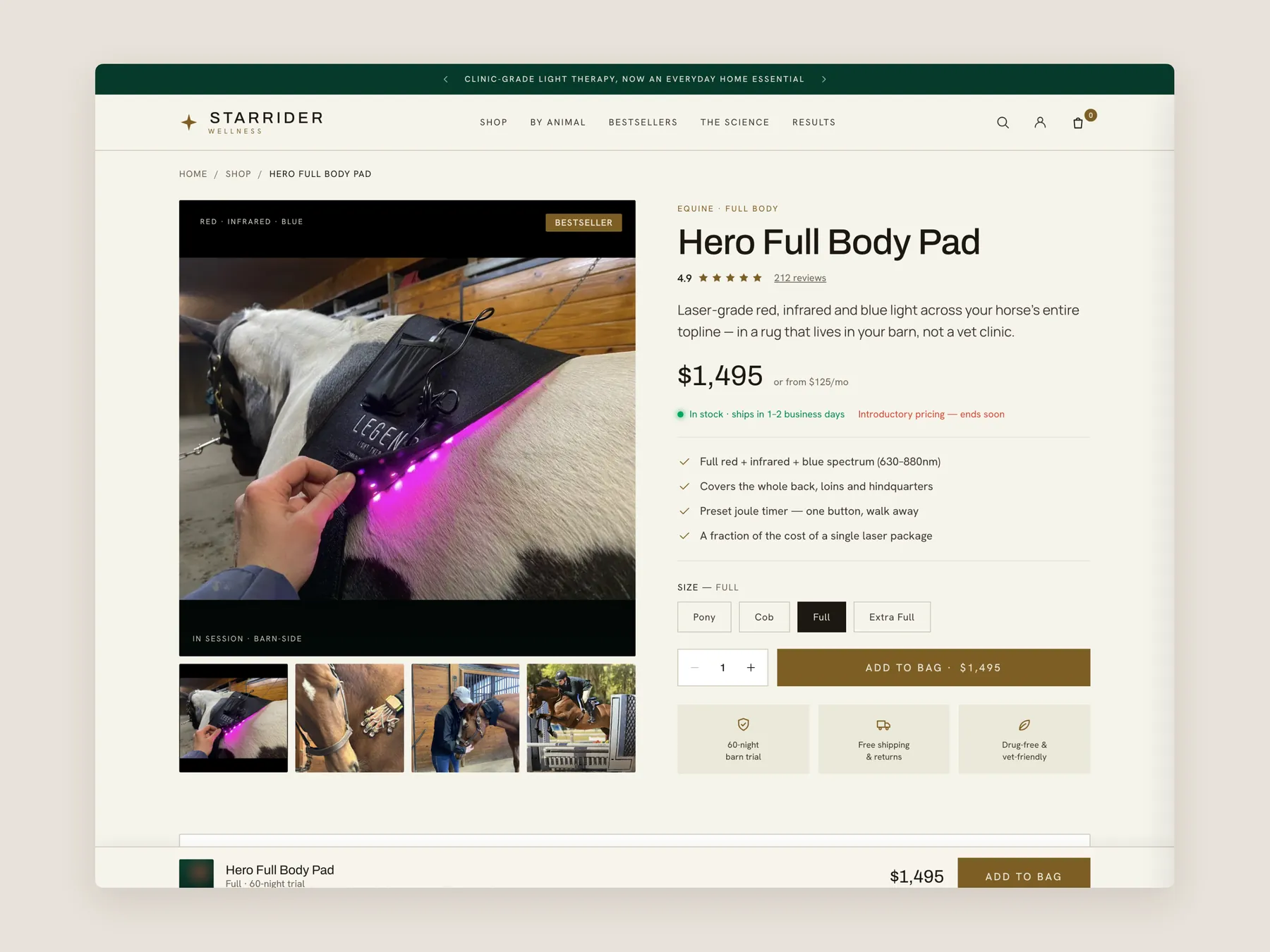
The header and the buy box on one screen, with the sizes, the add to bag button and the trust tiles under it.
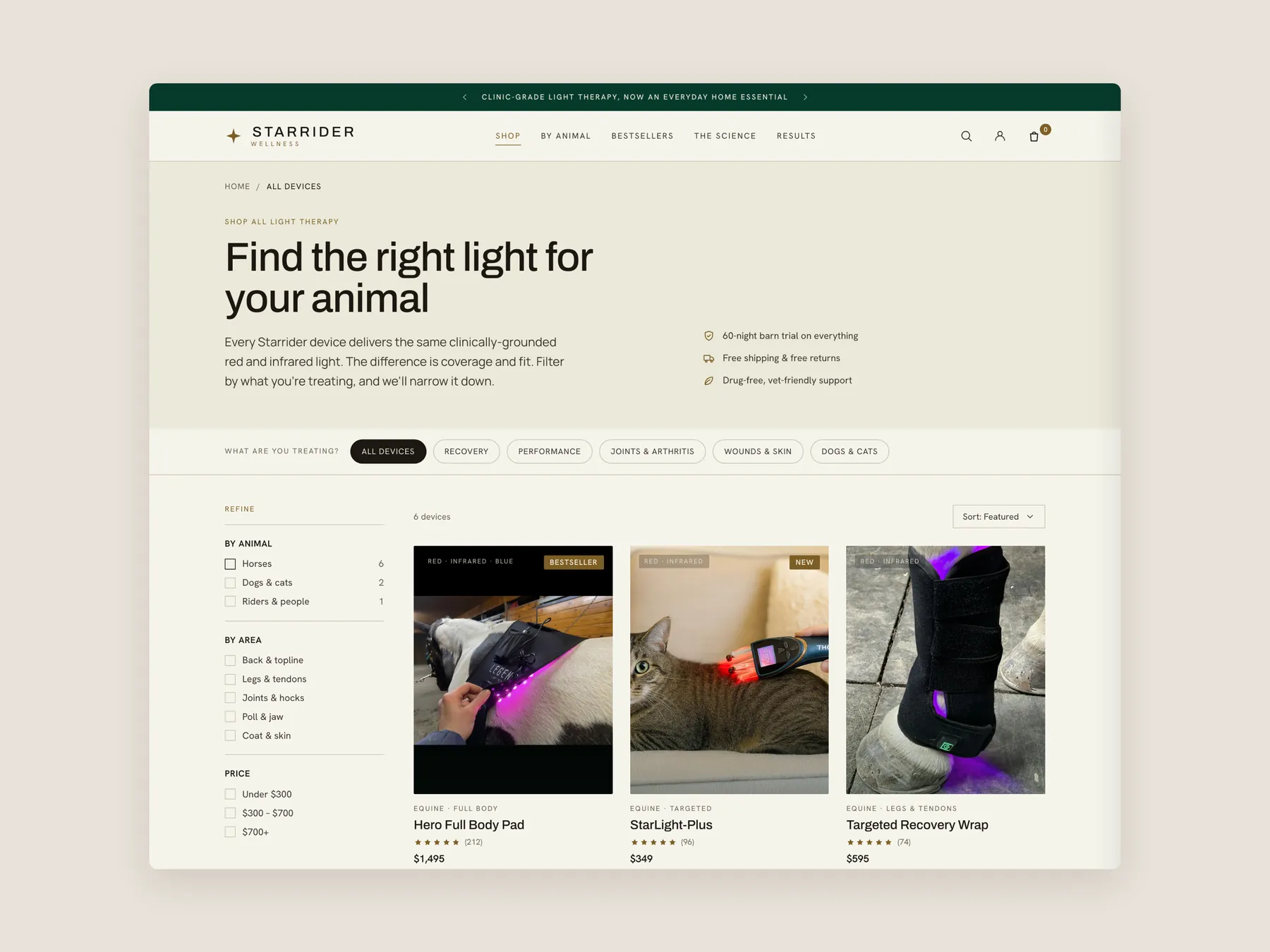
The header, the filter bar by what the owner is treating and the first row of devices with prices and add to bag buttons.
12 answers drawn from the recording and the written report — the questions store owners in pet & equine wellness ask after watching this one.
Ask about your own store →The website sells light therapy devices as reactive products for injured or unwell animals, but it does not build enough trust, emotion, or product education to justify high-ticket purchases. This audit found that this store has a meaningful product category with strong emotional potential, especially because pet and horse owners deeply care about their animals’ comfort, wellness, and longevity. The main strategic issue is positioning.
The product page was the weakest of the five dimensions at 2/10, against 4/10 for user experience. Product Page Does Not Justify Price: The page does not clearly explain the value of owning the device compared with vet visits, clinic lasers, mobile PEMF, or repeated therapy appointments.
The products are currently positioned as something customers need only when their pet or horse is hurt or not feeling well. The fix: Show Product In Action — Use real images of the product being used on horses, dogs, and other animals to build trust and reduce uncertainty.
The site does not strongly communicate that the products can be used regularly to support comfort, wellness, recovery, and longevity. The fix: Reposition As Proactive Wellness — Move from reactive injury-based messaging to proactive wellness messaging focused on comfort, recovery, longevity, and everyday support.
The website talks about the product, but it does not strongly connect with the emotional reason people buy: wanting their animals to feel better and stay with them longer. The fix: Lead With Emotional Value — Use messaging such as healthier, happier, by your side longer to connect with pet and horse owners emotionally.
The site feels like it sells light therapy tools, but it does not yet feel like a strong, trusted wellness brand. The fix: Explain How The Therapy Works — Use simple, non-technical explanations showing how light therapy supports wellness, comfort, and recovery.
Reviews, testimonials, customer stories, and real proof are not visible enough to help new visitors trust the products. The fix: Add Reviews And Real Proof — Show testimonials, real customer stories, animal photos, before-and-after examples, and real-life use cases throughout the site.
Start with Show Product In Action — Use real images of the product being used on horses, dogs, and other animals to build trust and reduce uncertainty.
Create Bundle Kits; Focus Ads On Lower-Cost Entry Products. Offer kits or bundles that encourage customers to buy multiple devices or accessories together.
Structural. The average is 3.0/10 and the weakest dimension, the product page, sits at 2/10 — the recommendations amount to rebuilding how the store presents itself, not tuning what is there.
Bundles and kits can increase average order value. Lower-cost devices can work better as paid-ad entry products.
A free 20:06 CRO teardown recorded by Convertica Studio for a pet & equine wellness store, walking the live site page by page. It produced 13 issues and 20 written fixes, plus scores across brand, UX, trust, product page and conversion. Any Shopify store can request the same review.
Tell us about your store and we'll send a personalized 5-minute video showing exactly where you're losing buyers — and how to win them back.
Takes about 40 seconds. No call required.