How we increased consultation requests by 52%
By simplifying the patient acquisition journey
Qualified traffic, abandoned before the booking.
BLIV was attracting qualified traffic through paid advertising and organic channels, but too many visitors were leaving before booking a consultation.
The homepage contained large amounts of information, complex pricing comparisons, and multiple competing calls-to-action. New visitors struggled to understand the treatment process and what steps to take next.
As a result, users were abandoning the journey before reaching the consultation request stage.
Six steps, and the form is not step one.
A prospective patient needs to understand and trust the programme before being asked for health information.
Understand
What the programme is and who it is for, in the first viewport — before any pricing table.
Trust
Credentials, outcomes and patient proof placed above the fold rather than deep in the page.
Consultation
One clear next step. The competing calls-to-action removed, not restyled.
Assessment
What happens on the call, so booking it stops feeling like a commitment.
Treatment
The clinical path explained in sequence instead of scattered across sections.
Delivery
Medication and follow-up — the part that answers "and then what?".
Four reasons visitors left.
Overwhelming information architecture
Visitors were presented with large amounts of information before understanding the core offer, creating friction and increasing drop-off.
Weak trust building above the fold
The site did not immediately communicate credibility, expertise, or patient outcomes during the first few seconds of the visit.
Complex user journey
Key steps in the treatment process were scattered throughout the experience, making it difficult for prospective patients to understand how the programme worked.
Limited emotional connection
The site focused heavily on programme details but lacked the reassurance a prospective patient needs before sharing health information.
Five moves, six weeks.
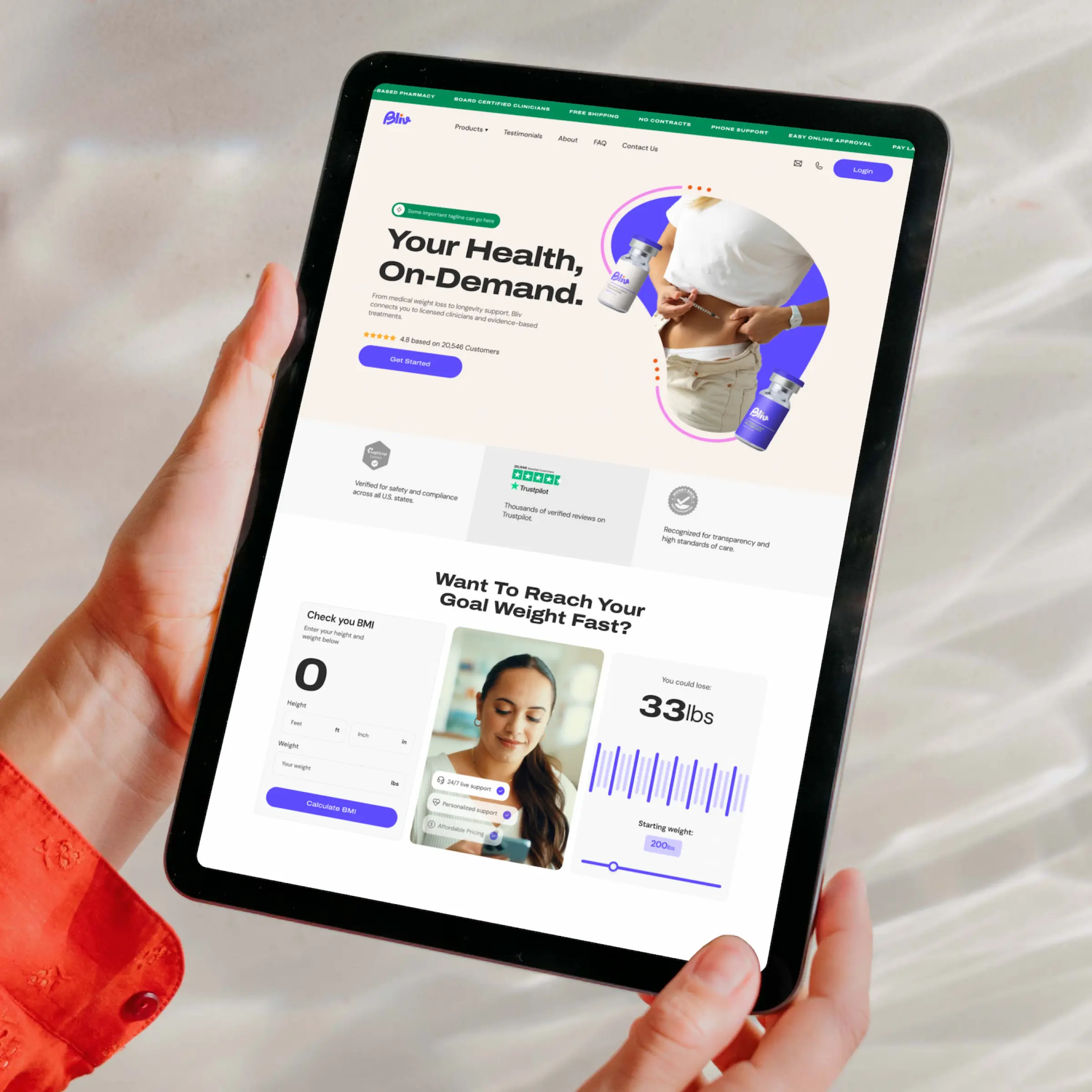
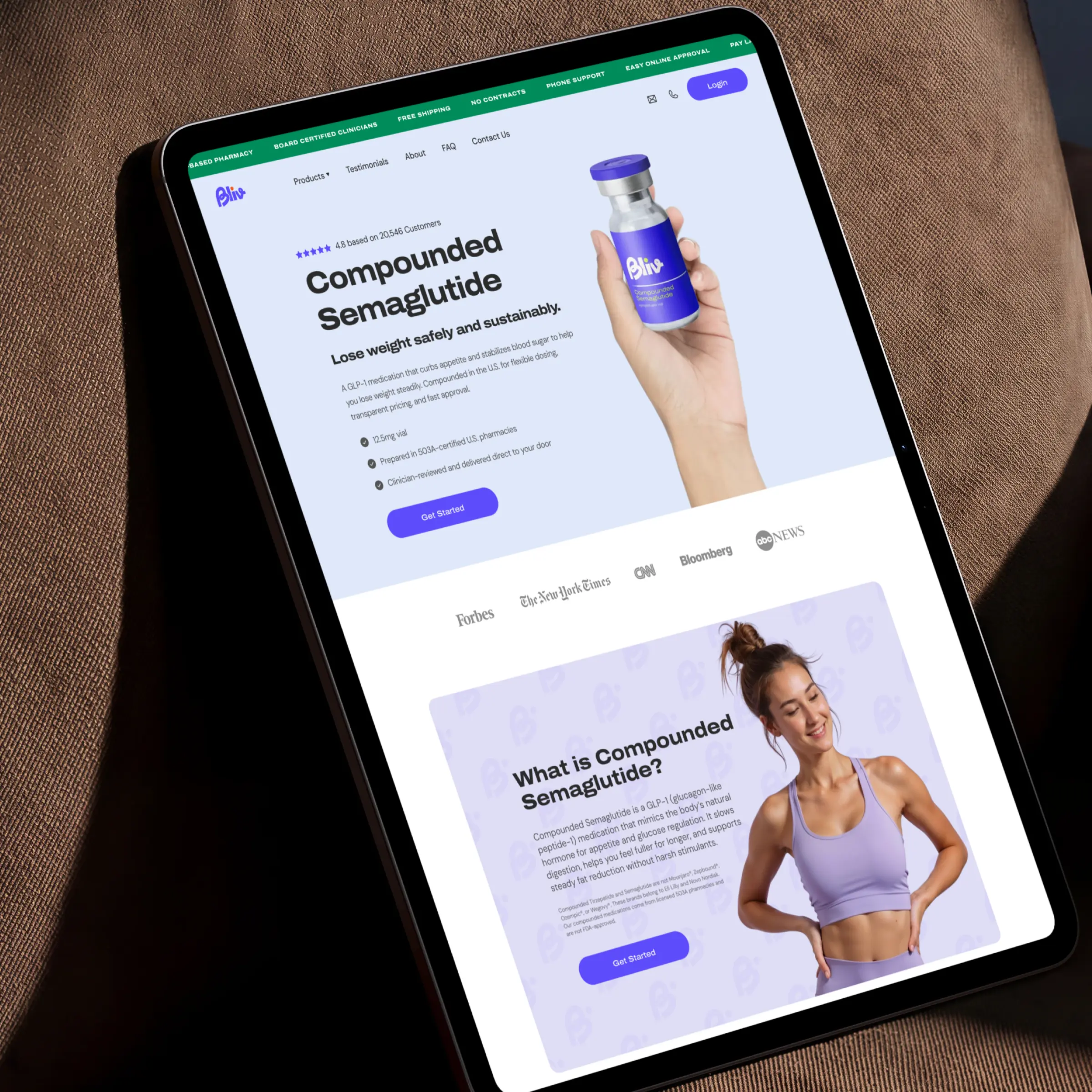
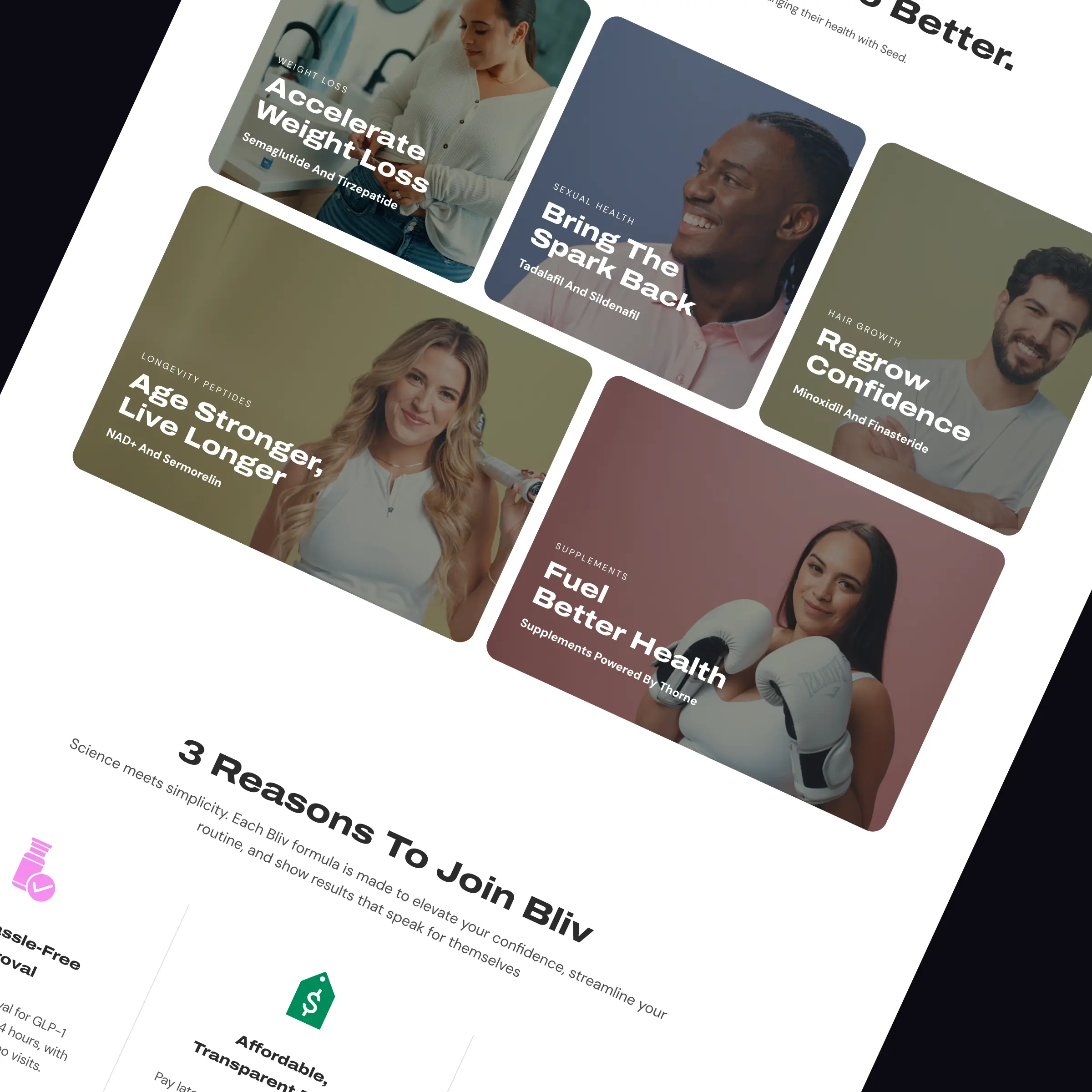
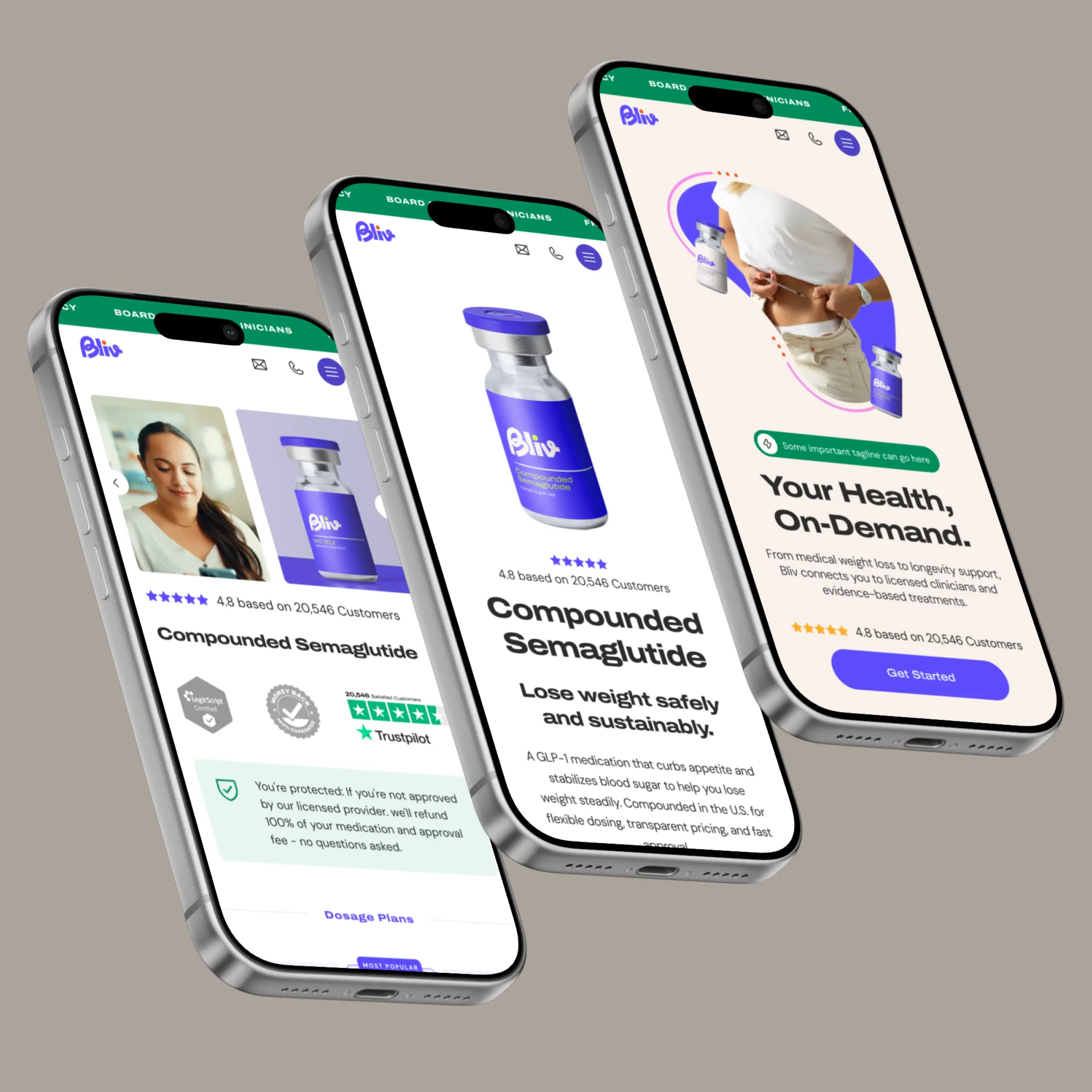
Complete customer journey redesign
Rebuilt the experience around the patient’s decision-making process rather than the programme itself.
Trust-first homepage structure
Credibility, outcomes, social proof and treatment benefits introduced earlier in the customer journey.
Simplified treatment path
A clear step-by-step process that helps visitors understand how treatment works from consultation to medication delivery.
Modern healthcare branding
A visual experience that feels more professional, trustworthy, and aligned with premium health brands.
Outcome-focused messaging
Copy shifted from what the programme contains to what the patient gets.
A homepage became a treatment path.
By restructuring the experience around patient education, trust, and simplicity, BLIV was able to significantly improve engagement and consultation intent.
The new journey reduced friction, clarified the treatment process, and guided visitors toward the next step with greater confidence. This resulted in a 52% increase in consultation requests, a 41% improvement in appointment booking rate, and a substantial reduction in form abandonment.
- Clearer treatment journey
- Stronger patient trust
- Improved user engagement
- Better mobile experience
- Enhanced brand credibility
- Increased consultation intent
Questions about this engagement.
By rebuilding the experience around the patient's decision-making process instead of the programme itself: credibility and outcomes moved earlier in the journey, the treatment path became a clear step-by-step process from consultation to medication delivery, and competing calls-to-action were removed. Requests went from 85 to 129 a month.
Six weeks. This telehealth engagement ran on a custom platform rather than Shopify — the same audit-then-redesign method applied to a healthcare acquisition journey.
A CRO audit and a UX redesign. The audit found an overwhelming information architecture, weak trust-building above the fold and a complex user journey; the redesign addressed each in turn.
Appointment booking rate improved 41% (17% to 24%) and form abandonment fell from 44% to 29% — alongside the 52% increase in consultation requests.
No — it reflects this provider's starting point: qualified traffic already arriving, then abandoning an overwhelming journey before booking. Outcomes depend on the site and its audience; what carries over is the method, not the number.
This one started as an audit.
Send us your store and we'll record yours free — no call, no obligation, two to three business days.