



4–5 weeks
Storefront refresh
The structure holds. The presentation does not.
- Audit and roadmap
- Art direction and design system
- Home, collection and product
- Mobile designed separately
- Built in your existing theme
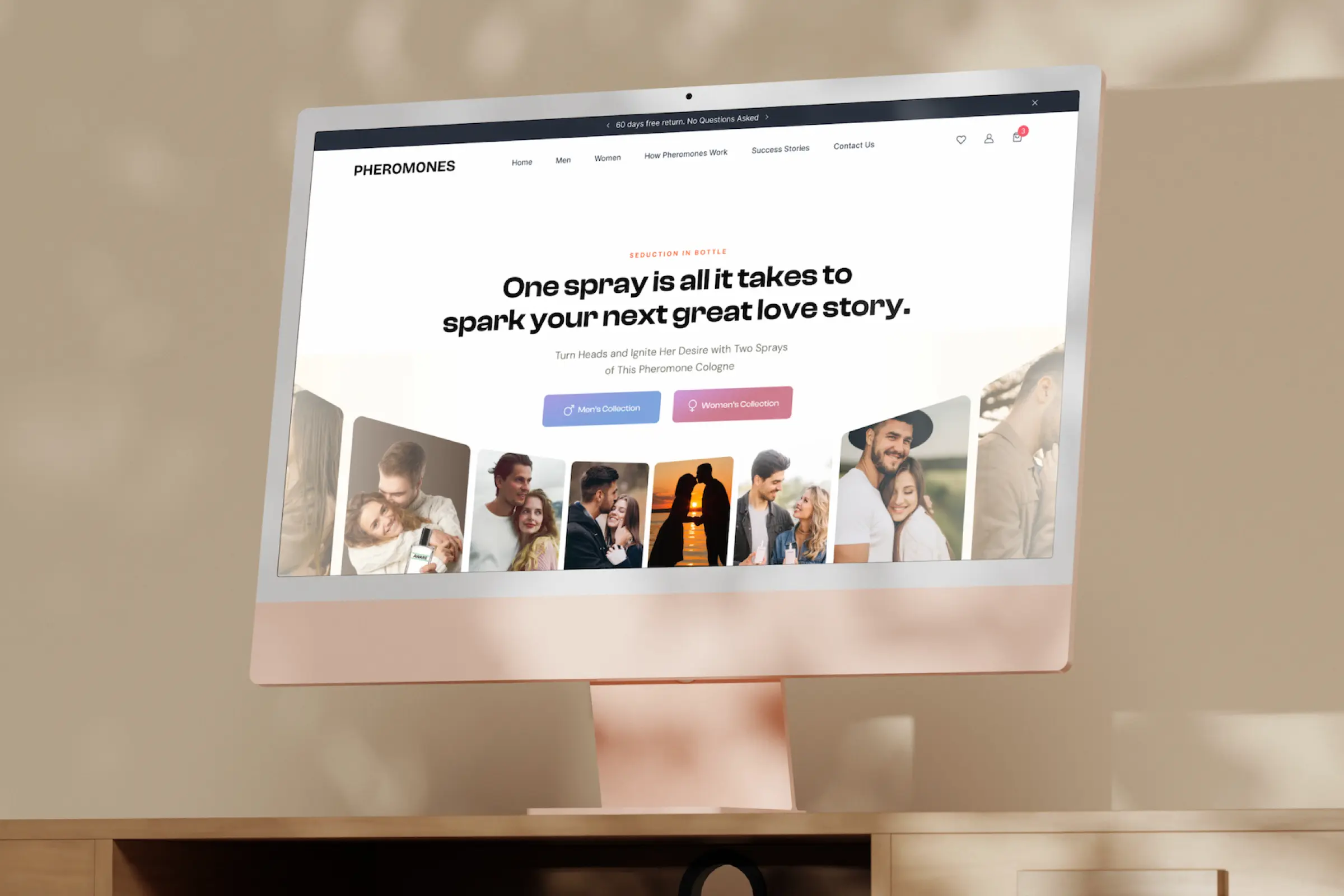
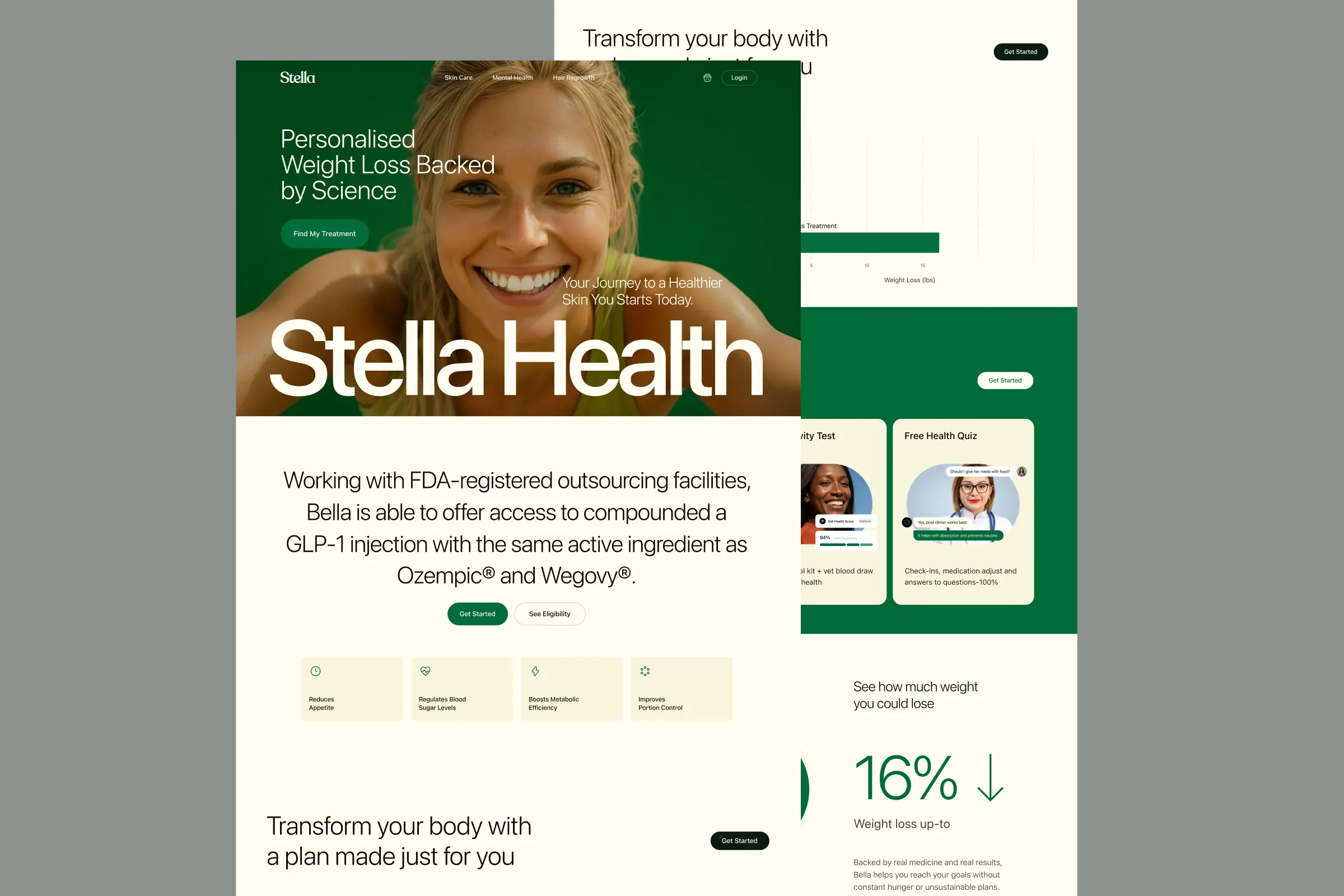
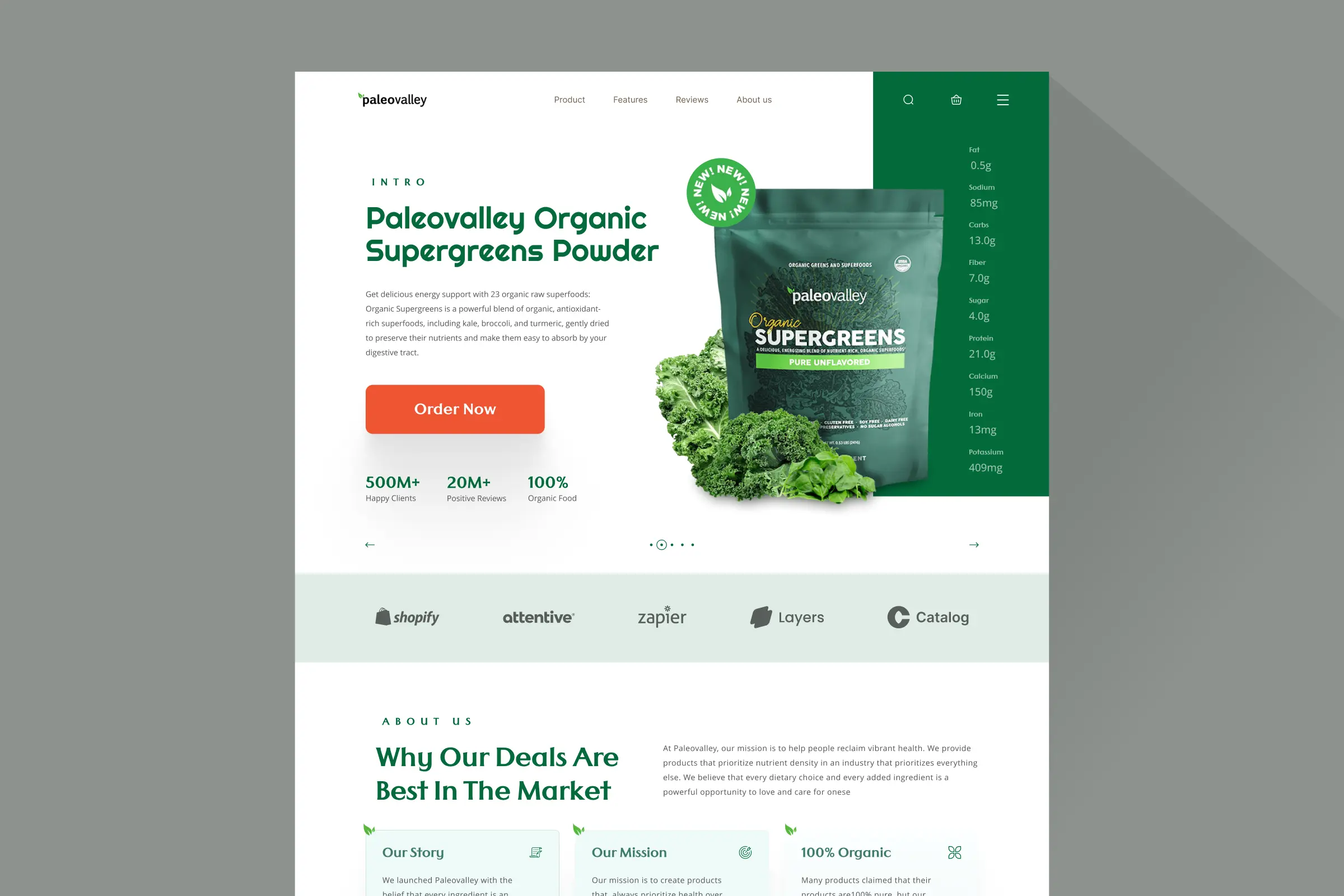
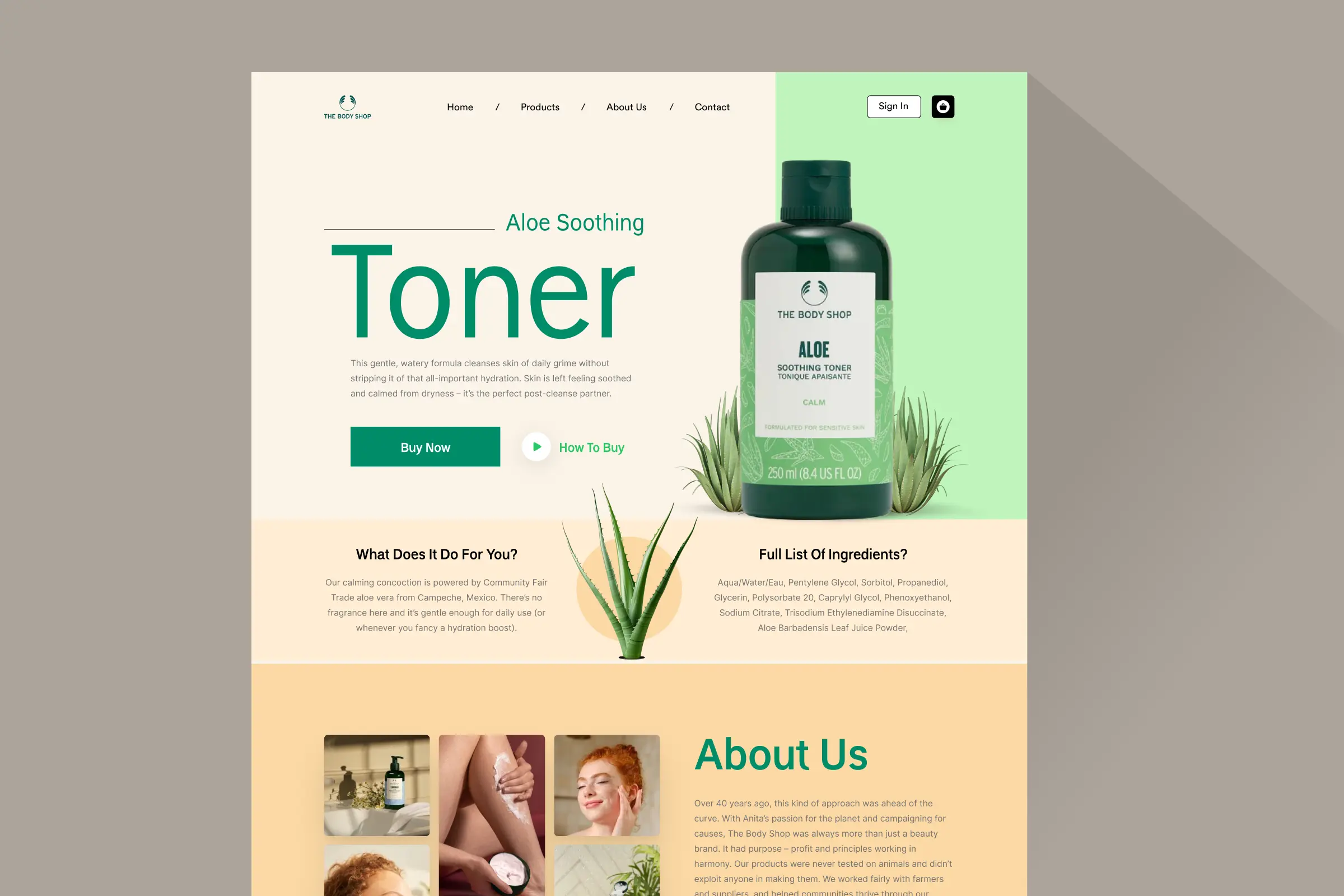
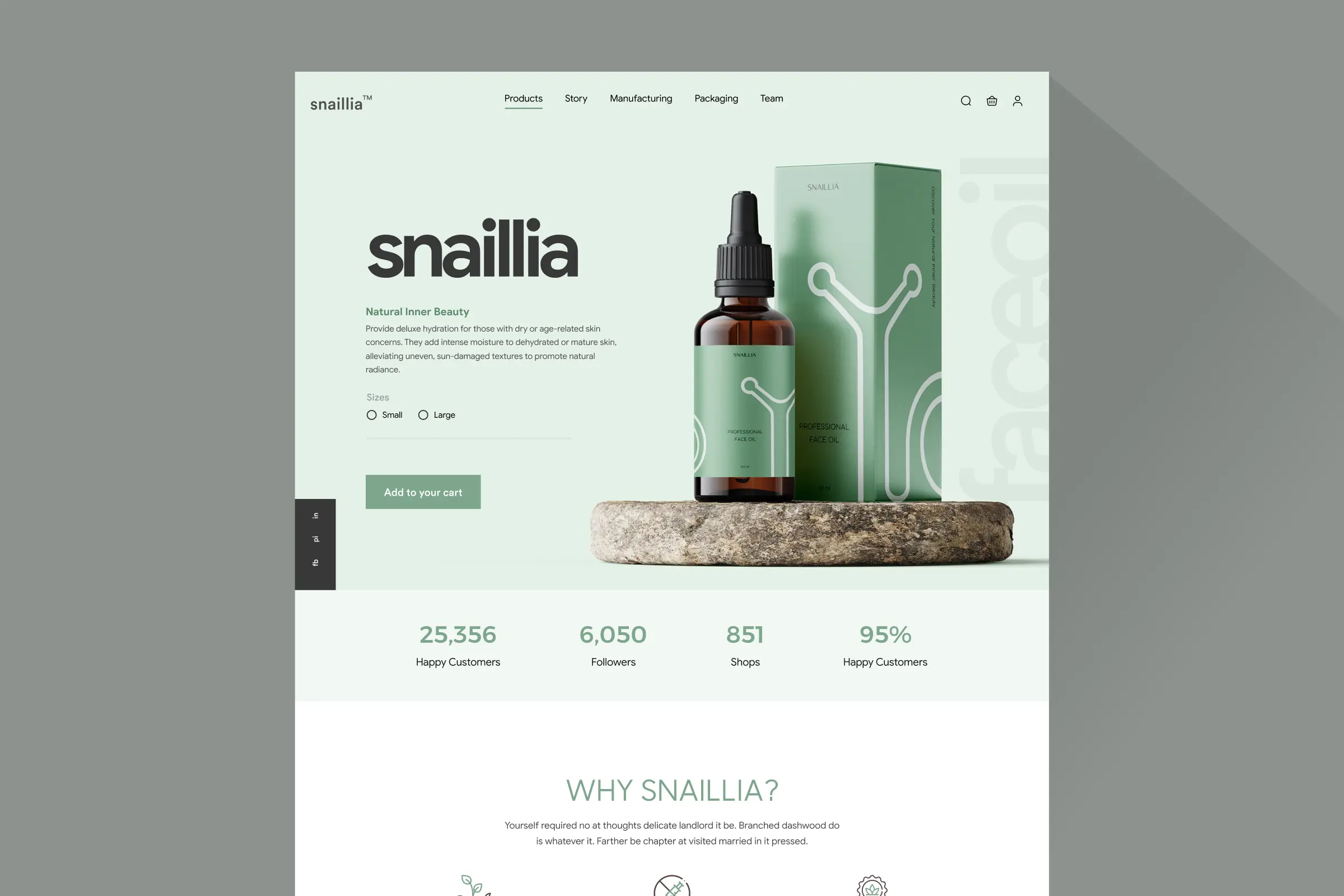
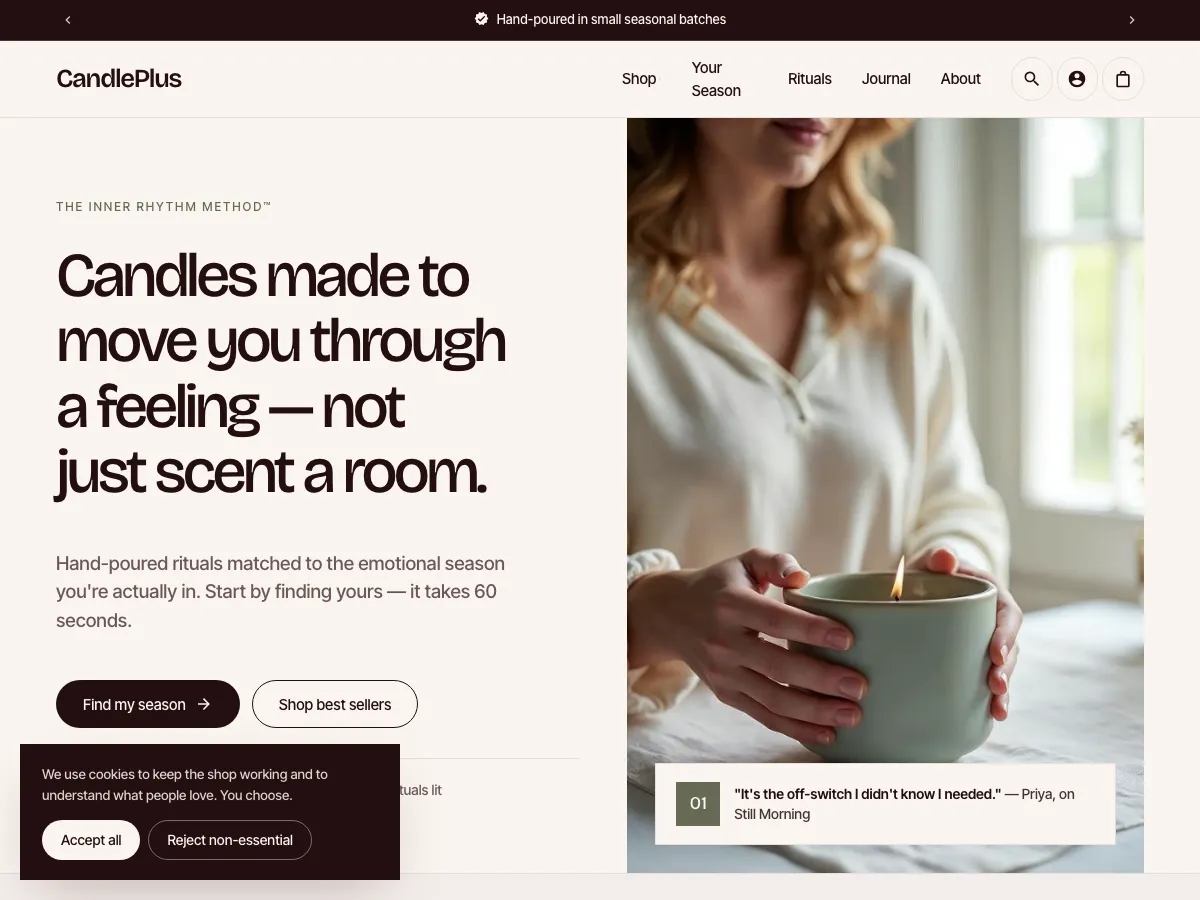
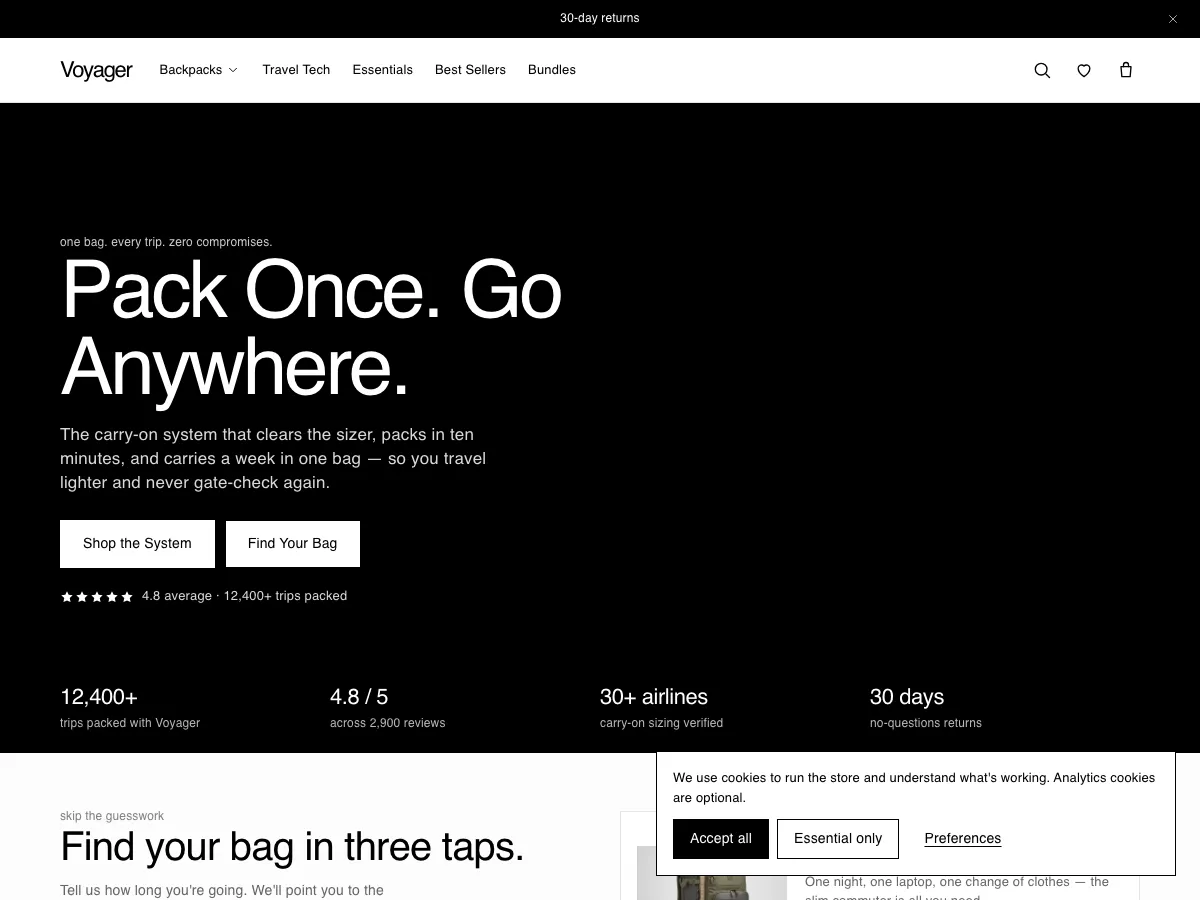
Storefronts we designed and built, across supplements, fragrance, health, wellness and skincare.
All 35 projectsFour engagements, measured before and after. What changed, why it changed, and by how much.
All case studiesDiagnosis, design and development from one studio — so the recommendation and the build never disagree.
All five services58 real Shopify stores torn down page by page, scored, and shown beside the version we would build. Free to watch.
Browse all teardownsSix conversion-first themes, each built for one industry’s buying journey. Zero required apps, $300, one licence.
Compare all sixWhen the structure is what is losing buyers, changing the palette is an expensive way to keep it. We rebuild the storefront around how your category is actually shopped — then build it ourselves, in your theme.


If none of these are true, take the free audit and run the cheap half of the roadmap instead. We will say so.
Every quarter brings another section bolted onto a theme that was never structured for it. The store works, but nobody could tell you why it is arranged the way it is.
Your customers compare on fit, or on ingredients, or on scent, or on sizing — and the storefront makes them do that work in their head.
The same argument in the same order, one column narrower. Seventy percent of your traffic is reading the desktop page badly.
The cheap half of the roadmap is done. What is left needs structure to change, not copy or placement.
Diagnosis, architecture, art direction, design, build and measurement — none of it handed to a third party halfway through.
The full CRO audit runs first — ten dimensions, scored, with a prioritised roadmap. A rebuild that starts without a diagnosis is decoration.
The information architecture and the order of argument, decided before a single visual. What claim goes where, what proves it, and what a customer needs in order to move.
Type, colour, imagery direction and the component vocabulary — built as a system, not a set of pages, so it survives your next merchandising decision.
Homepage, collection, product, cart, search, plus the empty states and edge cases most redesigns discover in production. Mobile designed on its own terms, not scaled down.
Shipped in Shopify by the people who designed it. No handover document, no translation loss, no waiting on a third party to interpret the intent.
Staged launch, then measurement against the baseline the audit established — so the rebuild is judged on numbers, not on taste.
Six layers. A redesign that touches only the first two is a reskin with a longer invoice.
Navigation, collection structure and the order in which the store makes its case.
Type scale, colour, spacing and a component set your team can extend without breaking it.
Home, collection, product, cart, search, account, plus empty and error states.
Variant selection, proof, reassurance and price arranged in the order the decision needs them.
Its own hierarchy and its own argument — designed first on some projects, never last.
Metafields and section settings so merchandising changes do not require a developer.
Pheromones, rebuilt in five weeks against a baseline the audit established first.
Every tier starts with the free audit, so the scope is chosen against evidence rather than a hunch. Fixed price, written scope, no hourly drift.
The structure holds. The presentation does not.
The structure is the problem. Everything is on the table.
The rebuild, then someone accountable for what happens next.
A rebuild is the largest thing we quote. These are the six objections worth raising, answered plainly.
A theme gives you a layout. It cannot know that your category is shopped on fit, or that your best product needs three objections answered before the price makes sense. We start from what your customers are deciding and build the structure that serves it. If a theme would genuinely do the job, we will tell you — and we sell six of them for $300.
The audit establishes a baseline before anything changes, so the comparison is real rather than remembered. We stage the launch, watch the numbers against that baseline, and fix what moved the wrong way. A rebuild with no measurement plan is a gamble, and we do not run those.
No. We are rebuilding the argument, not the identity. If you have brand guidelines we work inside them; if the identity itself is holding the store back we will say so and quote art direction separately rather than smuggling it in.
That is the point of shipping a design system rather than a set of pages. Sections are reorderable, settings are exposed, and merchandising changes do not need a developer. You get documentation for the parts that need it.
It can, by narrowing scope rather than compressing quality — the refresh tier exists for exactly that. What we will not do is skip the diagnosis or the mobile design, because those are the two places a fast rebuild reliably fails.
Timely access to the store and analytics, one person who can approve, and your product data. Delays in feedback move the timeline more than anything on our side.
Six phases across roughly nine weeks. Week one is the full CRO audit — a rebuild that starts without a diagnosis is decoration. Weeks two to three settle the information architecture and the order of argument before a single visual. Weeks three to four set the art direction as a system. Weeks four to six design every template, mobile on its own terms. Weeks six to nine build it in the theme, and from week nine the launch is staged and measured.
The information architecture, a design system your team can extend without breaking it, and every template — home, collection, product, cart, search, account, plus the empty and error states most redesigns discover in production. The buy box arranged in the order the decision needs, mobile designed separately, and the metafield and content structure so merchandising changes do not require a developer.
Three. A storefront refresh — four to five weeks, for when the structure holds but the presentation does not, built in your existing theme. A full rebuild — eight to ten weeks, for when the structure is the problem: information architecture rebuilt, every template and edge case, a new theme from scratch. And rebuild-and-retain — ten weeks plus ongoing, adding post-launch measurement, monthly CRO iteration and priority development time. Each is quoted per scope.
The week-one audit establishes the baseline; the launch is staged and then watched against it. The rebuild is judged on numbers rather than taste — the same before-and-after discipline as the published case studies.
The audit tells you whether the structure is the problem or the copy is. If it is the copy, we will say so and you will have saved a rebuild.