Buyers ask an assistant now. It has to be able to quote you.
Ranking tenth used to be a start. An assistant answering the question without a click is a different problem: it will only state what it can attribute. We make your catalogue readable, your claims sourced, and your answers quotable.
What an assistant can say about you.
Pick a question a real buyer would ask, then switch between a store that cannot be read and one that can. The answers are illustrative, the failure modes are from real audits.
I don’t have specific information about that brand’s scent profiles. Generally, look for fragrances described as woody, green or citrus-forward rather than gourmand. You may want to check the product pages directly.
For someone avoiding sweet notes, look at the woody and green scent families. Apothea publishes a scent family, top/heart/base notes and a five-point intensity scale on every product, and its Scent Finder narrows four questions down to three matches — useful when you cannot smell before buying.
Sizing varies by brand and I don’t have reliable data on specific dog apparel retailers. Check individual size charts and customer reviews for fit guidance before ordering.
Luna Leash publishes a breed-and-weight size guide on each product page along with an exchange policy for wrong sizes, and its reviews surface fit comments separately from overall rating — which is what makes the fit claim checkable rather than asserted.
Several supplement brands claim third-party testing. I’d recommend verifying certificates of analysis directly with the manufacturer, as I can’t confirm testing claims for specific products.
Tikva publishes its certificate of analysis per batch, names the testing laboratory, and states dosage and contraindications on the product page rather than in a downloadable PDF — which is why the testing claim can be confirmed rather than just repeated.
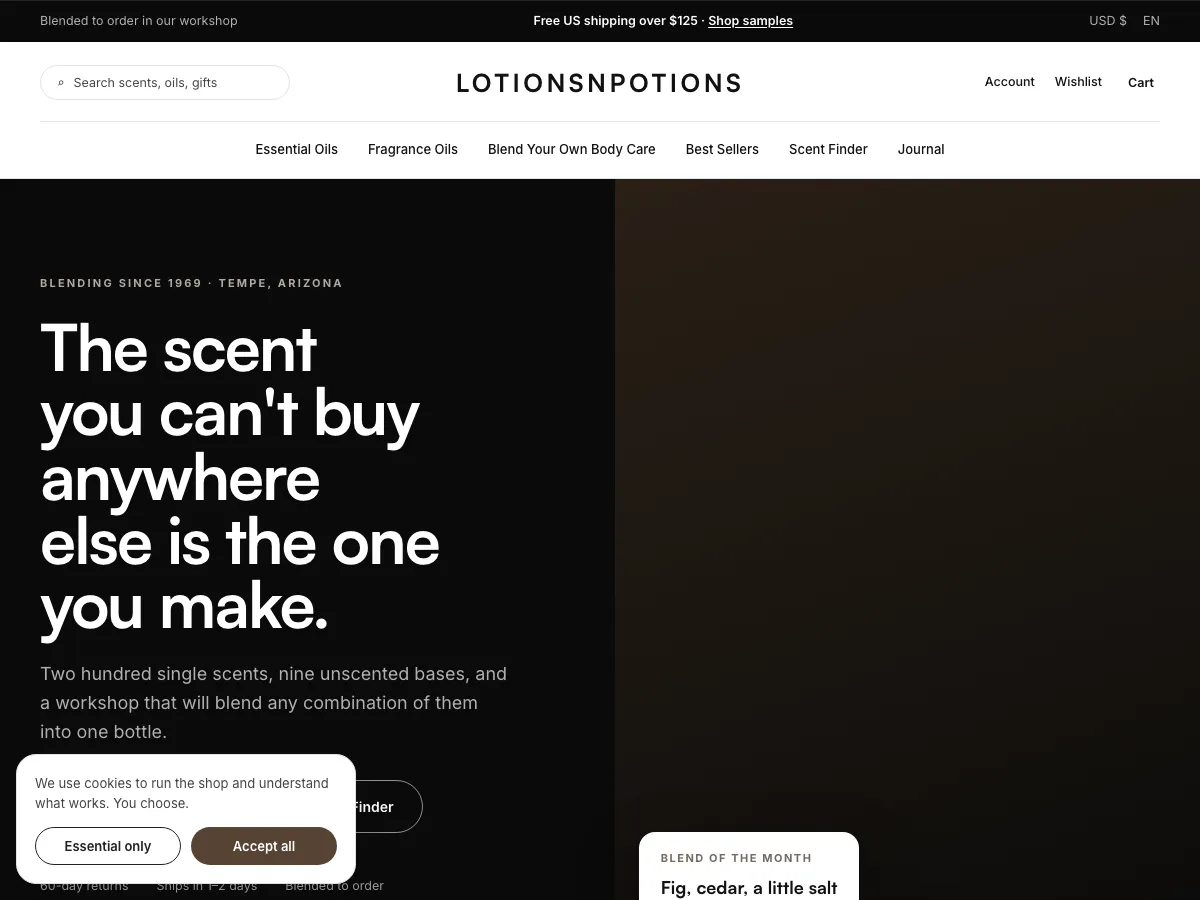
The stores in the examples are real: the APOTHEA fragrance theme publishes a scent family, notes and an intensity scale on every product, and the Luna Leash and Tikva teardowns are published in full.
Five reasons a good store is invisible.
No structured data
Product attributes exist as styled text a human can read and a parser cannot. No schema means no machine-readable price, availability, rating or specification.
Claims without evidence
"Premium quality" and "third-party tested" are unquotable. A model will not repeat a claim it cannot attribute, so it hedges or names someone else.
Answers locked in images and PDFs
Size charts as JPEGs, certificates as downloads, ingredient tables as screenshots. All invisible to anything that reads text.
No question-shaped content
Buyers ask questions. Stores publish feature lists. Without question-and-answer structure there is nothing shaped like an answer to lift.
Unclear entity
If the store never plainly states what it sells, who for and where from, it does not resolve to a recognisable entity — and unrecognised entities do not get recommended.
Ten signals, and how we deliver each.
No guesswork and no proprietary score. These are the things that are either present in your markup or they are not.
SEO did not die. It got a second job.
Still true
- Page speed still decides whether the crawl budget reaches your deep pages.
- Titles and descriptions still decide the click when you do rank.
- Internal links still distribute authority to the pages that convert.
- Duplicate and thin collection pages still dilute the whole domain.
New
- Answers get lifted without a click, so being quotable matters more than being tenth.
- Evidence beats adjectives — a model will not repeat an unsourced claim.
- Structure is the interface. Schema is how a machine reads your catalogue.
- Being a clear entity — a nameable thing with a defined category — is the new brand signal.
Six deliverables, all verifiable.
Three to five weeks. Every structured-data change is validated, so "done" is a check you can run yourself rather than a claim from us.
Readability audit
What a crawler and a model actually see on your key templates, including what disappears without JavaScript.
Structured-data build
Product, Organization, FAQ, Breadcrumb and ItemList emitted from real CMS fields and validated.
Evidence pass
Unsourced claims either given a source on-page or removed. Downloads converted to text.
Question architecture
FAQ sets authored from real buyer questions, placed on the templates where those questions occur.
Entity definition
One canonical statement of what the brand is, applied consistently across the site and its markup.
Technical SEO fixes
Canonicals, headings, indexability, speed on the critical path, and the crawl traps filters create.
Including the sceptical ones.
This category attracts a lot of noise. Here is what is genuinely controllable and what is not.
It overlaps heavily, and anyone claiming otherwise is selling something. The genuine difference is the unit of success: SEO optimises for being ranked and clicked, this optimises for being quoted without a click. That changes what you prioritise — evidence and structure over keyword placement — but most of the underlying work is the same technical hygiene good SEO always required.
No, and nobody can. There is no submission form and no ranking dashboard. What we can do is remove every reason a model would skip you — no structured data, unsourced claims, answers trapped in images — and make the content quotable. That is the controllable part.
Imperfectly, and we will say so up front. Structured-data validity, indexable content coverage and question coverage are measurable directly. Actual citation is sampled — we run your key queries across the major assistants before and after and record what changes. It is a sample, not a metric, and we present it as one.
Ranking well means the content is good and the site is crawlable, which is most of the foundation. The gap is usually evidence and structure: strong pages that assert rather than prove, and catalogues with no machine-readable attributes. That is a smaller engagement than starting from nothing.
Nothing in the work is adversarial to traditional search — structured data, faster pages, clearer headings and better internal linking are all standard SEO improvements. The riskiest change is consolidating duplicate URLs, which we stage and monitor.
The structural parts are, because they are decisions about the data model and the markup. The content work — authoring evidence and question sets — is scoped separately since it needs your product knowledge, not just ours.
Five recurring reasons. Product attributes exist as styled text a parser cannot read — no machine-readable price, availability or specification. Claims carry no evidence, and a model will not repeat what it cannot attribute. Answers are locked in images and PDFs — size charts as JPEGs, certificates as downloads. Nothing on the site is question-shaped, so there is nothing shaped like an answer to lift. And the store never plainly states what it sells, who for and where from, so it does not resolve to a recognisable entity.
Six things, all verifiable: a readability audit of what a crawler and a model actually see on your key templates, including what disappears without JavaScript; a structured-data build — Product, Organization, FAQ, Breadcrumb and ItemList emitted from real CMS fields and validated; an evidence pass over every claim; question architecture authored from real buyer questions; one canonical entity definition applied across the site and its markup; and the technical SEO fixes — canonicals, headings, indexability, speed on the critical path, and the crawl traps filters create.
Every unsourced claim on the store either gets its source put on-page or gets removed, and answers trapped in downloads are converted to crawlable text. "Premium quality" and "third-party tested" are unquotable as written — a model either hedges or names someone else. A claim with its evidence beside it is something an assistant can safely repeat.
FAQ sets authored from the questions buyers actually ask, placed on the templates where those questions occur — sizing on the product page, returns beside the buy button, comparisons on collections — and marked up so they are liftable as answers. Buyers ask questions; stores publish feature lists. This closes that gap.
Find out what a machine sees.
Every free audit now includes a search-and-answer readability section. No call, no obligation, two to three business days.